For years, Nuapada stood on the edge of fear. Dense forests, porous borders, and underdevelopment had made it fertile ground for Left Wing Extremism. Villages lived under silent pressure. Movement was cautious. Trust was fragile. But today, the narrative has changed. Nuapada is no longer a red corridor stronghold—it is being seen as a model of how sustained strategy and leadership can dismantle insurgency.
At the heart of this transformation was a focused, intelligence-driven approach led by Gundala Reddy Raghavendra, who served as Superintendent of Police in the district during a crucial phase of anti-Naxal operations.
Understanding the Ground Before Acting
Nuapada’s challenge was not just about armed insurgents. It was about fear, lack of development, and disconnect between people and administration. Each village had its own dynamics. Some were vulnerable due to economic distress, while others were influenced by long-standing mistrust of state institutions.
Also Read – How Anju Yadav Overcame Social Barriers and Became a Deputy Superintendent of Police
Rather than relying only on force, the strategy began with understanding the terrain and the people. Field visits, local interactions, and constant engagement helped bridge the trust gap. The police presence gradually shifted from being seen as external authority to a more approachable system.
Intelligence: The Turning Point
The biggest shift came with strengthening intelligence networks. Information in such areas is rarely clear or complete. It comes in fragments—sometimes delayed, sometimes misleading. The challenge is to connect the dots quickly.
Under SP Raghavendra’s leadership, the team focused on:
• Building local intelligence sources
• Cross-verifying inputs through multiple channels
• Using technology like surveillance tools and drones
“In such operations, you rarely get perfect information. You act on patterns, verify quickly, and move decisively,” he told Indian Masterminds.
This blend of human intelligence and technology created a strong foundation for operations.
Coordinated Operations and Major Breakthroughs
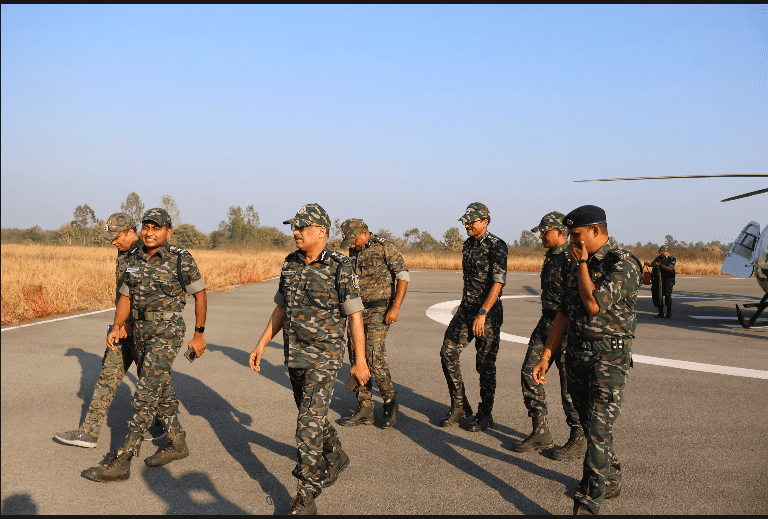
One of the defining features of Nuapada’s success was inter-state coordination, especially with neighboring Chhattisgarh. Naxal groups often used border areas to escape and regroup. Breaking this pattern required seamless cooperation between forces.
Joint operations involving Odisha Police, Special Operations Group (SOG), District Voluntary Force (DVF), and central forces like CRPF and BSF began to yield results.
A defining moment came with the Nuapada–Gariabandh encounter, where 16 Naxals were neutralized, including a Central Committee Member (CCM). This marked the first time a CCM-level leader was neutralized on the ground in this region, making it a historic breakthrough in Odisha’s fight against Naxalism.
The operation demonstrated the growing sophistication of the forces, with drones being deployed at night for effective surveillance—significantly enhancing situational awareness and operational precision.
In this encounter, cadres across multiple levels were neutralized, including:
• 1 Central Committee Member (CCM)
• 2 State Committee Members (SCM)
• Divisional Committee Members (DCM)
• Area Committee Members (ACM)
• Party members
This encounter became a defining moment in the history of Odisha’s anti-Naxal operations. It disrupted leadership structures, shattered morale within the ranks, and accelerated the collapse of the insurgent network.
Across 2025–26, 27 Maoists were neutralised, with several high-ranking operatives among them. Simultaneously, arrests and sustained pressure weakened the network.
But what truly marked success was not just elimination—it was collapse from within.
The Surge in Surrenders
Following the encounter and intensified operations, a wave of surrenders began.
• 78 Maoists surrendered before Odisha Police
• 42 more laid down arms in neighboring states
• Many were senior leaders, including State and Divisional Committee members
This shift reflected a deeper change. The ecosystem that once sustained extremism was breaking apart. Government rehabilitation policies played a key role, offering former cadres a path back into society.
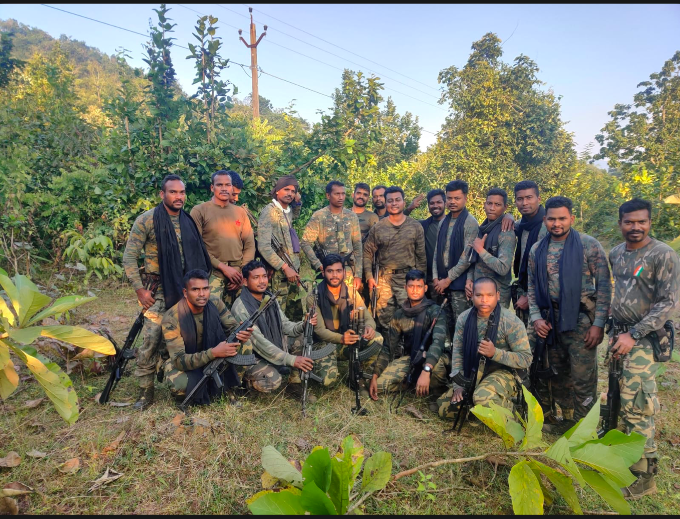
The final turning point came when nine Maoists surrendered in Gariaband, effectively marking Nuapada as free from active Naxal presence. After that, many surrenders followed—and the rest is history.
Breaking the Recruitment Chain
One of the most significant outcomes was the near collapse of recruitment. For years, extremist groups relied on local youth for expansion. But with improved governance, development outreach, and consistent policing, this pipeline dried up.
There were no fresh inductions reported in recent times. Villagers, once hesitant, began sharing information. The fear that once protected insurgents started fading.
“Technology gives us scale, but human trust gives us real intelligence,” SP Raghavendra shared with Indian Masterminds, underlining the importance of community cooperation.
A Shrinking Footprint Across Odisha
Nuapada’s transformation was part of a larger shift. From 21 Naxal-affected districts in 2012, Odisha now has only a handful with residual presence. Districts like Malkangiri, Koraput, and Kalahandi have seen significant improvement.
Nuapada, once categorized as a vulnerable zone, now falls under areas that have largely eliminated insurgency, though vigilance continues to prevent regrouping.
The Human Cost and the Resolve
The journey, however, was not without sacrifice. Over the years, 239 security personnel and 359 civilians lost their lives in the conflict. These numbers are a reminder of the long and difficult battle.
Yet, they also highlight the importance of sustained effort. The success in Nuapada is not a sudden victory—it is the result of years of coordinated action, policy support, and on-ground leadership.
The Officer Behind the Mission
Gundala Reddy Raghavendra belongs to the 2019 batch of the Indian Police Service (Odisha cadre). He secured an All India Rank of 180 in the UPSC Civil Services Examination 2018 and underwent his professional training at the Sardar Vallabhbhai Patel National Police Academy. Over the course of his service, he has developed expertise in counter-insurgency operations, intelligence collection and analysis, cybercrime investigation, and crisis as well as leadership management. At present, he is serving as the Superintendent of Police in Jharsuguda district, Odisha.
In recognition of his role in these high-impact operations, he was awarded the DGP’s Disc and the Union Home Minister’s Medal for Special Operations.
Strengthening the Anti-Maoist Grid Along the Odisha–Chhattisgarh Border
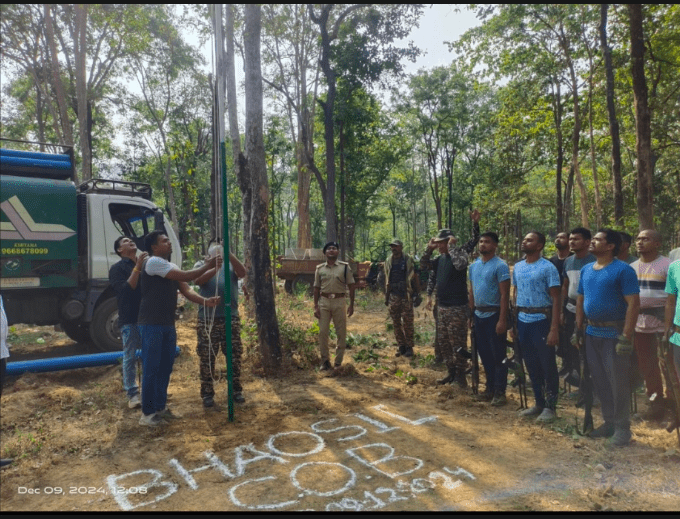
During his tenure as SP Nuapada, several strategically significant security establishments including Bhaosil COB, Dhekunpani COB, Garjanpani COB, Bhatapani COB, and the Dattunama Joint Task Force Camp were established to strengthen the anti-Maoist operational grid along the Odisha–Chhattisgarh border. These camps played a crucial role in restricting the movement of Maoist cadres, enhancing inter-state operational coordination, and enabling security forces to penetrate deeper into previously inaccessible and Maoist-affected pockets. The Joint Task Force mechanism significantly improved intelligence sharing, area domination, and coordinated operations between Odisha and Chhattisgarh Police forces. The establishment of these forward operational bases not only enhanced the security presence in vulnerable border regions but also delivered a major strategic setback to Maoist activities by reducing their mobility, logistical support, and influence in the area.
A Model for the Future
Nuapada’s journey from a Naxal-affected district to a peaceful zone offers a clear lesson: force alone cannot end insurgency. It requires a mix of intelligence, coordination, development, and trust-building.
Today, as Odisha moves closer to the goal of becoming Naxal-free, Nuapada stands as proof that even the most challenging regions can transform—with the right leadership and a committed team.
The silence in its forests now tells a different story. Not of fear, but of change.
Also Read – From Guns to Growth: How Balaghat Turned the Tide Against Naxalism Through Community Power