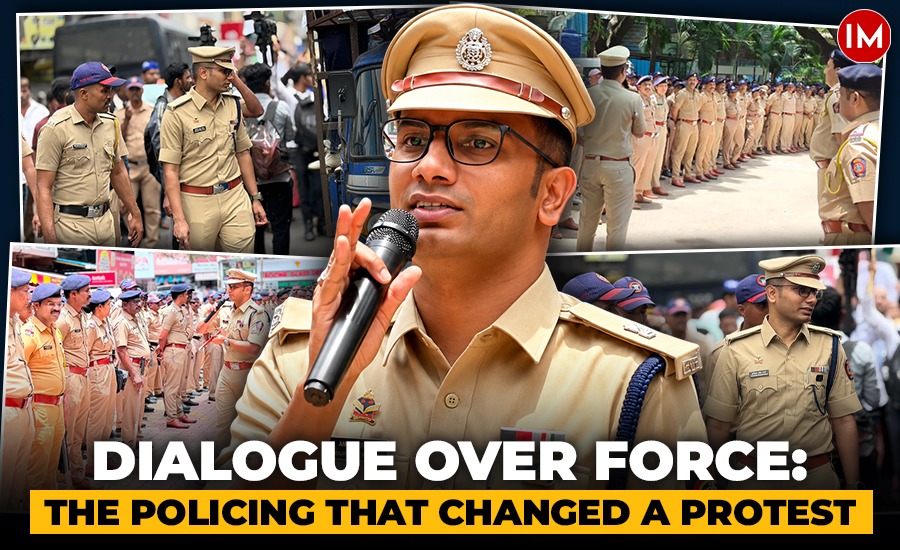
The protest began with anger, outrage and a single political demand—the resignation of Union Education Minister Dharmendra Pradhan over the alleged NEET paper leak. It came at a time when images of students being lathi-charged and dispersed with water cannons during protests in Delhi had triggered a national debate over the police response to youth demonstrations. Many feared Pune would witness a similar confrontation.
Instead, it produced an image that few could have predicted.
As thousands of students concluded one of Pune’s largest youth marches, slogans against the government gave way to chants of “We Love You, Pune Police” and “Andar ki baat hai, police humare saath hai.” Students posed for selfies with police personnel, presented roses to officers and flooded social media with appreciation for the force that had ensured the protest remained peaceful.
The transformation did not happen by accident. Behind the scenes, it was the result of meticulous planning, continuous dialogue and a conscious decision by Pune Police to replace force with communication.
Also read: How NAFED is Strengthening Farmers, Markets and Food Security
A Protest Built on Anger
Organised under the banner of the Cockroach Janata Party (CJP), the march drew nearly 15,000 students, youth activists and aspirants from across Maharashtra. Beginning at Shaniwar Wada and ending at the District Collectorate, the demonstrators demanded accountability over the alleged NEET paper leak and called for the resignation of the Union Education Minister.
With memories of clashes during protests elsewhere still fresh, many participants expected an equally aggressive police response.
“We had seen videos of Delhi Police beating protesters. Naturally, we thought the same might happen here,” recalled one participant.
But from the very beginning, Pune Police chose a different path.
Planning Before Policing
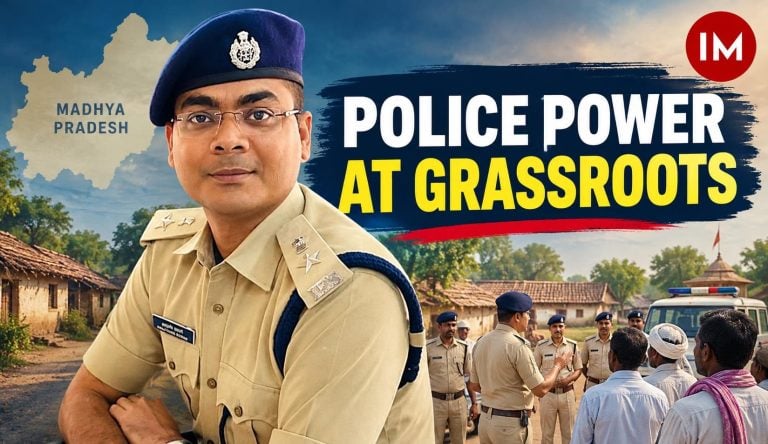
Speaking to Indian Masterminds, Rawale Krushikesh Pradeep, IPS (2019 batch), Deputy Commissioner of Police (Zone I), Pune, said the biggest challenge was not the size of the gathering but the uncertainty surrounding it.
Initially, organisers had proposed multiple assembly points and different timings, making crowd movement and traffic management extremely difficult.
“We requested the organisers to adopt a single designated route. After several rounds of discussions, they agreed. That decision itself reduced a great deal of uncertainty and helped us prepare better,” Mr. Rawale said.
Police officials remained in constant touch with organisers for days before the march, discussing permissions, traffic diversions and crowd management plans.
Fighting Rumours Before They Became Reality
As the protest date approached, another challenge emerged.
According to Mr. Rawale, social media became flooded with rumours claiming the police were preparing for a lathi charge. Screenshots of alleged internal chats and misleading messages circulated widely, fuelling anxiety among students.
“Some local political elements also tried to create mistrust by suggesting that the police would use force. Our biggest task was to reassure students that we were there to facilitate expression of opinions, not suppress it,” he said.
Instead of responding through warnings, the police continued engaging with organisers and clarifying their intentions.
Winning Trust One Conversation at a Time
The defining moment came when tensions briefly escalated during the march.
Rawale personally walked into the crowd to address protesters. But with thousands shouting slogans, speaking through a microphone was impossible.
As the atmosphere grew increasingly charged, DCP (Zone I, Pune) Krushikesh Rawale climbed onto his police vehicle and tried to address the crowd. But every attempt to speak was drowned out by loud slogans from thousands of protesters.
Instead of reaching for the microphone immediately, Rawale chose an unconventional approach. He gestured with his hand, requesting the crowd to let him speak. The students refused to quieten down and only shouted louder.
Sensing the mood, he changed tack. Smiling, he gestured back, encouraging them to raise their slogans even louder, while simultaneously indicating through his body language that he could not hear so they should be louder. The playful exchange struck a chord with the largely Gen Z crowd, which responded enthusiastically and began vibing with the officer.
Once the energy had peaked, Rawale slowly lowered his hand, signalling for the voices to come down. Almost instinctively, the slogans softened. Within moments, thousands of protesters fell silent enough for him to finally address the gathering.
“I first tried asking them to let me speak, but they weren’t ready to listen. So I joined their energy instead. I encouraged them to shout louder. Once they connected with that, I slowly signalled for them to lower their voices, and they responded. That’s when we were able to start a conversation,” Rawale recalled.
Once silence returned, Rawale assured the students that Pune Police had no intention of using force against peaceful demonstrators.
“I told them that Pune Police had earned public trust over the years, and we wanted to preserve that trust by ensuring they could protest peacefully while we ensured everyone’s safety.”
He also clarified that officers carried only standard polycarbonate crowd-management equipment and had no instructions to use force. Plain-clothes personnel, he explained, had been deployed solely to protect women participants and prevent theft or harassment.
To avoid creating an atmosphere of intimidation, Rawale even left his official vehicle behind and walked to the protest site.
“It was a small gesture, but we wanted students to see us as facilitators, not as an opposing force,” he said.
When Protesters Started Thanking the Police
The atmosphere gradually changed.
Students who had arrived expecting confrontation instead found officers helping them navigate crowds, offering assistance and patiently answering questions.
“We saw videos of Delhi Police beating protesters mercilessly. But in Pune, officers actually protected us. When I got stuck in the crowd, two constables immediately helped me out safely,” said one protester
Another protester said they never imagined the slogans would change.
“The senior officers were polite, approachable and never shouted at us. We didn’t expect that.”
Soon, chants of “Justice for Students” were replaced by “We Love Pune Police.”
Hundreds of participants stopped to take selfies with officers. Many shared reels, photographs and messages on Instagram and WhatsApp thanking the police for their restraint.
Rawale himself unexpectedly became an internet favourite, with young protesters affectionately calling him the “Pookie Officer” in viral social media posts.
Defusing a Counter-Protest
Another factor behind the peaceful outcome was the police’s handling of potential confrontation.
Several organisations had announced counter-protests, raising fears of clashes.
Police Commissioner Amitesh Kumar, Deputy Commissioner Dr Prashant Amrutkar and other senior officers held separate discussions with representatives of all groups, urging them to maintain peace.
The dialogue worked.
The proposed counter-demonstrations were withdrawn, significantly reducing the risk of conflict.
Nearly 140 Special Branch personnel were deployed—not to control protesters through force, but to remain in continuous communication with organisers and quickly resolve emerging issues.
A Lesson in Democratic Policing
Large public demonstrations in India often become remembered for clashes between protesters and police. The Pune march offered a different narrative.
By prioritising communication over coercion, and trust over intimidation, Pune Police demonstrated that maintaining law and order need not come at the cost of democratic expression.
As Rawale reflected, “Our role was never to stop students from raising their voice. Our responsibility was to ensure they could do so peacefully and return home safely.”
In the end, the protest may not have secured the political resignation its organisers demanded.
But it achieved something equally remarkable.
It showed that when dialogue replaces confrontation, even an angry crowd can leave with gratitude—and that sometimes the loudest slogan at the end of a protest is not against authority, but in appreciation of those who chose empathy over force.
Also read: The Officer Chosen at a Critical Time: Inside IPS Anurag Kumar’s Journey to Delhi Police Chief