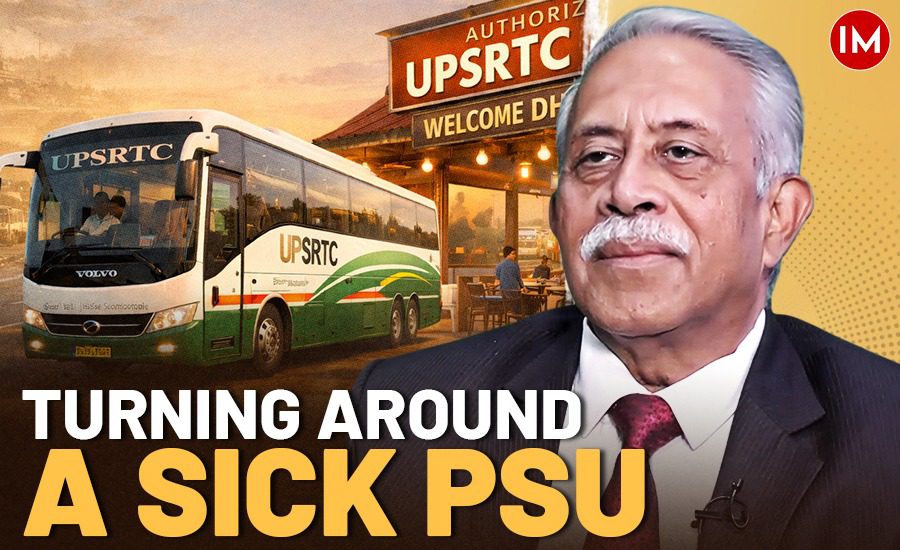
For years, the Uttar Pradesh State Road Transport Corporation (UPSRTC) was a byword for losses, ageing buses and eroding public confidence. Burdened by rising fuel costs, inefficiencies and competition from private operators, the PSU seemed trapped in a cycle of decline. Yet, in a quiet but determined transformation over the last decade, UPSRTC emerged as one of the better-performing state transport undertakings — and a key driver of this turnaround has been an unlikely but powerful innovation: monetising pit-stops through designated dhabas on a revenue-sharing basis, introduced in 1998 by it’s the then Chairman and Managing Director Mr Desh Deepak Verma.
Please click on the link to watch his full interview…..
The logic behind the scheme was deceptively simple. Long-distance bus journeys require mandatory stops for refreshments, washrooms and rest. For decades, these stops were informal and unmanaged — drivers halted wherever convenient, and passengers patronised unregulated roadside eateries. UPSRTC decided to convert this unavoidable operational necessity into a structured business opportunity.
Under the policy, UPSRTC identified high-traffic routes and notified official halt points. At these locations, dhabas were selected through a transparent process and given authorised status. In return, they agreed to share revenue or pay lease and parking charges to UPSRTC, while adhering to standards on hygiene, pricing, service time and facilities.
This single move unlocked multiple benefits. First, it created a new stream of non-fare revenue — a critical requirement for a transport utility where fare hikes are politically and socially sensitive. Instead of relying only on ticket sales, UPSRTC began earning from commercial use of its roadside footfall, turning passenger volume into monetisable value beyond seats.
Second, it dramatically improved passenger experience. Predictable, clean, safe and well-lit stops gave travellers confidence, particularly women, elderly passengers and families. Better journey comfort helped attract riders back from private buses and boosted uptake of premium AC and Volvo services.
Third, the scheme transformed local dhaba owners into stakeholders. For them, official UPSRTC recognition meant guaranteed daily footfall, higher turnover and brand visibility. Many invested in better kitchens, toilets and seating, raising service quality across highways. The relationship shifted from informal dependence to a structured public-private partnership.
But the dhaba scheme was only one part of UPSRTC’s broader revival strategy. Parallel reforms tightened fleet management through GPS tracking and vehicle location systems, reducing pilferage, idle time and unscheduled halts. Route rationalisation weeded out persistently loss-making services while strengthening profitable corridors. Digital ticketing, online booking and yield-based pricing improved seat occupancy and revenue per kilometre. Maintenance systems were modernised, increasing bus availability and lowering breakdown rates.
Together, these steps reshaped UPSRTC’s operational culture — from a purely welfare-driven utility to a commercially alert public service provider.
What makes the dhaba initiative especially notable is that it required no heavy capital expenditure. It leveraged existing passenger flows and roadside behaviour, turning everyday operational friction into a revenue opportunity. In a sector often obsessed with fleet size and subsidies, UPSRTC demonstrated that service design and micro-commercialisation can be just as powerful as large infrastructure investments.
Today, as UPSRTC reports improved financial performance and expanding services, the dhaba partnership model stands out as a replicable template for other state transport undertakings. It shows that public enterprises can become profitable not by abandoning their social mandate, but by managing it intelligently.
Sometimes, a turnaround begins not in boardrooms — but where buses stop for chai.