A quiet but seismic transformation is reshaping India’s industrial landscape. The traditional global narrative of India as a leading defense importer is being systematically dismantled, not from distant global capitals, but from the industrial corridors of northern India. Driven by the vision of Prime Minister Narendra Modi and executed with tight policy discipline under Chief Minister Yogi Adityanath, Uttar Pradesh has rapidly transitioned from its historical agrarian identity to become the foundational blueprint for Atmanirbhar Bharat (Self-Reliant India).
The state is no longer a bystander in national security; it has become its primary workshop. This industrial evolution takes its next definitive step forward with the upcoming Uttar Pradesh Defence and FDI Conclave-2026 in Lucknow. Designed as an economic catalyst for deep aerospace and military manufacturing, this summit bridges the gap between state-backed policy, global capital, and advanced engineering. With ground-level investment proposals now exceeding Rupees 35,000 crore, Uttar Pradesh has successfully positioned itself as India’s leading hub for indigenous defense production.
The Six-Node Shield: A Map of Strategic Dominance
At the core of this industrial shift is the Uttar Pradesh Defence Industrial Corridor (UPDIC), a masterfully planned web of six specialized manufacturing nodes managed by the state’s infrastructure vehicle, UPEIDA. Rather than creating generic industrial zones, the government has divided these nodes into targeted military specializations to maximize supply chain efficiency.
Also Read – From Battling Kidney Surgeries to AIR 4 in UPSC IFS: How Karan Singh Turned Setbacks into Success
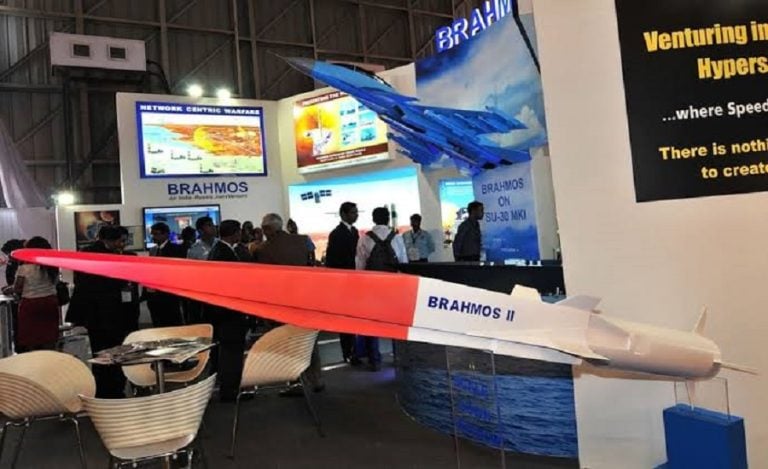
In Central Uttar Pradesh, Lucknow serves as the high-tech spearhead. The crown jewel is the Rupees 300-crore BrahMos Aerospace facility, which is actively establishing assembly lines for the Next-Generation (BrahMos-NG) missile system. This is closely supported by Aerolloy Technologies, which has injected 320 crore rupees to build advanced titanium casting capabilities vital for structural aerospace designs. Neighboring Kanpur operates as the corridor’s heavy ammunition fortress, leading all nodes with committed investment proposals totaling approximately Rupees 12,683 crore. This node hosts South Asia’s largest private ammunition and missile manufacturing complex—a sprawling, ₹1,500-crore facility built by Adani Defence and Aerospace to manufacture everything from advanced ballistic gear to large-caliber artillery shells.
Further south, the historically under-industrialized Bundelkhand region has been converted into a heavy tactical zone. Jhansi has locked in investment proposals worth Rs- 9,139 crore across 16 companies allotted land for manufacturing military explosives, propulsion systems, and mobile platforms. Meanwhile, Chitrakoot is anchored by Bharat Electronics Limited (BEL) through a Rs 562-crore radar and air defence production facility.
In Western Uttar Pradesh, the electronic and autonomous grid takes shape. Aligarh has secured roughly Rs 3,419 crore in proposals, evolving into a localized hub for autonomous systems where firms like Ancor Research Labs are investing Rs 550 crore to manufacture tactical UAVs and electronic warfare equipment. Agra complements this grid by advancing rapidly in specialized aerospace logistics and precision engineering.
Global aerospace and defense original equipment manufacturers (OEMs) invest capital based on predictable, structurally viable policy frameworks. The upcoming conclave will serve as the premier platform to showcase the UP Aerospace and Defence Unit and Employment Promotion Policy-2024, which offers some of the most aggressive fiscal incentives in Asia.
Under this policy framework, the state offers up to an 80% land subsidy for eligible foreign entities investing in high-priority aerospace sectors, alongside an upfront 25% subsidy for Mega-Anchor units. Financial operations are optimized through tiered capital subsidies, which offer 7% up to Rs 500 crore in the western and central nodes, scaling up to 10% in the Bundelkhand region to boost local manufacturing economics. Furthermore, the state provides 100% stamp duty exemptions on land acquisition, direct transport and freight reimbursements, and comprehensive fiscal support for securing international military-grade certifications and patents.
Beyond capital, the policy directly addresses the industry’s biggest bottleneck: validation. By utilizing advanced testing infrastructure, like the newly operational UAS Testing Foundation at the IIT Kanpur Campus under the federal Defence Testing Infrastructure Scheme (DTIS), UP provides convenient, direct access to military-grade certification right inside the corridor.
Conclave 2026: The Strategic Agenda
The upcoming Lucknow conclave is designed to accelerate the state’s trajectory toward a one-trillion-dollar economy. By leveraging its robust network of operational expressways and streamlined single-window clearance mechanism via the Nivesh Mitra portal, the state has positioned itself as an unassailable logistics hub.
The event brings together a formidable list of global and domestic defense giants. Invitations have been extended to global aerospace leaders like Boeing, Airbus, and Lockheed Martin, alongside domestic heavyweights such as the Tata Group and Adani Defence. Major Defence Public Sector Undertakings (DPSUs) including HAL, BEL, and BEML will drive the state-backed manufacturing discussions, while key regulatory and research bodies like DRDO, the National Aerospace Laboratories (NAL), and the Bureau of Indian Standards (BIS) oversee compliance frameworks. Crucially, the participation of advanced MSMEs and defense startups, such as MKU Ltd., PTC Industries, ideaForge, and Skyroot, underscores the depth of the ecosystem.
The agenda prioritizes seamless Business-to-Government (B2G) and Business-to-Business (B2B) interactions. High-level panel discussions will deep-dive into critical operational themes, including “Why Uttar Pradesh for Defence and Aerospace Investment?” and the “Role of DPSUs and Government Institutions in Promoting the UP Defence Corridor.” These sessions are engineered to connect heavy defense public sector undertakings with private supply chains, ensuring that the state’s vast network of over 96 lakh MSMEs becomes permanent nodes in global military manufacturing.
From Factories to Sovereignty: The Multi-Layered Outcomes
As Defense Production Secretary-level guidance from the Government of India meets the executive will of Chief Minister Yogi Adityanath, the outcomes of this strategic push extend far into the next decade. Modern conflicts have evolved beyond conventional land, sea, and air parameters into the realms of cyber, space, data networks, and the electromagnetic spectrum. In an era where data, satellites, and signals are as crucial as bullets, the UP Defence Industrial Corridor is explicitly anchoring its infrastructure around tech-driven warfare.
This translates into massive, high-tech employment opportunities for the state’s youth. By establishing centers of excellence and fostering a network of over 21,000 technology startups specializing in artificial intelligence, robotics, and semiconductors, Uttar Pradesh is building an industry-ready workforce tailored for high-caliber precision engineering.
The state is proving that true national security cannot be bought off the shelf; it must be forged in the furnaces of indigenous innovation. As Lucknow prepares to host the world’s leading military minds, one reality stands absolute: the road to India’s self-reliance runs straight through Uttar Pradesh.
Also Read- Breath Before Battle: What Yoga Day 2026 Means for an Ageing, Anxious World