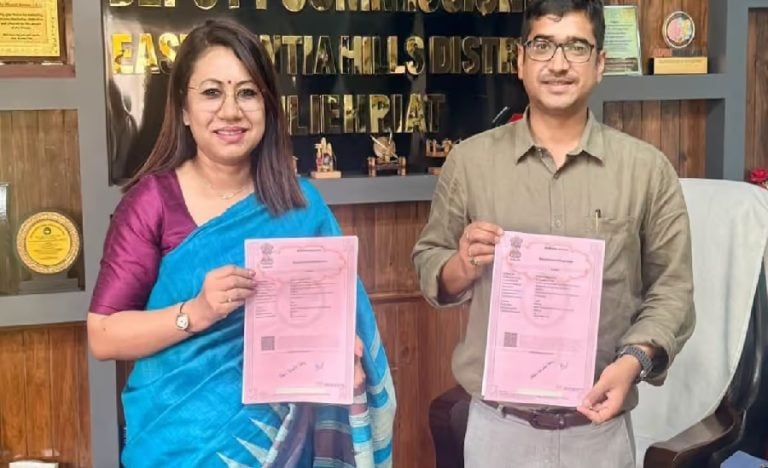
Pilibhit, Uttar Pradesh: The Agricultural and Processed Food Products Export Development Authority has signed a 70-year lease agreement for establishing a Basmati and Organic Training Centre-cum-Demonstration Farm in Tanda Bijaisi, Pilibhit, marking a major push to strengthen India’s premium rice export ecosystem.
The agreement involves the Department of Agriculture and the Government of Uttar Pradesh, aiming to boost training, research, and export-oriented farming practices.
First Dedicated Basmati & Organic Training Centre in India
The proposed centre will be developed over approximately seven acres and will serve as India’s first integrated facility for both conventional and organic Basmati cultivation.
Key features of the centre will include:
- Training and capacity-building facilities for farmers
- Auditorium, conference rooms, and museum/gallery on Basmati farming
- Laboratory and storage units for organic inputs
- Demonstration farm for modern agricultural practices
Officials said the centre will benefit farmers across Uttar Pradesh and Uttarakhand, becoming a major knowledge hub for high-value agriculture.
Read also: APEDA Highlights India’s ₹5 Lakh Crore Agri and Processed Food Exports at AAHAR 2026
Pilibhit to Become Key Basmati Research Hub
The centre has also been designated as an All India Coordinated Research Projects (AICRP) centre, making it a national-level hub for Basmati variety trials.
This will make Pilibhit the third AICRP centre in Uttar Pradesh’s Basmati GI zone, after Nagina (Bijnor) and Modipuram.
The facility will focus on:
- Testing new Basmati varieties
- Improving crop quality and yield
- Adapting to regional agro-climatic conditions
Launch of AI-Based Basmati Paddy Survey Project
On the same occasion, India’s first AI-based Basmati Paddy Survey Project (2026–2028) was launched.
The project will be implemented by All India Rice Exporters Association in collaboration with APEDA.
Key highlights include:
- Coverage of nearly 4 million hectares
- Over 150,000 ground-truth data points
- Engagement with more than 500,000 farmers
The initiative aims to improve:
- Crop assessment accuracy
- Varietal identification
- Scientific advisory services
- Export planning efficiency
Focus on Technology and Farmer Support
Union Minister of State for Commerce and Industry Jitin Prasada praised the initiative and highlighted Pilibhit’s potential as a major Basmati-producing region.
He suggested integrating:
- AI-based interactive museum for learning
- Dedicated outlet for quality seeds and organic inputs
The initiative reflects India’s push towards technology-driven agriculture and smart farming systems.
Strengthening India’s Basmati Export Sector
India’s Basmati rice exports reached USD 5.67 billion in 2025–26, with a total volume of around 6.5 million metric tonnes.
Major export markets include:
- Middle East
- Europe
- North America
Officials said the sector continues to play a crucial role in strengthening India’s agricultural export economy.
Push for Organic Farming and Sustainable Agriculture
APEDA is also promoting organic farming practices through:
- Training programs
- Certification support
- Market linkage initiatives
These efforts align with rising global demand for sustainable and environmentally friendly agricultural products.
Strategic Step for India’s Agri-Export Growth
The Pilibhit training centre and AI-based survey project together represent a major step toward modernizing India’s Basmati ecosystem, improving farmer incomes, and strengthening India’s global leadership in rice exports.
Read also: ICCT India, Deendayal Port Authority Sign MoU to Drive Green Maritime Transition at Gujarat’s Kandla