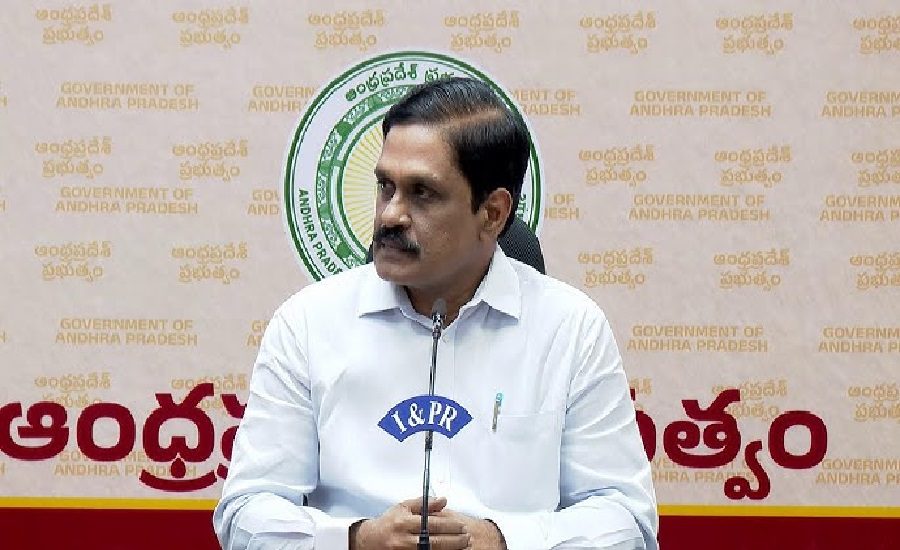
Vijayawada: The Andhra Pradesh government has categorically denied speculation over the privatisation of the Andhra Pradesh State Road Transport Corporation (APSRTC), with Special Chief Secretary (Transport) M.T. Krishna Babu affirming that all depots, garages and land assets will continue to remain under the ownership of the state transport corporation.
Addressing the media at the Secretariat, Krishna Babu clarified that the ongoing induction of electric buses under national schemes and leasing models does not amount to privatisation. He also assured employees that no jobs would be lost during the transition and reiterated the government‘s commitment to strengthening public transport through sustainable mobility initiatives.
No Move to Privatise APSRTC
Responding to concerns raised by employee unions and sections of the public, Krishna Babu said there is no proposal to privatise APSRTC.
He stressed that:
- All APSRTC depots will remain under the corporation’s ownership.
- APSRTC land and other assets will not be transferred to private entities.
- Private firms will only receive temporary access to garage facilities for operational requirements related to electric buses.
According to him, the arrangement is purely operational and complies with the guidelines issued under national electric mobility programmes.
Private Operators to Use Garages Only During Contract Period
Krishna Babu explained that private operators engaged under the electric bus programme will be permitted to use designated garage space solely for:
- Maintenance of electric buses.
- Charging infrastructure.
- Operational servicing during the contract period.
Once their contracts conclude, the operators will be required to vacate the premises, ensuring that the facilities remain under APSRTC’s control.
Entire APSRTC Fleet to Become Electric by 2029
The Special Chief Secretary said the government has drawn up an ambitious roadmap to convert APSRTC’s entire fleet of 10,661 buses into electric vehicles by 2029.
The transition will be implemented under the Sustainable Electric Mobility Policy (SEMP) 4.0.
He added that Chief Minister N. Chandrababu Naidu has directed the Transport Department to procure fully air-conditioned electric buses across all service categories, including the rural Palle Velugu network, with the objective of improving passenger comfort and public transport standards.
Why the Gross Cost Contract Model Was Chosen
Krishna Babu defended the adoption of the Gross Cost Contract (GCC) or wet lease model, stating that it is a nationally accepted framework designed to address the high capital costs associated with electric buses.
He explained that:
- Each electric bus costs around ₹1.5 crore.
- Battery performance declines over time and requires specialised maintenance.
- Leasing models reduce financial risks for transport corporations while ensuring operational efficiency.
Under this model, private operators own and maintain the buses, while APSRTC continues to provide public transport services.
1,050 Electric Buses Under PM e-Bus Sewa Scheme
The Special Chief Secretary announced that 11 cities in Andhra Pradesh will receive 1,050 electric buses under the PM e-Bus Sewa Scheme.
Key developments include:
- National bidding completed for 750 electric buses through Convergence Energy Services Limited (CESL).
- Tendering underway for another 300 electric buses to serve Tirumala.
The initiative forms part of the Centre’s nationwide effort to promote sustainable urban mobility.
Centre Sanctions Infrastructure and Operational Support
Krishna Babu said the Government of India has approved substantial financial assistance for the state’s electric mobility programme.
The support includes:
- ₹145.39 crore for civil and electrical infrastructure.
- ₹1,774 crore in operational subsidies.
These funds will be utilised to establish charging infrastructure and other facilities necessary for operating the electric bus fleet.
Additional Bus Procurement Cleared
Besides the PM e-Bus Sewa Scheme, the government has approved procurement of:
- 1,450 electric buses under the Gross Cost Contract (GCC) model.
- 500 CNG buses under the capital expenditure (CAPEX) model.
- 903 conventional standard buses to strengthen APSRTC services.
The procurement is aimed at modernising the fleet while maintaining adequate transport services during the transition.
No Employee Will Lose Their Job
Addressing apprehensions among employees, Krishna Babu categorically stated that no APSRTC employee would be retrenched because of the electric bus programme.
He said the state government continues to spend approximately ₹4,200 crore annually on employee salaries and welfare benefits.
The government remains committed to protecting the workforce while implementing transport sector reforms.
APSRTC to Introduce Dry Lease Model
Krishna Babu also announced that APSRTC will introduce an innovative Dry Lease model.
Under this arrangement:
- Manufacturers will be responsible for battery replacement and major battery overhauls.
- APSRTC employees will continue handling driving operations.
- Mechanical maintenance, apart from specialised battery work, will remain with APSRTC staff.
The model is expected to balance technological expertise with workforce protection.
750 E-Buses to Be Deployed Across 12 Depots
The first batch of 750 electric buses will be introduced across 12 depots in 11 cities.
Once the required infrastructure is commissioned, APSRTC plans to immediately redeploy:
- Drivers.
- Conductors.
- Mechanics.
This, officials said, will ensure uninterrupted services while optimally utilising existing staff.
Welfare Schemes to Continue
Krishna Babu clarified that the transition to electric mobility will not affect APSRTC’s social welfare initiatives.
He confirmed that flagship schemes including:
- Sree Shakthi (free bus travel for women).
- Divyang Shakthi.
will continue without any changes.
Appeal to Employees and Public
Concluding his address, Krishna Babu urged APSRTC employees and the public not to believe rumours regarding privatisation.
He emphasised that the transformation of APSRTC is being guided by three core principles:
- Transparency.
- Sustainability.
- Workforce protection.
He appealed to stakeholders to rely only on official government notifications and support the corporation’s transition towards a modern, environmentally friendly public transport system.