New Delhi: Two of India’s largest public sector enterprises – Bharat Heavy Electricals Limited and Steel Authority of India Limited – are facing the unprecedented possibility of losing their prestigious Maharatna status after failing to meet key financial performance benchmarks prescribed by the government.
In a first-of-its-kind move, the Centre has reportedly placed both companies on a one-year notice period, directing them to improve their financial performance or face a downgrade to Navratna status.
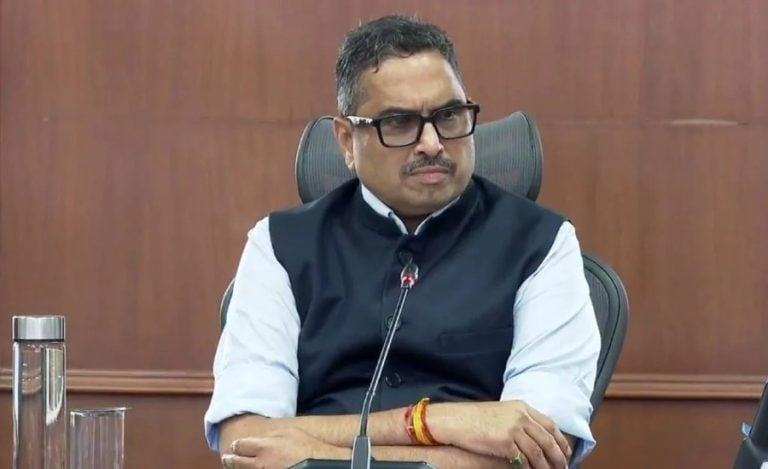
The development follows recommendations made by a high-powered committee led by Cabinet Secretary T. V. Somanathan, which reviewed the performance of Central Public Sector Enterprises (CPSEs) and proposed stricter accountability measures for retaining elite PSU classifications.
First-Ever Threat of Maharatna Downgrade
This is the first instance since the Maharatna framework was introduced that companies have been formally warned about losing the coveted status.
The committee reportedly recommended that Maharatna recognition should not be treated as permanent and that companies failing to meet prescribed criteria should face downgrading.
The move signals a significant shift in the government’s approach toward PSU governance, emphasizing performance-based recognition rather than historical achievements.
Why BHEL and SAIL Are Under Scrutiny
According to the official assessment, both BHEL and SAIL have failed to satisfy one of the most critical eligibility conditions for Maharatna status—maintaining an average annual Profit After Tax (PAT) of more than ₹5,000 crore over the preceding three years.
Among the 14 Maharatna CPSEs currently operating in India, BHEL and SAIL are reportedly the only two companies that have consistently fallen short of this profitability benchmark.
The Maharatna framework requires companies to fulfill several financial and operational conditions, including:
- Average annual turnover exceeding ₹25,000 crore during the previous three years.
- Average net worth of over ₹15,000 crore.
- Average annual Profit After Tax (PAT) exceeding ₹5,000 crore.
- Significant international presence or global operations.
While both companies continue to comfortably meet turnover and net-worth requirements, profitability remains the principal concern.
Ministries Asked to Prepare Revival Roadmaps
The Ministry of Heavy Industries and the Ministry of Steel have reportedly been directed to submit detailed plans outlining measures to improve the operational and financial performance of BHEL and SAIL.
The plans are expected to address issues including:
- Weak profitability
- Operational efficiency
- Business restructuring
- Market competitiveness
- Long-term growth strategy
Officials believe that corrective interventions during the one-year review period could help both companies retain their Maharatna status.
What Losing Maharatna Status Would Mean
A downgrade from Maharatna to Navratna would significantly reduce the autonomy currently enjoyed by the boards of both companies.
Maharatna CPSEs are permitted to make equity investments of up to ₹5,000 crore without seeking prior government approval.
In contrast, Navratna companies are restricted to investment decisions up to ₹1,000 crore without government clearance.
Such a reduction in autonomy could impact:
- Strategic investment decisions
- Expansion projects
- Joint ventures
- International acquisitions
- Capital allocation flexibility
Industry observers note that Maharatna status is not merely symbolic; it provides substantial operational freedom that helps large PSUs compete more effectively.
SAIL’s Financial Position Remains Strong Despite Profitability Concerns
During discussions with the review panel, the Ministry of Steel highlighted that SAIL continues to maintain a strong operational scale.
According to ministry data:
- Average annual turnover has exceeded ₹1 lakh crore over the last four years.
- Average net worth stands at approximately ₹53,976 crore.
However, SAIL reportedly last met the three-year average PAT threshold of ₹5,000 crore during the 2022-23 assessment period, after which profitability weakened.
NITI Aayog Flags BHEL’s Human Resource Challenges
In BHEL’s case, concerns extend beyond profitability.
The NITI Aayog reportedly identified the company’s human resource policies as a significant constraint affecting future growth and competitiveness.
The policy think tank is understood to have recommended a comprehensive review of BHEL’s workforce management systems and organizational structure.
Experts believe that modernization, talent management reforms, and operational restructuring could be critical for improving BHEL’s long-term performance.
Tougher Governance Standards for Public Sector Enterprises
The review reflects a broader effort by the government to strengthen accountability among CPSEs.
In recent years, the Centre has tightened annual performance assessment norms and introduced stricter monitoring mechanisms covering:
- Corporate Social Responsibility (CSR) compliance
- Timely payments to MSMEs
- Succession planning
- Corporate governance standards
- Financial performance indicators
Failure to comply with these parameters can result in penalties and adverse performance assessments.
Cabinet Secretary’s Push for Reform
The committee led by Cabinet Secretary T.V. Somanathan reportedly recommended a comprehensive re-evaluation of Maharatna eligibility criteria to align them with contemporary market realities.
The panel advocated periodic reviews of PSU performance rather than treating Ratna classifications as permanent designations.
The Department of Public Enterprises (DPE) has consequently been tasked with reworking eligibility norms and undertaking fresh assessments of CPSEs based on revised criteria.
A Defining Year for Two PSU Giants
For both BHEL and SAIL, the next year could prove decisive.
The two companies now face the challenge of demonstrating sustained profitability and operational improvement to retain their elite Maharatna status.
The government’s message appears unequivocal: prestigious PSU classifications must be earned through continuous performance, financial discipline, and effective governance rather than legacy alone.
As India seeks to modernize its public sector ecosystem and improve enterprise competitiveness, the outcome of the review involving BHEL and SAIL could establish a new benchmark for accountability across the CPSE landscape.