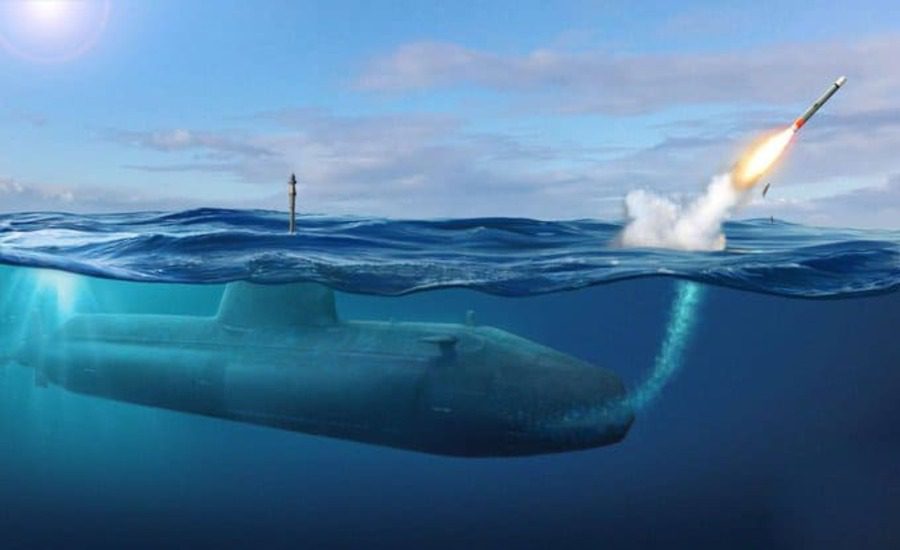
New Delhi: India’s K-5 SLBM program has reportedly achieved a major milestone after a successful “pop-up” ejection trial from an underwater test platform. The test is considered an important step toward developing India’s next-generation submarine-launched ballistic missile with possible MIRV capability.
Defence experts believe the achievement will significantly strengthen India’s sea-based nuclear deterrence and second-strike capability.
What Happened in the K-5 SLBM Test?
According to defence reports, the trial involved a submerged underwater platform that tested the missile’s ejection mechanism before actual powered flight testing. This type of test is commonly called a “pop-up” or cold-launch test.
Read also: India Prepares to Deploy Deadly ‘Carrier-Killer’ Missile With 1,500 KM Strike Range
Key Highlights
- The test was conducted from an underwater launch platform.
- The missile was successfully ejected from beneath the water surface.
- The trial validated underwater launch systems and pressure resistance.
- It is seen as a preparatory step before full missile flight trials.
- The missile is expected to be integrated with future Indian nuclear submarines.
What is the K-5 SLBM?
The K-5 is an advanced submarine-launched ballistic missile (SLBM) being developed by India’s Defence Research and Development Organisation (DRDO). It is expected to become one of India’s most powerful sea-based strategic missiles.
Expected Specifications of K-5
- Estimated range: 5,000–6,000 km
- Launch platform: Arihant-class and future S5-class submarines
- Propulsion: Three-stage solid fuel system
- Capability: Nuclear payload delivery
- Feature: MIRV-enabled strike capability
- Speed: Around Mach 7+ estimated
Why the “Pop-Up” Trial is Important
The underwater ejection phase is one of the most critical parts of a submarine-launched missile system.
Before the missile engine ignites, the missile must safely exit the submarine or underwater launcher using gas pressure systems. Any failure during this phase can damage the submarine or missile.
The successful trial indicates that India is progressing toward operational deployment of long-range underwater nuclear missiles.
MIRV Capability Could Be a Game Changer
Reports suggest the K-5 missile may carry MIRV (Multiple Independently Targetable Re-entry Vehicle) technology. This means one missile can carry multiple nuclear warheads capable of hitting different targets independently.
Strategic Advantages of MIRV
- Higher deterrence capability
- Ability to attack multiple targets
- Better penetration against missile defence systems
- Reduced need for multiple missile launches
- Improved survivability during nuclear conflict
Boost to India’s Nuclear Triad
The K-5 missile is expected to strengthen India’s nuclear triad, which includes:
- Land-based nuclear missiles
- Air-delivered nuclear weapons
- Sea-based nuclear deterrence
Military experts say sea-based systems are the most survivable part of a nuclear deterrence strategy because submarines remain hidden underwater for long periods.
Possible Deployment of K-5 SLBM
Reports indicate that the upcoming INS Aridhaman and future S5-class submarines may carry the K-5 missile. This would allow India to strike distant targets while remaining safely inside the Indian Ocean region.