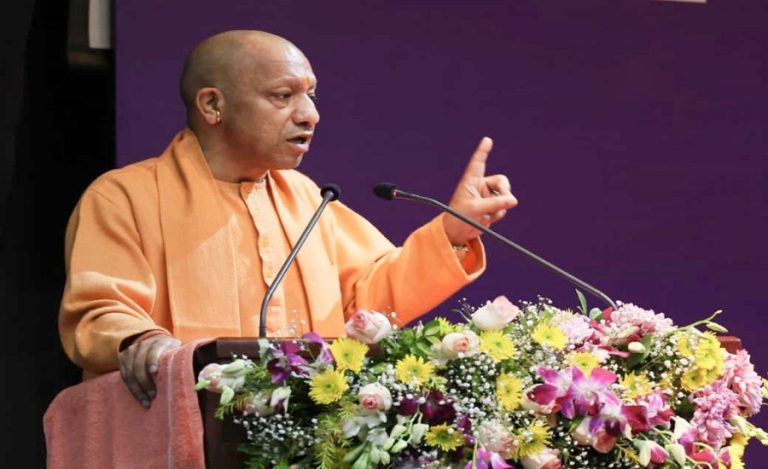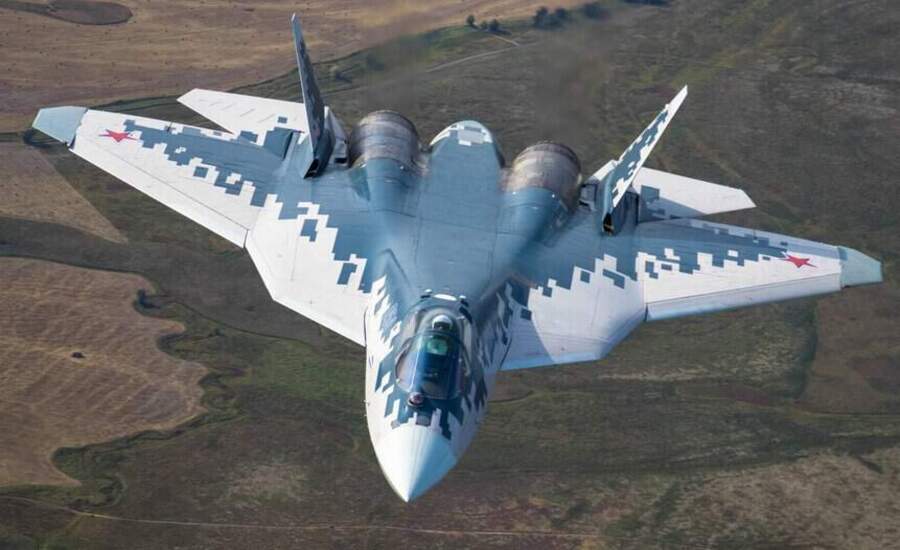
New Delhi: India-Russia Su-57 co-development has returned to the spotlight after Russian President Vladimir Putin renewed Moscow’s offer for India to jointly develop and produce the fifth-generation Su-57 stealth fighter.
Speaking during interactions linked to the St. Petersburg International Economic Forum (SPIEF), Putin said Russia remains ready to cooperate with India on the Su-57 programme and future upgrades without restrictions. The proposal comes at a time when India is assessing its future fighter aircraft requirements amid regional military developments.
Details of India-Russia Su-57 Co-Development Programme
Russian President Vladimir Putin reiterated that:
- Russia is prepared to supply the Su-57 stealth fighter to India.
- Moscow is willing to co-develop and further improve the aircraft with Indian participation.
- The offer includes cooperation in production and technology development.
- Russia remains open to expanding defence collaboration beyond simple aircraft sales.
According to reports, Putin emphasized that India and Russia could work together on the platform’s future development and modernization.
Background of the India-Russia Su-57 Co-Development Programme
The latest proposal is linked to the earlier Fifth Generation Fighter Aircraft (FGFA) programme.
Key facts:
- India and Russia initially planned to jointly develop a fighter based on the Su-57 platform.
- The proposed Indian version was expected to include significant upgrades and modifications.
- India later stepped away from the project due to concerns regarding stealth performance, avionics, sensors, technology sharing, costs, and maintenance issues.
Many defence analysts viewed the FGFA programme as a missed opportunity because it could have provided India with early access to fifth-generation fighter technology.
Why Is Russia Renewing the Offer Now?
Several strategic factors appear to be driving Moscow’s renewed push:
1. India’s Need for More Fighter Squadrons
The Indian Air Force (IAF) continues to face a shortage of combat squadrons compared with its sanctioned strength.
Challenges include:
- Retirement of older aircraft.
- Slow induction of new fighter jets.
- Growing operational requirements on multiple fronts.
This creates pressure to find both short-term and long-term solutions.
2. Regional Fifth-Generation Competition
Asia’s air power landscape is rapidly evolving.
Key developments include:
- China’s growing fleet of stealth fighters.
- Pakistan’s reported interest in acquiring advanced Chinese fighter platforms.
- Increasing emphasis on stealth technology and network-centric warfare in the region.
3. Strengthening India-Russia Defence Ties
Russia remains one of India’s largest defence partners.
Major areas of cooperation include:
- Fighter aircraft.
- Air defence systems.
- Naval platforms.
- Missile technologies.
Putin’s remarks reflect Moscow’s desire to maintain and expand this long-standing strategic partnership.
What Makes the Su-57 Important?
The Su-57 is Russia’s flagship fifth-generation fighter aircraft.
Major features include:
- Stealth-oriented design.
- Internal weapon bays.
- Supercruise capability.
- Advanced sensor fusion.
- High maneuverability.
- Multi-role combat capability.
Russia has also explored export versions and future variants, including concepts that could address some earlier concerns raised by India.
How Does This Affect India’s AMCA Programme?
India is already developing its own fifth-generation stealth fighter:
Advanced Medium Combat Aircraft (AMCA)
The AMCA programme is considered India’s long-term solution for indigenous stealth air power.
Objectives include:
- Indigenous design and development.
- Reduced dependence on foreign suppliers.
- Advanced stealth and sensor technologies.
Current projections suggest operational deployment may still be years away.
Because of this timeline, defence experts continue debating whether India needs an interim fifth-generation capability before AMCA enters service.