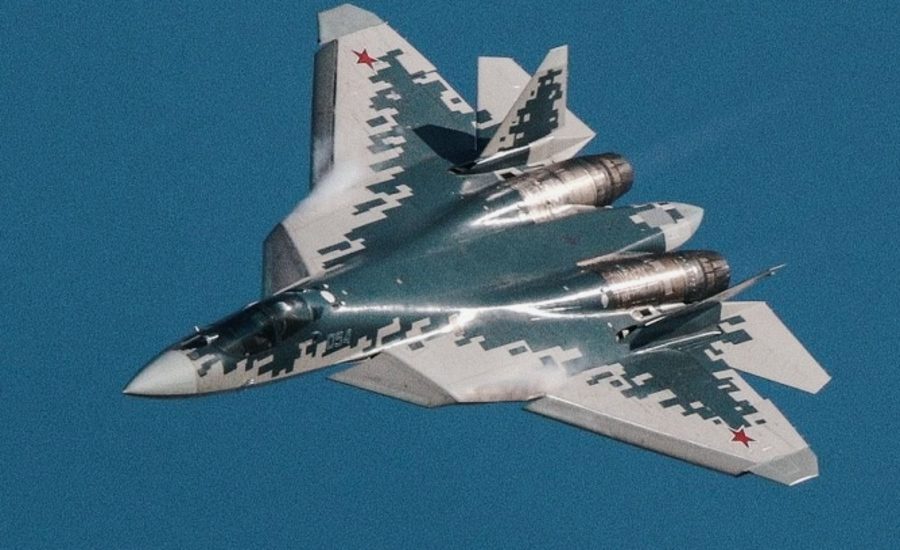
New Delhi: India Russia Su-57M1 fighter deal has become a major talking point in defence circles as Russia expands its offer to India in April 2026.
This upgraded proposal goes beyond a simple aircraft sale and focuses on advanced technology sharing, local integration, and modern warfare capabilities.
The new pitch includes a modernised single-seat fighter and a futuristic twin-seat drone command variant. The move is aimed at strengthening the Indian Air Force (IAF) while helping it bridge the gap until India’s indigenous Advanced Medium Combat Aircraft (AMCA) becomes operational.
India Russia Su-57M1 Fighter Deal: Russia’s New Flexible Offer to India
Russia has shifted from offering a standard export version of the Sukhoi Su-57 to presenting two advanced options:
- A single-seat Su-57M1 with major upgrades
- A twin-seat MUM-T variant designed for drone warfare
Read also: India Russia Su-57 Stealth Jets Deal: Timeline, Features, and Strategic Impact Explained
This approach reflects a long-term strategic partnership rather than a basic buyer-seller deal.
What is Su-57M1 Fighter
The Su-57M1 is designed for high-speed, stealth, and high-altitude combat missions.
What are the Features of Su-57M1 Fighter
- Advanced Engine: Powered by the AL-51F-1 engine (Izdeliye 30), delivering around 16.5 tonnes thrust
- Supercruise Capability: Can fly at supersonic speed without afterburners
- Improved Stealth: Wider body and flatter design reduce radar detection
- Internal Weapons Bay: Carries missiles inside to maintain stealth
These upgrades give India an edge against advanced fighters like China’s J-20 stealth aircraft.
Technology Transfer: A Major Advantage
One of the most important aspects of the deal is Russia’s willingness to share source code access.
This means India can integrate:
- Virupaksha AESA Radar with ~2,400 GaN modules
- Astra air-to-air missile
- BrahMos-NG supersonic cruise missile
This would turn the aircraft into a custom Indo-Russian combat platform, boosting India’s defence independence.
Twin-Seat Variant: Future of Air Combat
Russia is also offering a next-generation twin-seat variant based on Manned-Unmanned Teaming (MUM-T).
What Makes Su-57M1 Fighter Unique
- Second cockpit for a Weapon Systems Officer
- Ability to control up to 8 drones in real-time
- Acts as a flying command centre
These drones include the stealthy S-70 Okhotnik-B.
Strategic Impact
- Drones can scout, attack, or absorb enemy fire
- Pilots remain safer during high-risk missions
- Moves IAF closer to sixth-generation warfare capability
Production Plan and India’s Strategy
Russia has proposed local manufacturing with Hindustan Aeronautics Limited (HAL) in Nashik.
Russian Proposal
- Build up to 100 aircraft in India
India’s Current Thinking
- Prefer 36–40 ready-made jets initially
- Use them as a stopgap solution
This approach ensures immediate capability while waiting for AMCA.
AMCA Timeline and Strategic Gap
India’s Advanced Medium Combat Aircraft (AMCA) is expected to:
- First flight: Around 2028
- Full induction: Mid-2030s
The Su-57M1 could fill this critical gap and maintain air superiority.
Read also: Tejas Mk2 Features Explained: How It Surpasses Mk1A in Range, Weapons, and Combat Endurance