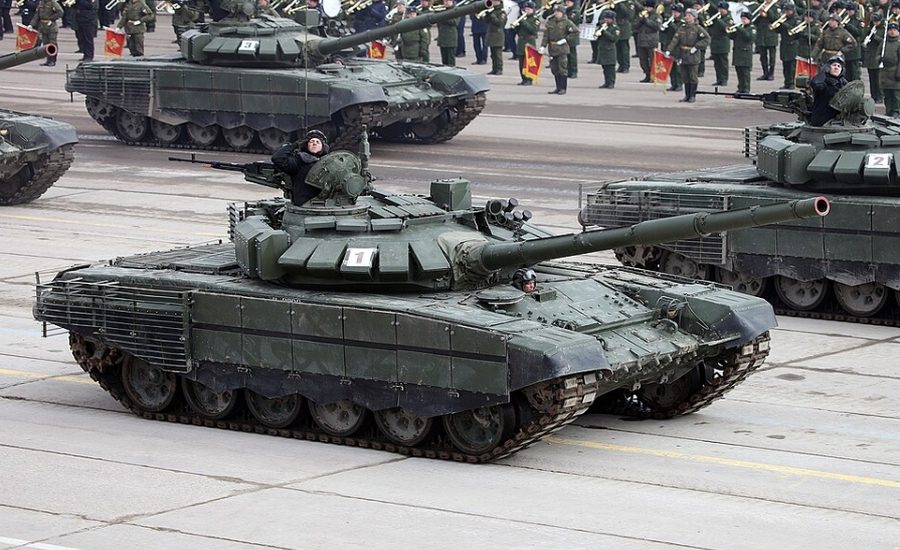
New Delhi: The Indian Army T-72 robotic combat vehicle program is set to transform thousands of aging T-72 tanks into remotely operated battlefield platforms. Instead of retiring these tanks, the Army plans to modernize them with autonomous and remote-control technologies for dangerous combat missions where soldier safety is a major concern.
The move is part of India’s broader military modernization strategy and aims to extend the operational life of the T-72 fleet while reducing risks to soldiers during future warfare.
What is the Need of T-72 Robotic Combat Vehicle Program
The Indian Army operates around 2,400 T-72 tanks, many of which have been in service for decades. These tanks were originally expected to be phased out gradually from around 2030 as newer platforms entered service. However, instead of retiring all of them, the Army is exploring ways to convert these battle-proven tanks into robotic combat vehicles that can perform hazardous tasks without putting soldiers directly in harm’s way.
Read also: Indian Army T-72 Modernization Program: Key Changes, Strategic Goals and Future Plans
What Are Robotic Combat Vehicles
Robotic combat vehicles are armored platforms that can be:
- Remotely controlled by operators
- Semi-autonomous during missions
- Used without a crew inside the vehicle
- Integrated with digital battlefield networks
Such systems are designed to undertake dangerous operations while reducing casualties among troops.
Key Highlights of the T-72 Robotic Combat Vehicle Program
| Feature | Details |
| Platform | T-72 Main Battle Tank |
| Purpose | Conversion into robotic combat vehicles |
| Operation | Remote and autonomous control |
| Main Goal | Reduce risk to soldiers |
| Expected Service Life | Extended beyond original retirement timeline |
| Technology | Digital control systems and autonomous capabilities |
Sources indicate the project is being pursued through defense innovation initiatives focused on future warfare technologies.
Where Will These Robotic Tanks Be Used
The Army is expected to deploy robotic T-72 vehicles in missions that involve high operational risk, including:
- Minefield breaching operations
- Forward reconnaissance missions
- Surveillance in hostile zones
- Combat support in heavily defended areas
- Operations in regions with high casualty risks
These tasks often expose soldiers to significant danger, making unmanned systems highly valuable.
T-72 Robotic Combat Vehicle Program: Part of India’s Future Warfare Vision
The conversion project aligns with the Indian Army’s growing focus on:
- Artificial Intelligence (AI)
- Autonomous systems
- Manned-Unmanned Teaming (MUM-T)
- Network-centric warfare
- Indigenous defense innovation
The Army has already launched a challenge under the government’s innovation ecosystem to explore the conversion of T-72 tanks into autonomous armored fighting vehicles.
T-72 Tanks Continue to Receive Upgrades
The robotic conversion initiative comes alongside other modernization efforts. Recent upgrades include:
- Thermal Imaging Fire Control Systems (TIFCS)
- Improved night-fighting capability
- Enhanced targeting systems
- Engine modernization programs
These upgrades are helping maintain the combat effectiveness of the T-72 fleet while new technologies are introduced.
Why the T-72 Tanks Still Matters
The T-72 entered Indian Army service in 1978 and became the backbone of India’s armored forces for decades. Despite its age, the platform remains reliable and can be adapted for modern battlefield requirements through technological upgrades.
The Army’s decision to repurpose these tanks instead of retiring them completely reflects a cost-effective approach to strengthening combat capabilities.