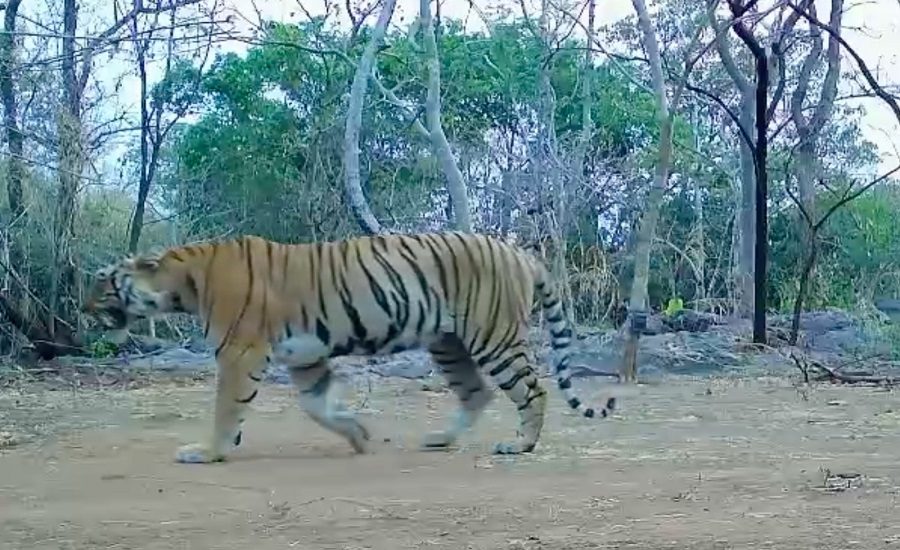
Raipur/Gariaband: In a significant boost to wildlife conservation efforts in Chhattisgarh, a four-year-old tigress has been recorded in the Udanti-Sitanadi Tiger Reserve after an eight-year gap, raising hopes for the revival of the tiger population in the protected forest landscape.
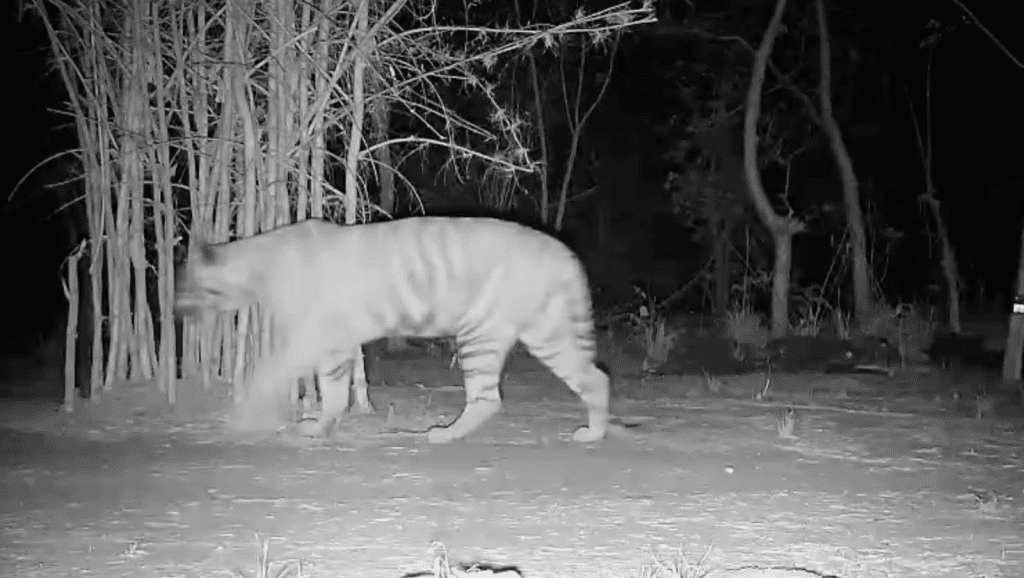
The tigress has recently been captured in camera traps installed by the forest department and has also been photographed and filmed by villagers in the area. Forest officials say this is the first confirmed presence of a tigress in the reserve since 2018, making it a landmark development for the sanctuary spread across Dhamtari and Gariaband districts.
The sighting has generated excitement among forest officials, wildlife conservationists and nature enthusiasts, who see it as evidence of improving habitat conditions and successful conservation measures.
Conservation Measures Begin Showing Results
Officials have attributed the development to sustained efforts undertaken under the guidance of Chhattisgarh Forest Minister Kedar Kashyap, Principal Chief Conservator of Forests and Head of Forest Force Arun Kumar Pandey, and Principal Chief Conservator of Forests (Wildlife) O. P. Yadav.
Over the past few years, the forest department has intensified efforts related to wildlife conservation, anti-poaching operations and habitat management across the reserve.
According to officials, these initiatives have helped create a safer and more conducive environment for wildlife, encouraging the movement and settlement of large carnivores such as tigers.
Over 900 Hectares of Encroached Forest Land Reclaimed
Forest authorities stated that more than 900 hectares of illegally encroached forest land within the sanctuary area have been cleared over the last two years.
In addition to removing encroachments, the department has carried out:
- Intensive anti-poaching operations
- Arrests of suspected poachers
- Development of water sources
- Grassland improvement programmes
- Continuous camera-trap monitoring
- Establishment of anti-poaching camps
- Strengthening of wildlife protection infrastructure
Officials believe these interventions have significantly improved habitat quality and security within the reserve.
Tigress Captured on Camera Traps Three Times
Speaking on the development, Varun Jain, Deputy Director of the reserve, said the tigress has been recorded on camera traps on three separate occasions within the past 11 days.
According to him, available records of the National Tiger Conservation Authority (NTCA) do not indicate any previous identification of the tigress, suggesting that she is a new entrant to the landscape.
He noted that preliminary assessments indicate the animal may have migrated either from the Chandrapur region of Maharashtra or through the forest corridors of Abujhmad.
Hope for Tiger Population Recovery
Wildlife experts consider the presence of a tiger, an apex predator, as one of the strongest indicators of a healthy and balanced ecosystem.
The repeated sightings suggest that the tigress may be exploring or gradually establishing a territory within the reserve. Her continued presence is being viewed as a positive sign that habitat conditions in Udanti-Sitanadi have improved sufficiently to support large carnivores.
Conservationists believe that maintaining habitat connectivity, strengthening anti-poaching measures and preserving prey populations will be crucial for ensuring long-term tiger recovery in the region.
A Positive Sign for Chhattisgarh’s Wildlife Conservation Efforts
The return of a tigress after nearly a decade is being seen as a validation of the state’s ongoing conservation initiatives. Forest officials remain optimistic that sustained protection measures and habitat improvement programmes could encourage more tiger movement into the reserve in the coming years.
If current efforts continue, Udanti-Sitanadi could gradually re-emerge as an important tiger habitat in central India, contributing to broader landscape-level conservation goals and strengthening the state’s wildlife heritage.