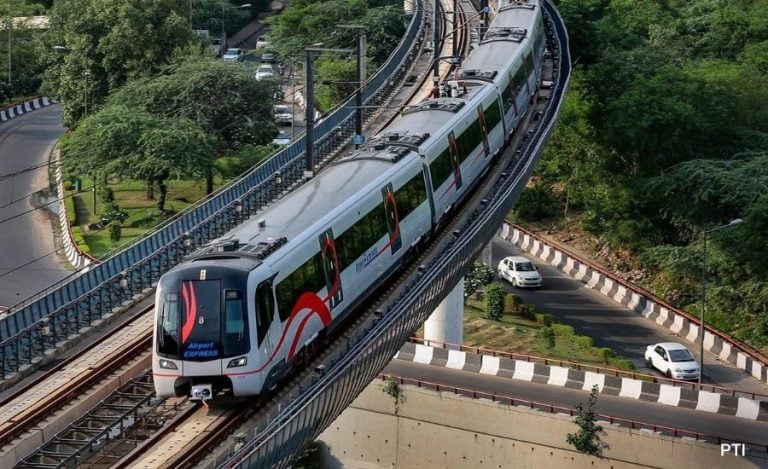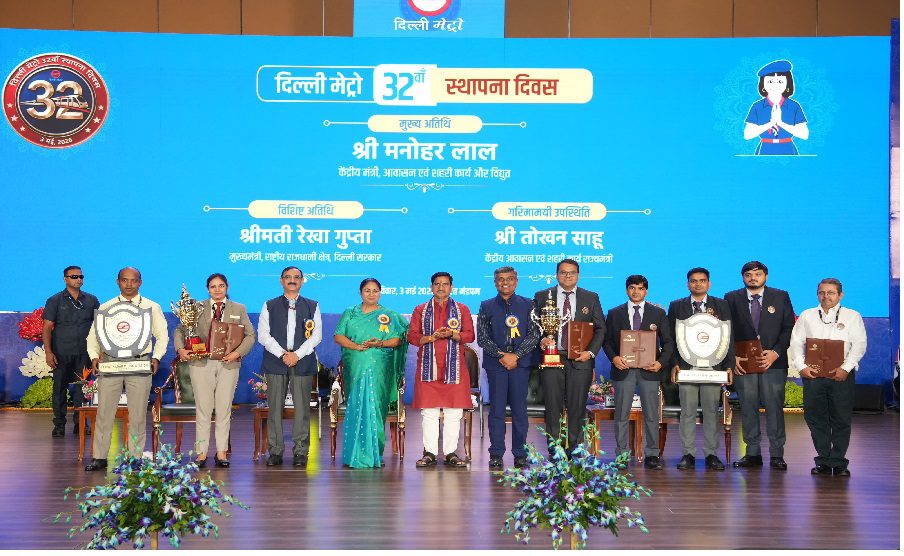
New Delhi: On the occasion of the 32nd Foundation Day of Delhi Metro Rail Corporation, Delhi Chief Minister Rekha Gupta announced an ambitious expansion plan under Metro Phase-V (B), which will significantly enhance connectivity across the national capital.
The project includes seven new metro corridors spanning 97.158 km with 65 stations, at an estimated cost of ₹48,204.56 crore.
Major Boost to Connectivity in Developing Areas
CM Rekha Gupta stated that the expansion aims to connect outlying and rapidly developing areas of Delhi to the metro network, ensuring faster, safer, and more convenient travel for commuters.
She emphasized that the project will improve urban mobility and support the city’s growing infrastructure needs.
Corridor 1: Dhansa Bus Stand to Nangloi
The first corridor will run 11.859 km from Dhansa Bus Stand in Najafgarh to Nangloi.
- Fully elevated corridor with 9 stations
- Connects areas like Ranhola, Bakkarwala, Baprola, and Najafgarh Extension
- Interchange at Nangloi (Green Line) and Dhansa Bus Stand (Grey Line)
Corridor 2: Central Secretariat to Kishangarh
This 15.969 km corridor will mostly be underground.
- 13.721 km underground, 2.248 km elevated
- Total 10 stations (9 underground)
- Connects key locations like RK Puram, JNU, and Prime Ministers’ Museum
- Multiple interchange points including Central Secretariat and Moti Bagh
Corridor 3: Samaypur Badli to Narela Extension
An extension of Line-2 covering 12.89 km:
- Fully elevated with 8 stations
- Connects Alipur, Holambi Kalan, and Narela
- Interchange at Siraspur (Yellow Line) and Narela (Red Line)
Corridor 4: Kirti Nagar to Palam
This 9.967 km corridor includes both underground and elevated sections:
- 6 stations (5 underground)
- Serves Mayapuri Industrial Area, Janakpuri, and Sagarpur
- Interchange at Mayapuri and Palam
Corridor 5: Jor Bagh to Mithapur
A 16.991 km independent corridor:
- 12 stations (7 underground, 5 elevated)
- Connects Lodhi Colony, Okhla, and Jaitpur
- Interchange at major hubs like Lajpat Nagar and Jasola Apollo
Corridor 6: Shastri Park to Mayur Vihar Phase III
This corridor will span 13.197 km:
- Mixed alignment with 8 stations
- Covers Geeta Colony, Patparganj, and New Kondli
- Interchange at Shastri Park, Nirman Vihar, and Trilokpuri
Corridor 7: Keshavpuram to Rohini Sector 34
A fully elevated corridor of 16.285 km:
- 12 stations
- Connects Pitampura, Rohini sectors, and Delhi Technological University
- Interchange at Keshavpuram and Rohini Sector 34
Priority Corridors to Be Completed by 2029
CM Rekha Gupta announced that four of the seven corridors have been identified as priority projects and will be fast-tracked for completion by 2029.
She also directed Delhi Metro Rail Corporation to prepare revised Detailed Project Reports (DPRs) separately for priority and non-priority corridors.
The Delhi Metro Phase-V (B) expansion marks a significant step toward transforming urban mobility in the capital. With improved connectivity, modern infrastructure, and expanded reach, the project is expected to benefit millions of commuters while supporting Delhi’s rapid urban growth.