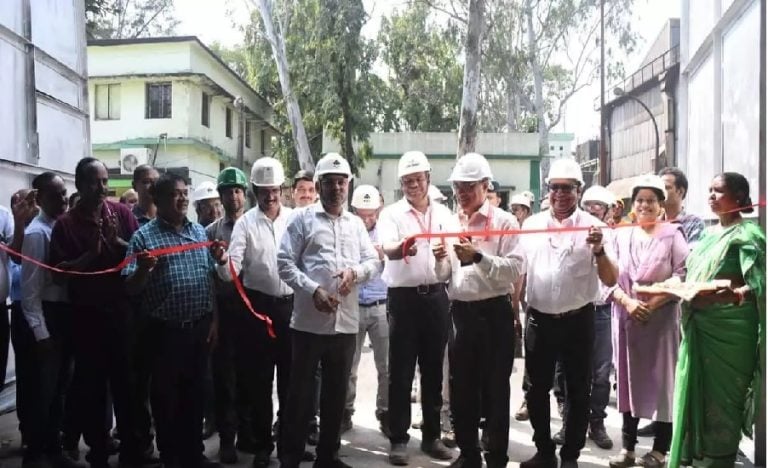
New Delhi: HAL G3INS testing facility has taken center stage in India’s defence ecosystem after Hindustan Aeronautics Limited (HAL) inaugurated a new advanced testing and assembly unit at its Korwa division on April 23, 2026.
The facility, launched by CMD Dr. D.K. Sunil, is designed to strengthen India’s self-reliance in avionics and navigation systems. With increasing global focus on secure and jam-resistant navigation, this move positions India to reduce dependency on foreign technologies and accelerate indigenous defence manufacturing capabilities.
What is the G3INS System?
The G3INS (Satellite Navigation-based Inertial Navigation System) is a hybrid navigation solution combining satellite data with inertial sensors.
Read also: Explained: HAL’s Missamari MRO Hub and Its Role in Strengthening Eastern Theatre Defence
An Inertial Navigation System (INS) uses accelerometers and gyroscopes to track position, speed, and orientation without relying on external signals.
This makes INS extremely important in defence because:
- It works even when GPS signals are jammed
- It ensures high accuracy in aircraft, missiles, and naval systems
- It provides continuous navigation in denied environments
The G3INS enhances this by integrating satellite navigation inputs, improving accuracy and reliability.
Key Highlights of the HAL G3INS Testing Facility
- Located at HAL’s Korwa Avionics Division
- Inaugurated on April 23, 2026
- Dedicated to assembly and testing of G3INS systems
- Aims to strengthen India’s indigenous avionics ecosystem
- Supports defence platforms with advanced navigation capability
This facility is expected to become a critical hub for next-generation navigation systems used across India’s defence forces.
What is the Importance of HAL G3INS Testing Facility
1. Boost to Atmanirbhar Bharat in Defence
India has been actively pushing for self-reliance in defence technology. By building in-house testing and assembly capabilities, HAL reduces dependency on imports.
2. Strategic Advantage in Modern Warfare
Modern warfare increasingly involves electronic warfare and GPS jamming. INS-based systems like G3INS ensure uninterrupted navigation, giving Indian forces a tactical edge.
3. Strengthening Indigenous Avionics Capability
The facility enhances India’s ability to design, test, and deploy complex avionics systems, which are crucial for:
- Fighter aircraft
- UAVs and drones
- Missiles and guided systems
Industry and Strategic Analysis
The inauguration of the G3INS facility reflects a broader trend in global defence:
- Countries are shifting toward hybrid navigation systems
- There is growing investment in anti-jamming technologies
- Indigenous manufacturing is becoming a strategic priority
For India, HAL’s move aligns with:
- Defence production targets
- Export ambitions in aerospace technology
- Reduced reliance on foreign OEMs
Additionally, Korwa has already been a key avionics hub, and this upgrade further strengthens its role in India’s defence manufacturing ecosystem.
Future Impact of the HAL G3INS Testing Facility
The long-term implications of this facility include:
- Faster deployment of navigation systems in defence platforms
- Improved testing standards and quality control
- Increased potential for defence exports
- Strengthening collaboration between DRDO, HAL, and private players
This also signals India’s readiness to compete globally in high-end avionics and navigation technologies.