18 November 2026
ADVERTISEMENT
ADVERTISEMENT

Indian Military Modernization: General Upendra Dwivedi Reviews Future-Ready Warfare Systems

Indian Army Chief General Upendra Dwivedi reviewed AI-driven defence technologies at a research lab, emphasizing indigenous innovation and future battlefield readiness.
Indian Army AI Defence Technologies
Indian Masterminds Stories

New Delhi: India is rapidly strengthening its defence capabilities with advanced technologies, and Indian Army AI defence technologies are becoming a key focus area. Recently, General Upendra Dwivedi, the Chief of Army Staff (COAS), visited a Centre for Artificial Intelligence and Research Lab to review cutting-edge innovations. 

His visit highlights the Indian Army’s commitment to modern warfare preparedness, where Artificial Intelligence (AI) plays a crucial role in improving speed, precision, and decision-making on the battlefield.

Indian Army AI Defence Technologies: Details of COAS Review 

During the visit, General Dwivedi closely examined ongoing projects at the AI research centre. The lab is focused on developing advanced defence technologies powered by artificial intelligence.

Read also: Indian Navy to Commission Indigenous ASW Vessel ‘Mahe’ , Boosting Coastal Defence Capabilities

Officials briefed the Army Chief on various indigenous innovations designed to support real-time battlefield operations. These systems aim to make military responses faster, smarter, and more efficient.

The visit also aligns with India’s broader push for self-reliance in defence under the vision of indigenous development.

Focus on AI Defence Technologies

The Indian Army is increasingly adopting AI-based systems to enhance operational readiness. These technologies are designed to:

  • Improve real-time data analysis
  • Support faster decision-making
  • Increase battlefield accuracy
  • Reduce human error in critical situations

AI tools can process large amounts of data instantly, helping commanders make informed decisions during high-pressure situations.

Indian Army AI Defence Technologies: Indigenous Innovation Takes Centre Stage

A major highlight of the visit was the focus on indigenous defence innovation. The Army Chief was briefed about locally developed AI solutions that are tailored to India’s unique defence needs.

These innovations are part of India’s long-term strategy to reduce dependence on foreign technology and build strong domestic capabilities.

The emphasis on “Make in India” in defence ensures better control, customization, and security of critical systems.

Enhancing Speed, Precision and Decision-Making

The AI-enabled systems demonstrated during the visit are designed to improve three key aspects of modern warfare:

1. Speed

AI allows quick analysis of battlefield data, reducing response time significantly.

2. Precision

Advanced algorithms help in accurate targeting and surveillance.

3. Decision-Making

AI assists commanders with predictive insights and strategic recommendations.

These improvements can give the Indian Army a strong advantage in future conflicts.

Recognition for Scientists and Researchers

General Dwivedi appreciated the efforts of scientists and researchers working on these advanced systems. He acknowledged their dedication and innovation in building next-generation defence technologies.

He also emphasized that collaboration between the military and research institutions is essential for continuous progress.

AI’s Role in Future Warfare

Artificial Intelligence is becoming a key pillar of modern defence strategy worldwide. The Indian Army is actively preparing for future battlefields where technology will play a decisive role.

AI can support:

  • Autonomous systems
  • Cyber defence
  • Intelligence gathering
  • Surveillance and reconnaissance

This shift marks a transformation from traditional warfare to technology-driven operations.

Strategic Vision: Data-Centric and Networked Warfare

The visit also reflects the Indian Army’s broader vision of becoming a data-centric and network-enabled force.

With initiatives like the “Year of Networking and Data Centricity” and the “Decade of Transformation,” the Army is focusing on integrating advanced technologies into its core operations.
Read also: India Accelerates Coast Guard Modernisation: How India Is Building a Smarter and Greener Maritime Defence Fleet


Indian Masterminds Stories
Join our WhatsApp Channel
ADVERTISEMENT
ADVERTISEMENT
Related Stories
ADVERTISEMENT
ADVERTISEMENT
NEWS
Vinimay digital platform
Amit Shah Congratulates JKP, Army and CRPF for Neutralising Lashkar's Last Known Active Local Terrorist in Kashmir
Indian PSU bank merger
PSBs Record Highest-Ever ₹1.10 Lakh Crore Net Profit in H1 FY27, Business Crosses ₹300 Lakh Crore
Chief Minister Rekha Gupta
Delhi Govt Approves Rs 10 Lakh Ayushman Bharat Health Cover for Transgender Community
Delhi Anti-Pollution Measures
CM Rekha Gupta Vows to Continue Strict Anti-Pollution Measures, Appeals to Delhi Residents for Public Support 
Yogi Adityanath
CM Yogi Adityanath Says Gen-Z and Gen-Alpha Must Know About UP's Transformation Over the Last 10 Years 
Jharkhand Foundation Day 2026
Jharkhand Foundation Day 2026: Nearly 2,000 Families Get New Homes, Over 5,600 Workers Receive Employment 
Barak Missile System Upgrade
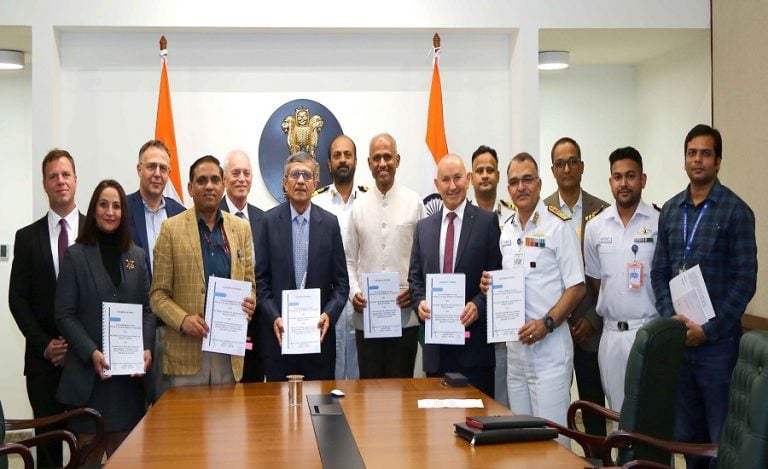
MoD Signs Rs 1,976.40 Crore Deal with Israel Aerospace Industries to Upgrade Indian Navy's Barak Missile System
R Hithendra IPS
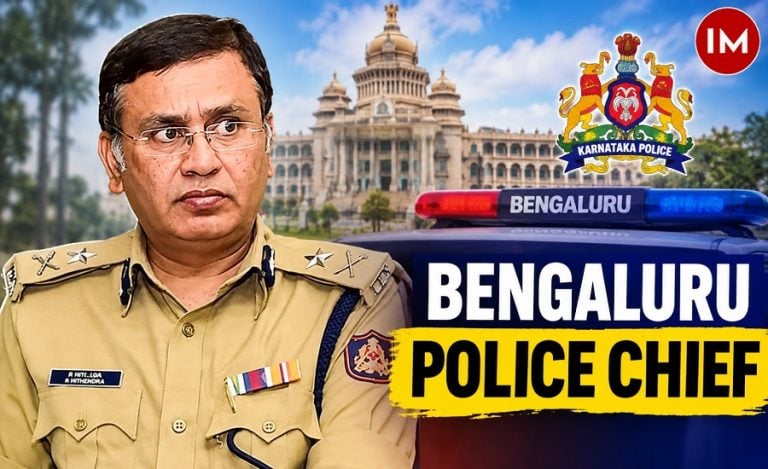
Who Is R Hithendra? 1996-Batch IPS Officer Appointed Bengaluru City Police Chief, Know His Career, Education & Awards
ADVERTISEMENT
ADVERTISEMENT
Videos
Five years after Kargil, India sent its cricketing heroes to Pakistan where terrorism posed a deadly threat. The man guarding them, former Special Director of Intelligence Bureau, Mr. Yashovardhan Azad, reveals what all went behind the scenes during that crucial tour. 
Trust No One, Said His Instinct in Pakistan
Gajendra Singh Shekhawat
How India Plans to Boost Tourism, Create Jobs and Ease Overcrowding : Gajendra Singh Shekhawat on the Road to 2047
Dr Saket Badola IFS
Beyond Tigers and Safaris: How Corbett Literature Festival Wants to Change the Conservation Conversation
ADVERTISEMENT
UPSC Stories
Mayank Gurjar
He Lost His Father in Class 12, Then Cleared UPSC in One Attempt to Become an IPS Officer
After losing his father in Class 12, Mayank Gurjar held on to his dream of public service, graduated...
Gautam UPSC
He Studied at 4 AM in a 10×10 Mumbai Slum Room; Today, Gautam Padibhar is an Indian Forest Service Officer
Meet IFS officer Gautam Padhibhar, a 2023-batch Chhattisgarh cadre officer who rose from financial hardship...
Aniket Sagar ICoAS
No Coaching, Full-Time Job and Two Attempts: How Aniket Sagar Cleared ICoAS
Aniket Sagar, a chartered accountant from Bundelkhand, cleared UPSC ICoAS 2025 after working at PwC,...
CSR NEWS
Coal India CSR Programme
Coal India Organises CSR Programme to Align Mining Operations with Community Development 
Initiative Aims to Strengthen CSR Implementation in Coal-Bearing Regions and Improve Community Well-Being...
hurl
HURL Signs MoU with Injot Trust to Launch Project ANGOR for Children's Education in Assam
The three-year CSR initiative will cover five locations in Assam, focusing on holistic education, digital...
cmpdil
CMPDIL Partners with Tata Steel Foundation to Upgrade Technical Education at ITI Tamar 
The project will modernise training infrastructure with robotic welding technology, digital learning...
ADVERTISEMENT
ADVERTISEMENT
ADVERTISEMENT
Latest
Vinimay digital platform
Amit Shah Congratulates JKP, Army and CRPF for Neutralising Lashkar's Last Known Active Local Terrorist in Kashmir
Indian PSU bank merger
PSBs Record Highest-Ever ₹1.10 Lakh Crore Net Profit in H1 FY27, Business Crosses ₹300 Lakh Crore
ADVERTISEMENT
ADVERTISEMENT
ADVERTISEMENT
ADVERTISEMENT
ADVERTISEMENT
ADVERTISEMENT
ADVERTISEMENT
Videos
Five years after Kargil, India sent its cricketing heroes to Pakistan where terrorism posed a deadly threat. The man guarding them, former Special Director of Intelligence Bureau, Mr. Yashovardhan Azad, reveals what all went behind the scenes during that crucial tour. 
Gajendra Singh Shekhawat
Dr Saket Badola IFS
ADVERTISEMENT
ADVERTISEMENT