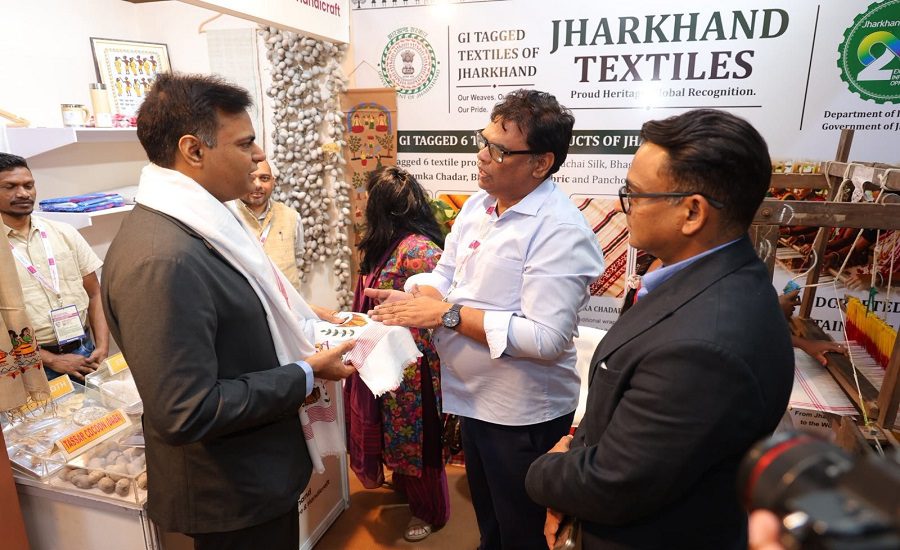
New Delhi/Ranchi: The Jharkhand Pavilion at Bharat Tex 2026, India’s largest textile event being held at Bharat Mandapam, New Delhi, has emerged as a major attraction for international visitors, buyers, and fashion designers.
On the second day of the four-day event, held from July 14 to July 17, 2026, Jharkhand showcased its rich textile heritage, traditional weaving techniques, and unique handicraft products before a global audience.
The state’s participation aims to connect traditional industries with modern markets while promoting the vision of “Atmanirbhar Jharkhand” and “Viksit Jharkhand.”
Jharkhand Showcases Six GI-Tagged Textile Products at Bharat Tex 2026
The biggest highlight of the Jharkhand Pavilion is the display of six traditional products that have received Geographical Indication (GI) tags.
These products represent the state’s cultural identity, skilled craftsmanship, and centuries-old weaving traditions.
Major GI-Tagged Products Showcased
- Tasar Silk:
Known as the pride of Jharkhand, Tasar Silk is recognised for its natural shine, durability, and eco-friendly production process. - Kuchai Silk:
Produced in the Saraikela-Kharsawan region, Kuchai Silk is valued for its fine weaving, attractive natural colours, and premium texture. - Bhagaiya Saree and Fabric:
Originating from Bhagaiya village in Sahibganj, this textile reflects traditional rural craftsmanship and unique designs. - Dumka Chadar:
A traditional cotton bedsheet from the Santhal Pargana region, famous for its strong fabric quality and distinctive border patterns. - Bhoya Saree and Fabric:
A representation of tribal weaving traditions featuring vibrant colour combinations and artistic designs. - Panchi Saree and Fabric:
Known for geometric patterns and handmade weaving techniques, representing Jharkhand’s tribal culture.
Traditional Weaving Gets Global Platform Through Bharat Tex 2026
Jharkhand’s participation in Bharat Tex 2026 has provided local artisans and weavers an opportunity to showcase their skills to a global audience.
Visitors including:
- International buyers
- Exporters
- Fashion designers
- Retail brands
have appreciated the craftsmanship of Jharkhand’s weavers and shown interest in future business collaborations.
The initiative is expected to help traditional textile products gain wider recognition in domestic and international markets.
GI Tags Provide New Opportunities for Jharkhand Weavers
The GI tag recognition has helped Jharkhand’s traditional products establish themselves as authentic and unique brands.
The benefits include:
- Legal protection for traditional products
- Better market recognition
- Direct economic opportunities for artisans
- Reduced dependency on middlemen
- Improved income prospects for local weavers
The move is expected to strengthen rural employment and help reduce migration among skilled artisans.
Jharkhand Promotes Sustainable and Heritage-Based Textile Industry
The state government is focusing on promoting its traditional textile sector by connecting local craftsmanship with modern business opportunities.
Through platforms like Bharat Tex 2026, Jharkhand aims to create stronger links between artisans, global buyers, and fashion industries.
The showcase of Tasar Silk, Panchi Sarees, Bhagaiya textiles, and other GI-tagged products highlights the state’s commitment to preserving cultural heritage while creating new economic opportunities.
Bharat Tex 2026 Helps Showcase India’s Textile Diversity
Bharat Tex 2026 serves as a major platform for displaying India’s diverse textile traditions, innovation, and manufacturing capabilities.
Jharkhand’s pavilion has attracted attention by presenting the state’s unique combination of tribal culture, traditional weaving, and sustainable textile practices on an international stage.