Raipur: Chhattisgarh High Court back wages ruling has clarified an important service law issue for government and government employees.
The court held that if an employee was dismissed from service following a criminal conviction, a later acquittal does not automatically entitle that employee to receive full back wages for the period spent out of service.
The judgment reinforces the legal principle of “No Work, No Pay” and highlights that a dismissal order valid at the time it was issued cannot be erased simply because the employee is later acquitted.
Key Highlights of Chhattisgarh High Court Back Wages Ruling
- Chhattisgarh High Court dismissed a plea seeking full back wages after acquittal.
- The employee had been removed from service after being convicted in a corruption case.
- The conviction was later overturned by a higher court.
- Despite the acquittal, the High Court ruled that the employee was not entitled to full salary for the period he remained out of service.
- The court applied the legal principle of “No Work, No Pay.”
Background of Chhattisgarh High Court Back Wages Ruling
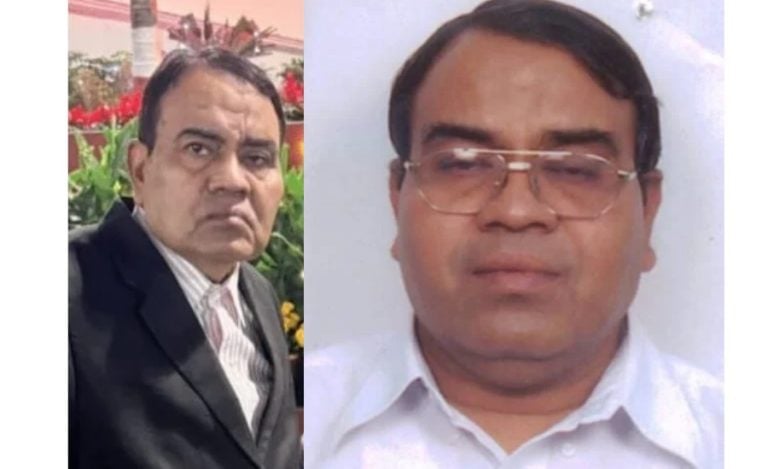
The case involved Ram Prasad Nayak, a former employee of a state power distribution company in Chhattisgarh.
Timeline of Events
- In 2012, a trial court convicted Nayak in a corruption-related case.
- Following the conviction, the employer dismissed him from service.
- In 2018, a higher court acquitted him and set aside the conviction.
- After acquittal, he sought restoration of benefits, including back wages for the period between dismissal and retirement.
- The dispute eventually reached the Chhattisgarh High Court.
What Did the High Court Say?
A Division Bench headed by Chief Justice Ramesh Sinha and Justice Ravindra Kumar Agrawal observed that the dismissal order was legally valid when it was passed because the employee stood convicted at that time.
The court said:
- A later acquittal does not automatically nullify all consequences of a conviction.
- The employer’s decision to dismiss the employee was lawful when taken.
- Since the employee did not perform duties during the relevant period, he cannot automatically claim full salary for that duration.
- Granting full back wages in such situations would be contrary to established legal principles.
“No Work, No Pay” Principle Applied
The High Court relied on the well-established doctrine of “No Work, No Pay.”
What Does It Mean?
- Salary is generally paid for work actually performed.
- If an employee remains out of service and does not render service, wages are not automatically payable.
- Courts may grant exceptions in specific cases, but such relief is not automatic.
The judges noted that during the period of dismissal, the employer-employee relationship was effectively interrupted, making a claim for full salary legally unsustainable.
What is the Importance of Chhattisgarh High Court Back Wages Ruling
The ruling is significant because it provides clarity on service-related disputes involving criminal convictions and subsequent acquittals.
Impact on Employees
- Acquittal alone may not guarantee full financial benefits.
- Employees may need to establish separate legal grounds for claiming salary arrears.
- Each case will depend on its facts and circumstances.
Impact on Government Departments and Public Sector Employers
- Employers can rely on a conviction-based dismissal if it was valid at the time of action.
- Later acquittals do not automatically create liability for payment of full back wages.