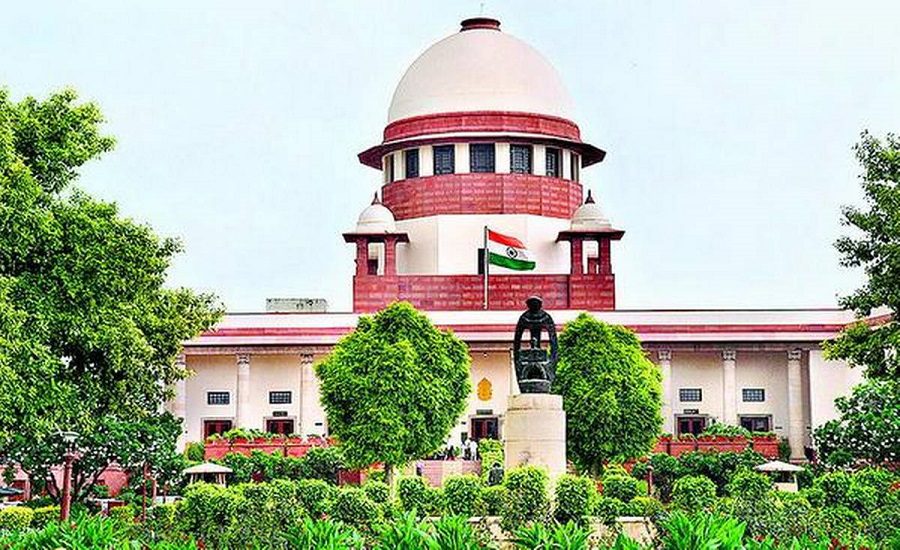
New Delhi: The Supreme Court orders protection for Kerala’s tallest elephant, Raman, who has emerged as a significant animal welfare case in India.
The Supreme Court has directed the Kerala Government to take temporary custody of Raman, a famous captive elephant, and shift him to a suitable rescue or rehabilitation center.
The Court strongly observed that it cannot remain a “mute spectator” when the welfare of voiceless animals is at stake.
Key Highlights of the Elephant Raman Custody Ruling
- The Supreme Court ordered the Kerala Government to take custody of elephant Raman.
- Raman is widely known as the tallest captive elephant in Kerala.
- The Court held a caretaker guilty of contempt for violating an undertaking given before the Court.
- Raman was allegedly used in temple and commercial activities despite a court restriction.
- The elephant will be housed in a rescue or rehabilitation facility until the ownership dispute is decided.
Read also: One of India’s Richest Biodiversity Zones Gets Supreme Court Protection
Elephant Raman Custody: What Did the Supreme Court Direct
A bench comprising Justice Dipankar Datta and Justice Satish Chandra Sharma stated that courts have a duty to protect animals that cannot speak for themselves.
The Court noted that Raman continued to be used in ceremonial and commercial activities despite a previous undertaking that he would not be employed for such purposes while the case was pending.
According to the Court, ignoring such violations would amount to failing in its responsibility toward animal welfare. The judges emphasized that the well-being of voiceless animals is of paramount importance.
Background of the Elephant Raman Custody Ruling
The case originates from a long-running ownership and custody dispute involving Raman.
Claims Made in the Case
- Jayakrishna Menon claimed that Raman belongs to the Mata Amritanandamayi Mutt.
- He argued that the elephant had only been temporarily entrusted to another individual for maintenance.
- The opposing party, Krishnankutty, claimed ownership based on gift deeds executed in 2017.
- The matter is currently pending before the Supreme Court through criminal appeals arising from proceedings in Kerala courts.
Why Did the Court Intervene?
The Supreme Court had earlier received an undertaking that Raman would not be used for:
- Temple festivals
- Public processions
- Commercial events
However, evidence, including photographs, posters, and social media material, was placed before the court, suggesting that the elephant was still being used in such activities.
The Court concluded that the undertaking had been violated and treated the matter as contempt of court.
Contempt Finding and Penalty
The court held Krishnankutty guilty of contempt for willfully disobeying the undertaking given before the apex court.
- As part of the order:
- A fine of ₹2,000 was imposed.
- Kerala was directed to immediately take temporary custody of Raman.
- The state was allowed to care for the elephant at its own expense.
- Authorities may issue necessary administrative orders under the Wildlife (Protection) Act, 1972.
Why is This Judgment Important
1. Strong Message on Animal Welfare
The ruling reinforces that animal welfare is not a secondary concern but an important legal and constitutional responsibility.
2. Accountability for Court Undertakings
The judgment shows that undertakings given before courts carry legal consequences and cannot be ignored without repercussions.
3. Welfare Over Commercial Interests
The Court placed Raman’s health and well-being above ownership claims and commercial considerations.
Broader Context: Captive Elephants in Kerala
Kerala has long faced debates over the use of captive elephants in temple festivals and public events.
Recent judicial interventions have focused on:
- Better welfare standards.
- Stricter monitoring of captive elephants.
- Enforcement of the Kerala Captive Elephants (Management and Maintenance) Rules.
- Reducing exploitation and unsafe use of elephants in festivals.
Expert Analysis
The Supreme Court’s order reflects a growing judicial trend that recognizes animals as living beings deserving protection and dignity.
By prioritizing rehabilitation over commercial use, the Court has sent a clear message that ownership rights cannot override animal welfare obligations. The ruling could influence future cases involving captive animals, temple elephants, and wildlife welfare across India.
The judgment also strengthens the principle that courts can intervene proactively when the welfare of animals is threatened, even while ownership disputes remain unresolved.
What Happens Next?
- The Kerala government will maintain custody of Raman.
- The elephant will remain in an approved rescue or rehabilitation center.
- The arrangement is temporary.
- Final ownership and custody rights will be decided by the Supreme Court after hearing the pending appeals.
Read also: CBSE’s New 3-Language Policy Challenged in Supreme Court — What Students Must Know