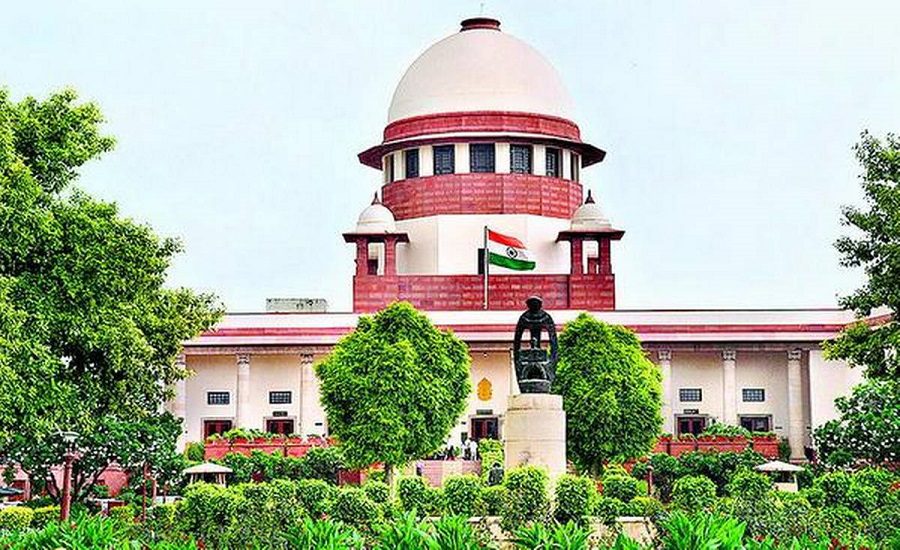
New Delhi: The Supreme Court bulldozer judgment was back in focus on Thursday after the Supreme Court refused to hear several contempt petitions alleging violations of its landmark 2024 ruling on demolition drives. Instead, the Court directed petitioners to approach the concerned High Courts, saying the disputes involve factual questions that cannot be decided in contempt proceedings.
Details of Bulldozer Judgment Row
A three-judge Bench comprising Chief Justice of India Surya Kant, Justice Joymalya Bagchi, and Justice V. Mohana ruled that each demolition case has different facts and evidence. The Bench said the Supreme Court cannot examine every individual allegation in contempt jurisdiction. Therefore, all pending contempt petitions have been transferred to the respective High Courts for further consideration.
Read also: Navy Recruitment Rules 2026: Supreme Court Seeks Government’s Response on Promotion Dispute
Why Did the Supreme Court Refuse to Hear the Petitions
The Court explained that the main issue in these petitions is whether authorities violated the safeguards laid down in the November 2024 bulldozer judgment. Petitioners argued that demolition orders were passed without following due process or the principles of natural justice. However, government authorities claimed that legal procedures were followed in every case. Since these claims require examination of records and evidence, the Supreme Court said such factual disputes should be decided by the High Courts rather than through contempt proceedings.
Bulldozer Judgment Row: Court Says Bulldozer Action Is Not Completely Barred
During the hearing, CJI Surya Kant pointed out that the 2024 judgment itself contains certain exceptions. The Court clarified that its directions do not automatically apply to structures that illegally occupy public roads, public spaces, or other government land. When authorities rely on these exceptions, courts must examine the facts before deciding whether the demolition was lawful.
Justice Bagchi Explains the Purpose of the 2024 Judgment
Justice Joymalya Bagchi said the November 2024 judgment was delivered because the Court was concerned about the growing trend of demolishing homes of people accused of crimes as a form of punishment. At the same time, he made it clear that the judgment was not intended to protect illegal constructions.
According to the judge, authorities can act against unlawful buildings, but they must strictly follow the procedure established by law instead of treating demolitions as a punitive measure.
Arguments Presented Before the Court
Senior Advocate Huzefa Ahmadi argued that the Court should intervene in cases where violations are obvious from official records. One petition related to the demolition of certain mosques in Somnath. Senior Advocate Chander Uday Singh claimed that many demolitions take place soon after public announcements by politicians calling for “bulldozer action,” suggesting that proper legal procedures were not followed.
Senior Advocate Sanjay Hegde also referred to a case involving the demolition of a fruit juice stall that was broadcast live on television.
Bulldozer Judgment Row: Relief in Madhya Pradesh Matter
The Bench also heard a case where a petitioner had already approached the Madhya Pradesh High Court. After hearing submissions, the Supreme Court set aside the High Court’s earlier order and sent the matter back for fresh consideration, directing the High Court to examine it again.
Bulldozer Judgment Row: Interim Protection to Continue
The Supreme Court clarified that it has not expressed any opinion on the merits of the allegations. The Court further ordered that the interim protection already granted by the Supreme Court will continue while the matters remain pending before the respective High Courts. However, the High Courts will be free to modify those interim orders after independently considering the facts of each case.