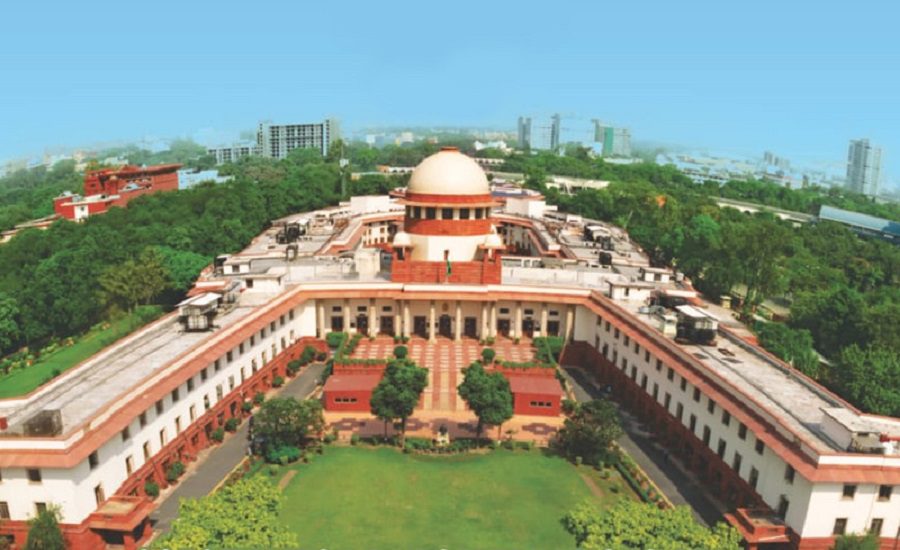
New Delhi: Class 9 third language policy came under the Supreme Court’s scrutiny on Thursday, with Justice B.V. Nagarathna says that introducing a new language in Class 9 can put unnecessary pressure on students. The Court suggested that if a third language is required, it should ideally begin from Class 6 instead of Class 9, when students are already preparing for board examinations.
Class 9 Third Language Policy: Supreme Court Observation
During the hearing, Justice B.V. Nagarathna said that Class 9 is already a stressful stage for students because board exam preparation begins around this time. She observed that introducing a new language at this stage is not the right approach and suggested that students should start learning a third language much earlier, preferably in Class 5 or Class 6, when learning is easier.
Why Was the Matter Before the Supreme Court
The observations came while the Supreme Court was hearing the Tamil Nadu government’s appeal against a Madras High Court order directing the State to facilitate the establishment of Jawahar Navodaya Vidyalayas (JNVs) in every district.
Tamil Nadu has opposed the JNV scheme, saying it follows a three-language formula, which conflicts with the State’s long-standing two-language policy.
Justice Nagarathna’s Remarks on Class 9 Third Language Policy
Justice Nagarathna clarified that the National Education Policy does not make Hindi compulsory as the third language. When Tamil Nadu argued that a third language becomes compulsory from Class 9, the judge responded that this was not a good idea because students are already under academic pressure.
She also recalled her own school experience, saying students in her time started learning a third language during middle school, making the transition much easier.
Advice to the Centre
The judge urged the Union Government to reconsider the timing of the policy. According to her, students from the end of Class 8 onwards begin focusing on Class 10 board examinations. Adding a new language in Class 9 may increase stress instead of improving learning outcomes.
Advice to Tamil Nadu
Justice Nagarathna also advised the Tamil Nadu government not to reject Central education schemes simply because they originate from the Union Government. She remarked that while every State may have its own education system, it should not prevent students from accessing Central government schools if they offer educational opportunities.
Centre’s Stand on Jawahar Navodaya Vidyalayas
The Union Government informed the Court that 689 Jawahar Navodaya Vidyalayas have been sanctioned across 666 districts in India. However, Tamil Nadu remains the only State without a JNV, as it has not accepted the scheme. The Centre said it is still willing to establish JNVs if the State agrees and provides the required land and infrastructure.
Tamil Nadu’s Position
Tamil Nadu argued that the JNV scheme is not compatible with its two-language education policy. The State also informed the Court that it has already built 38 Model Residential Schools, one in each district, and believes these schools are fulfilling similar educational goals. It requested the Centre to support these institutions instead of opening new JNVs.
What Happens Next?
The Supreme Court noted that discussions between the Centre and the Tamil Nadu government are still ongoing.
The Bench said it would examine the legal issues only if those discussions fail. The matter has now been listed for further hearing on August 11.
Read also: Explained: Why the Supreme Court Wants the Centre to Submit Aviation Law Rules Immediately