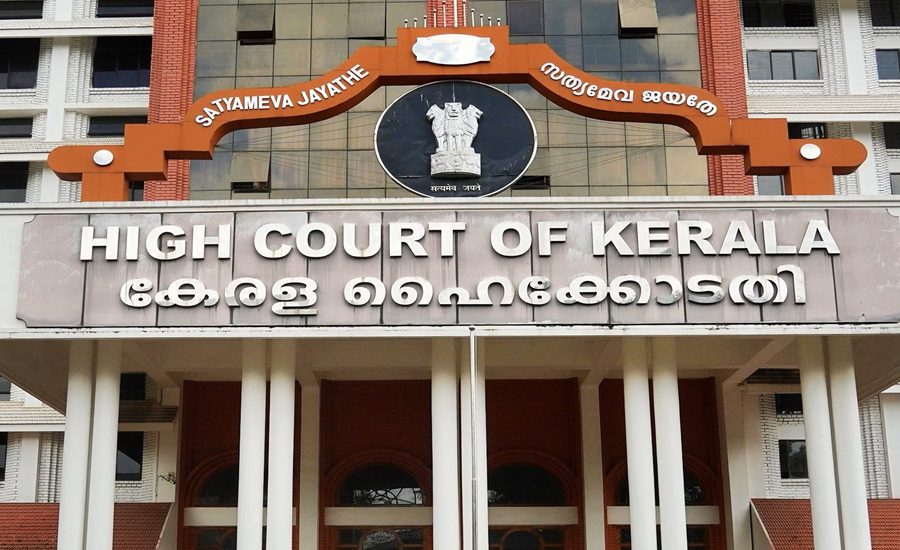
Kochi: The Kerala High Court on Wednesday initiated contempt of court proceedings against K. Biju (IAS), Secretary in charge of the Cashew Development Department, over controversial remarks made in an official government order granting prosecution sanction in the Kerala State Cashew Development Corporation corruption case. Observing that the order amounted to a serious attack on the judiciary, the court directed the senior IAS officer to appear in person on Friday and explain why contempt proceedings should not be initiated against him.
Justice A. Badharudeen made strong oral observations during the hearing, stating that the officer’s conduct was “extremely serious” and indicating that a mere apology would not be sufficient in the matter.
Government Order Triggered the Controversy
The controversy centres around a government order dated July 2, 2026, which granted prosecution sanction against the accused in the Kerala State Cashew Development Corporation corruption case.
The order contained several remarks concerning the High Court’s earlier directions. It stated that the High Court had allegedly assumed the role of the trial court by assessing evidence in the case, thereby leaving the government with no option but to grant prosecution sanction.
It further claimed that the prosecution sanction was being issued without an independent application of mind and solely to comply with directions issued by the High Court during contempt proceedings. According to the order, the court had effectively compelled the State Government to abdicate its statutory responsibility of independently examining the matter before granting sanction.
High Court Rejects Claims as Factually Incorrect
The High Court categorically rejected the assertions made in the July 2 government order.
Justice Badharudeen clarified that the court had never directed the State Government to grant prosecution sanction. Instead, it had merely instructed the government to reconsider the Central Bureau of Investigation (CBI) request for prosecution sanction in accordance with the law.
The court observed that the statements made in the government order were factually incorrect and appeared to be a deliberate attempt to tarnish the image of the judiciary in the eyes of the public.
Court Questions Officer’s Conduct
Coming down heavily on the IAS officer, the court questioned whether an officer who could issue such an order was fit to continue in public service.
The judge also expressed doubt over whether the controversial order had actually been drafted by the officer himself. According to the court, the contents appeared to reproduce arguments made by the accused in the case rather than reflecting an independent administrative decision.
The court remarked that it was surprising to find such statements incorporated into an official government order carrying a Government Order (G.O.) number.
Order Allegedly Reached Accused Before Official Release
The High Court also expressed concern over the circumstances surrounding the circulation of the government order.
During the hearing, the court noted that a copy of the July 2 order had allegedly reached the principal accused, R. Chandrasekharan, State President of INTUC, before it was officially released.
The court referred to a press conference conducted by Chandrasekharan, during which portions of the government order critical of the judiciary were publicly read out.
According to the court, these developments created an impression that the order had been issued to benefit the accused and amounted to an attack on the justice delivery system.
State Withdraws Controversial Order
Appearing on behalf of the State Government, Advocate General K. Gopalakrishna Kurup Jaju Babu informed the court that the July 2 government order had already been withdrawn.
He submitted that the government had issued a fresh order on July 6, removing all the controversial remarks contained in the earlier version.
When the court questioned how the revised order had been issued within four days after the government had earlier sought time to produce a proper order, the Advocate General stated that he had personally intervened in the matter.
Court Bars Use of Withdrawn Order
Taking note of the Advocate General’s submissions, the High Court observed that his intervention appeared to be bona fide.
However, the court directed that the withdrawn July 2 government order should not be relied upon for any purpose other than the ongoing contempt proceedings and any possible disciplinary action against the officer until further orders.
No Adverse Observation Against Political Executive
The High Court also clarified that it did not believe either the Chief Minister of Kerala or the Industries Ministerhad knowingly permitted such a government order to be issued.
The observation indicated that the court’s present focus remained on examining the conduct of the concerned IAS officer responsible for issuing the controversial order.
Next Hearing
The High Court has directed K. Biju, IAS, to appear in person before the court on Friday to explain why contempt proceedings should not be initiated against him. The matter is expected to be taken up further after hearing the officer’s explanation.
Read also: Why Is the ECI Reviewing Rules on Use of Children in Election Campaigns?