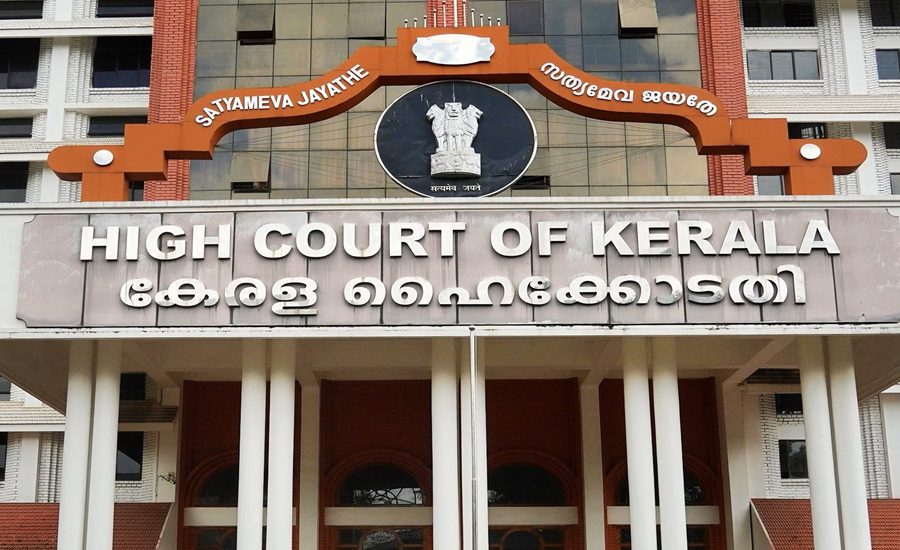
Thiruvananthapuram: In a significant stride for child protection, the Kerala High Court has issued a set of 15 key directions aimed at reforming the juvenile justice system in the state. These orders come amid concerns that despite India’s progressive laws, implementation gaps continue to leave children vulnerable.
The reforms emphasise prompt action, better coordination, staffing and audits across all agencies responsible for children in conflict with law (CICL) and children in need of care and rehabilitation (CNCR).
Background of the Juvenile Justice Reforms
The KHC’s initiative stems from a suo motu case titled Suo Motu v The Government of Kerala & Ors and connected matters, where the Court noted that in Kerala:
- While the nation has robust child protection statutes, the actual execution is flawed.
- Staff shortages, delays in rehabilitation services and weak data-management were flagged.
These deficiencies disproportionately impact children in conflict with law and those requiring care, leaving them exposed to neglect or exploitation.
Thus, the Court mandated a comprehensive reform roadmap covering all child protection bodies in the state.
The 15 Key Directions for Juvenile Justice Reforms
Here are the major directives from the KHC, summarised and reader-friendly:
1. Fill vacancies in KeSCPCR within four weeks to ensure the commission is properly staffed.
2. Begin recruitment at least four months before any vacancy arises, so there are no administrative gaps.
3. Publish the annual report for 2024-25 within eight weeks, as mandated under the CPCR Act.
4. Conduct mandatory annual social audits of all childcare institutions to check standards and accountability.
5. Ensure regular inspections of institutions under the juvenile justice system.
6. Improve data-management so information on children, cases and institutions is timely and reliable.
7. Strengthen rehabilitation services so children leaving the system are supported.
8. Ensure coordination between agencies — child welfare committees, juvenile justice boards, institutions and the commission.
9. Set time bounds for reforms — monitor progress within fixed deadlines rather than open-ended.
10. Ensure transparency and accountability, with clear records and reports.
11. Fill key posts in childcare institutions, avoiding delay in appointments.
12. Adopt uniform standards across institutions for children in conflict with law and children in need of care.
13. Promote welfare and rights-based approach, emphasising rehabilitation over mere detention.
14. Eliminate backlog and bottlenecks in processes for children under juvenile justice laws.
15. State to report compliance within defined timelines so the Court can monitor implementation.
These directives aim at an overhaul not just filling seats, but changing how the system functions.
Importance of Juvenile Justice Reforms
A poorly functioning juvenile justice system can hamper the future of children who need protection or rehabilitation.
- The state of Kerala, while progressive in policy, was found lacking in execution — according to the Court.
- Timely audits, data, inspections and staffing are critical to ensure children’s rights are safeguarded.
- Without coordination and accountability, institutions may face neglect, weaker rehabilitation outcomes, or rights-violations.
- The reforms push the state from mere compliance to proactive child-rights orientation.
Challenges and Roadblocks Ahead
- Filling positions and publishing reports are administrative tasks; transforming institutional culture is harder.
- Regular inspections and social audits require infrastructure, budget and trained staff.
- Data-management systems may need upgrading; legacy systems and reluctance can hamper that.
- Coordination among multiple bodies (child welfare, juvenile justice boards, institutions) has historically been weak.
- Ensuring actual change on ground — not just paper compliance — will test the system.
Way Forward
- The state government must act quickly to fill the vacancies and publishing the reports are immediate tasks.
- The Court will likely monitor progress and may summon status reports or hearings to ensure compliance.
- If agencies don’t act, there could be further judicial directions or consequences.
Over time, successful implementation could lead to improved outcomes for children — fewer delays, better care, stronger protection.
Read Also: A Turning Point for Judges: SC Makes Merit the Backbone of District Judiciary Promotions