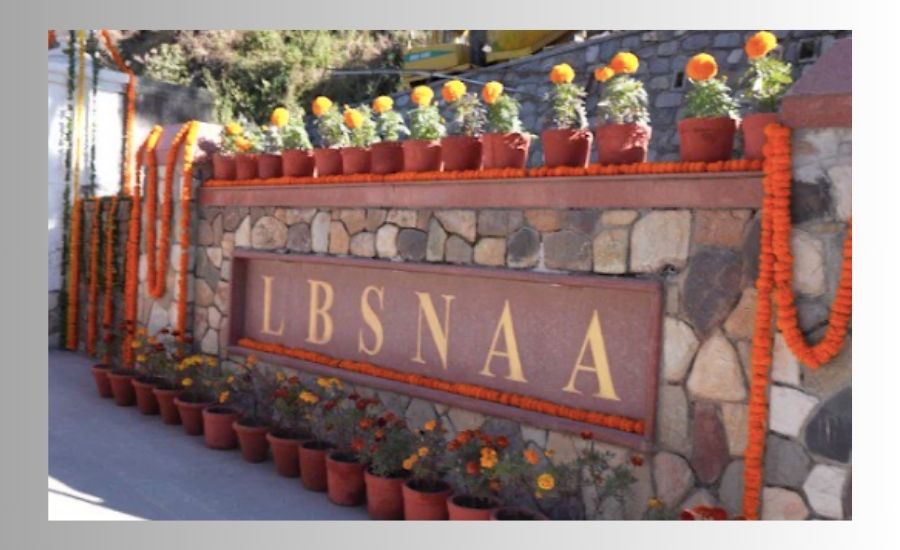
Mussoorie: Cracking the Union Public Service Commission (UPSC) Civil Services Examination is widely regarded as one of the toughest achievements in India. However, clearing the examination and securing a top rank does not immediately make someone an IAS or IPS officer in the fullest sense. The real journey begins at the Lal Bahadur Shastri National Academy of Administration (LBSNAA) in Mussoorie, where probationers undergo rigorous training before taking charge in the field.
Contrary to popular belief, even UPSC toppers can fail examinations during their training. An RTI response has revealed that 24 IAS probationers failed one or more examinations at LBSNAA during the last five years, with 14 such cases reported in just 2025 and 2026. The revelation has sparked curiosity about what happens when probationers fail during training and whether they risk losing their jobs.
The answer is reassuring: failing an examination at LBSNAA does not automatically result in dismissal from service.
LBSNAA: Where the Real Test Begins
Located in Mussoorie, Uttarakhand, LBSNAA is India’s premier training institution for civil servants.
After the UPSC results are declared, officers selected for the IAS, IPS, Indian Foreign Service (IFS), Indian Revenue Service (IRS) and several other Group ‘A’ services undergo a common Foundation Course. Subsequently, officers move to their respective academies, while IAS probationers continue their professional training at LBSNAA.
The Academy’s objective is not only to impart academic knowledge but also to build leadership, discipline, administrative competence and ethical decision-making among future civil servants.
Read also: 24 IAS Probationers Failed LBSNAA Exams in Five Years; 14 Cases Reported in 2025-26, RTI Reveals
24 IAS Probationers Failed Exams in Five Years
According to information obtained through the Right to Information (RTI) Act, 24 IAS probationers failed one or more examinations conducted at LBSNAA between 2022 and 2026.
What has drawn particular attention is that 14 of these failures occurred during 2025 and 2026, indicating that the Academy has maintained rigorous academic standards despite candidates having already cleared one of India’s most competitive examinations.
However, these failures do not mean the officers have failed the training programme itself or have been removed from service.
Which Subjects Do IAS Officers Fail?
Probationers are required to study a wide range of subjects that prepare them for administrative responsibilities.
The curriculum includes:
- Constitution of India
- Indian Economy
- Law
- Public Administration
- Management
- Governance
- District Administration
To pass these examinations, officers are generally required to secure at least 50 per cent marks.
However, according to several recently trained officers, the local language examination remains the most challenging component of the programme.
Why the Local Language Test Is the Biggest Challenge
Every IAS officer is allotted a state cadre after selection.
As part of their training, probationers must learn the official language of their allotted state and qualify in a language examination.
For example:
- Officers allotted the Telangana cadre must learn Telugu.
- Officers posted to Tamil Nadu must learn Tamil.
- Officers allotted Kerala must qualify in Malayalam, and so on.
For officers posted outside their native linguistic region, learning an entirely new language within a limited period often becomes the toughest hurdle.
A 2023-batch IAS officer shared that after being allotted the Telangana cadre, he managed to score only 3 out of 20 marks in his first Telugu examination before successfully clearing the re-test.
Do Officers Lose Their Jobs If They Fail?
The answer is No.
According to the rules governing LBSNAA training:
- Officers are not dismissed from service merely because they fail an examination.
- There is no fixed limit on the number of attempts available to clear the pending papers.
- Probationers must, however, clear all backlog papers within four years of joining the service.
Those who fail are generally given an opportunity to appear for a re-examination, often conducted within a short period after the initial test.
Most officers successfully clear these supplementary examinations.
Failure Can Affect Seniority
Although failing does not cost an officer the job, it can influence their career progression in another important way.
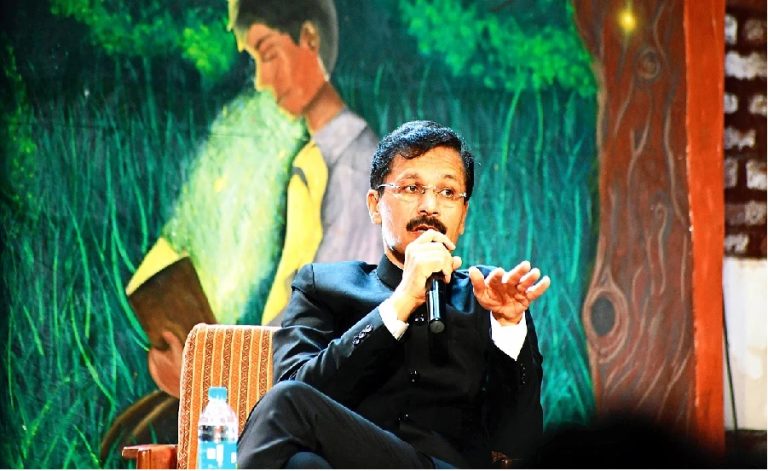
According to Gautam Thapliyal, Deputy Director at LBSNAA, the marks obtained during Academy training contribute to determining inter-se seniority within the batch.
Higher-performing officers receive better rankings within their batch, which may have implications for future postings and promotions.
Despite occasional failures in individual papers, the overall pass percentage for IAS probationers at LBSNAA has remained 100 per cent between 2018 and 2026, reflecting that all officers eventually complete the required training successfully.
Discipline Is Taken Very Seriously
The RTI also revealed that 14 IAS probationers faced disciplinary action in recent years.
The breakdown includes:
- Six officers from the 2022 batch
- Eight officers from the 2025 batch
The Academy has reportedly tightened disciplinary standards in recent years.
Common reasons for disciplinary action include:
- Poor attendance in classes.
- Missing or arriving late for morning Physical Training (PT).
- Using mobile phones or electronic gadgets inside classrooms.
- Violating the prescribed dress code.
Depending on the nature of the violation, officers may face deductions in marks, written warnings or formal memos.
The Academy believes discipline is an essential quality for officers who will eventually hold key administrative positions across the country.
Life Inside LBSNAA
Life at LBSNAA is widely regarded as physically demanding, academically intensive and professionally transformative.
The training programme spans nearly two years for IAS officers and combines classroom learning with extensive field exposure.
A typical day begins around 6 a.m. with:
- Physical Training (PT)
- Yoga
- Horse riding
This is followed by lectures, case studies, simulations and practical administrative exercises throughout the day.
Evenings often include:
- Formal dinners.
- Dining etiquette sessions.
- Group discussions.
- Leadership activities.
- Cultural programmes.
Learning Beyond the Classroom
The Academy places equal emphasis on practical exposure.
Some of the key components include:
Bharat Darshan
Officer trainees travel across India to understand the country’s geographical, cultural and administrative diversity while interacting with armed forces, government institutions, industries and local administrations.
Himalayan Trek
The famous Himalayan trek is designed to build endurance, teamwork, resilience and leadership under challenging conditions.
District Training
IAS probationers spend nearly a year in district administration, usually serving alongside experienced District Magistrates and functioning as Sub-Divisional Magistrates (SDMs) during training.
Here, they gain hands-on experience in:
- Public grievance redressal.
- Revenue administration.
- Law and order.
- Development schemes.
- File processing.
- Coordination among government departments.
Training Shapes Future Administrators
While clearing the UPSC examination opens the door to India’s premier civil services, LBSNAA ensures that selected candidates develop the knowledge, discipline and practical skills required to serve as administrators.
The Academy’s system of rigorous academics, physical endurance, language learning and ethical training is designed to prepare officers for the complex responsibilities they will shoulder throughout their careers.
The recent RTI findings also underline an important reality: failing an examination at LBSNAA is not the end of an officer’s career, but the Academy expects every probationer to eventually meet its high standards of competence and discipline before taking up administrative responsibilities.