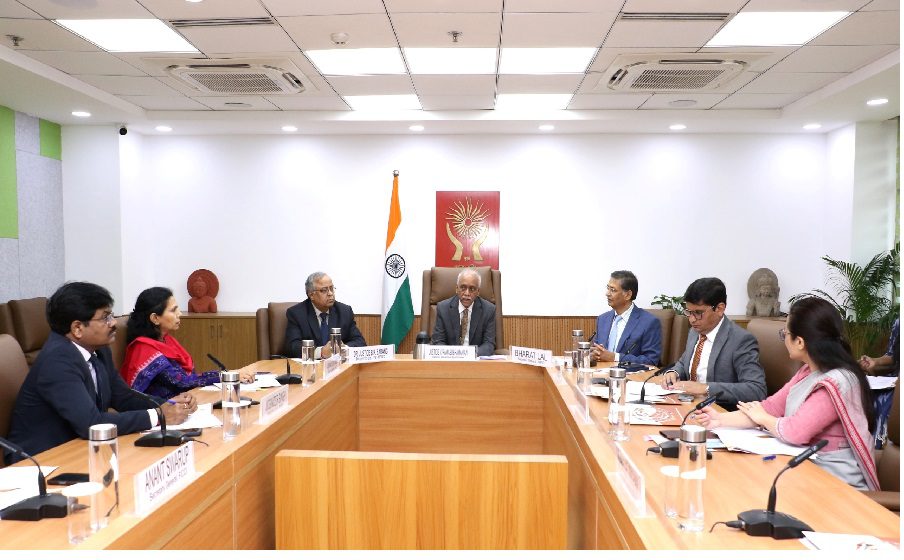
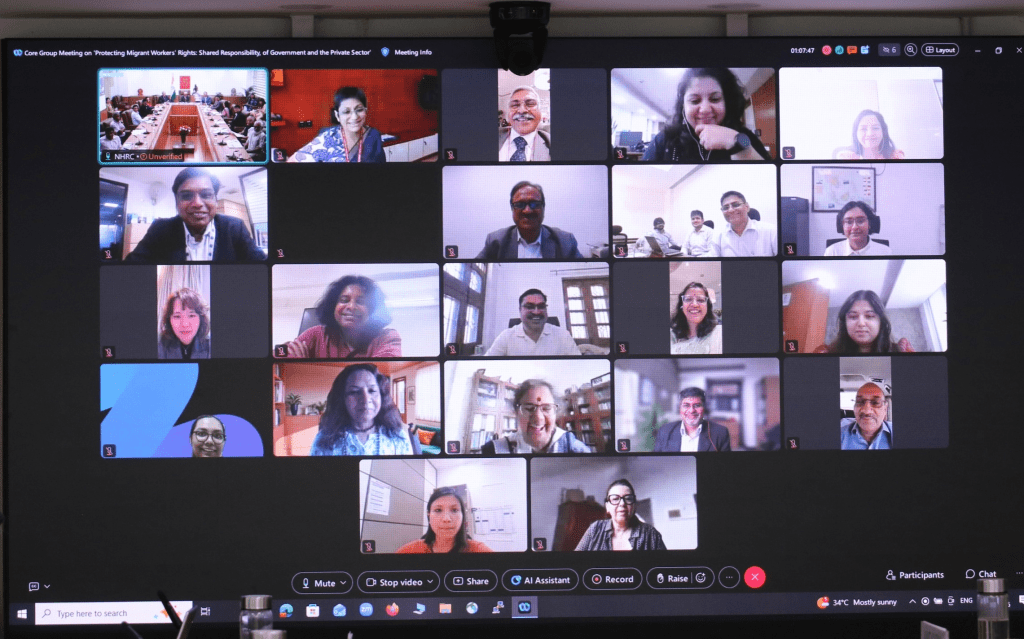
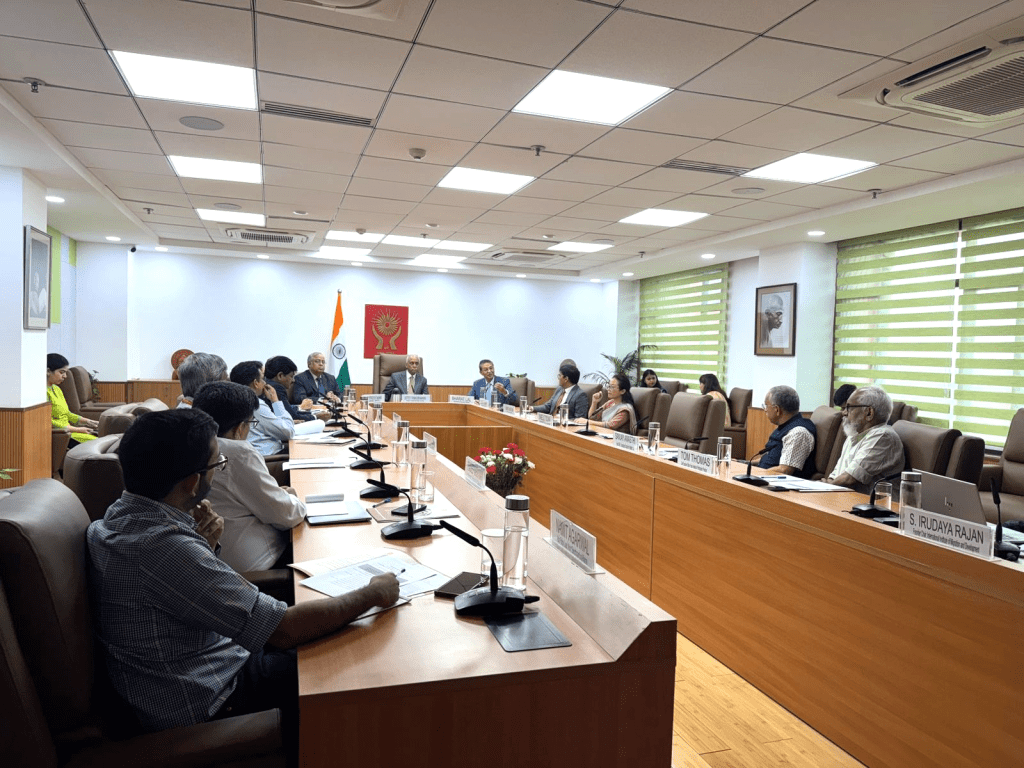
New Delhi: The National Human Rights Commission of India (NHRC India) organised a core group meeting in New Delhi on the theme “Protecting Migrant Workers’ Rights: Shared Responsibility of Government and the Private Sector.”
The hybrid meeting brought together government officials, policy experts, UN representatives, industry leaders, and labour specialists to discuss urgent reforms needed to improve the living and working conditions of migrant workers across India.
NHRC Chair Calls for Shift From Policy to Rights-Based Implementation
NHRC Chairperson Justice V. Ramasubramanian highlighted that migrant workers—mostly from the unorganised sector—face unique vulnerabilities such as mobility constraints, language barriers, and lack of stable housing.
He stressed the need for:
- Interstate coordination mechanisms
- Portable social protection systems
- Strong enforcement of labour laws
He also warned against loopholes in labour regulations that allow employers to bypass eligibility thresholds and called for a shift from a compliance-based system to a rights-based labour framework.
Focus on Timely Wages, Dignity, and Social Security
NHRC Member Justice (Dr.) Bidyut Ranjan Sarangi emphasized that delayed or unpaid wages defeat the very purpose of migration.
He said migrant workers must be ensured:
- Timely and fair remuneration
- Housing and healthcare access
- Education support for children
- Social security benefits
He also recommended creating a comprehensive database of migrant families to ensure better welfare coverage.
Government Highlights Role of Migrants in India’s Economy
NHRC Secretary General Bharat Lal noted that nearly 28.9% of India’s population comprises migrant workers, who play a crucial role in construction, services, logistics, and manufacturing sectors.
He appreciated initiatives such as the One Nation One Ration Card, while stressing the need to bridge the gap between legislation and implementation.
He also cited studies showing that better welfare conditions significantly improve productivity and social outcomes for workers and their families.
Key Issues Raised: Wage Gaps, Subcontracting and Exploitation
Experts at the meeting raised concerns over:
- Wage theft and delayed payments
- Exploitation in subcontracting chains
- Lack of documentation for workers
- Exclusion from welfare schemes
- Poor living conditions and housing shortages
They also highlighted how migrant workers were severely affected during the COVID-19 pandemic and continue to face informal-sector vulnerabilities.
Strong Push for Digital Systems and Data Integration
Several experts called for improved data systems to track migrant workers more effectively.
Key suggestions included:
- Integration of e-Shram Portal with Aadhaar, EPF, and ESIC
- National migrant labour dashboard
- QR-based migrant identity systems
- Real-time district-level migration tracking
The goal is to ensure seamless access to welfare schemes across states.
Role of Businesses and ESG Reporting in Worker Protection
Representatives from SEBI, CII, FICCI, and international organisations discussed the role of corporate responsibility in protecting migrant workers.
Key recommendations included:
- Strengthening ESG and BRSR reporting standards
- Mandatory wage and labour compliance disclosures
- Contractor accountability across supply chains
- Linking ESG ratings with worker welfare performance
- Ethical recruitment and zero-fee hiring policies
Experts also stressed the need to regulate “invisible supply chains” where accountability is unclear.
UN and Global Agencies Call for Rights-Based Migration Framework
Representatives from the International Labour Organization, United Nations Development Programme, and International Organization for Migration urged India to align policies with global human rights standards.
They emphasized:
- Fair wages and living wage benchmarks
- Safe and ethical recruitment systems
- Strong grievance redressal mechanisms
- Compliance with UN business and human rights principles
Major Policy Suggestions Emerge From NHRC Meeting
The meeting produced several key recommendations, including:
Governance and Coordination
- National coordination council for migrant workers
- Strong interstate migration corridor mechanisms
- Multi-commission collaboration for vulnerable groups
Data and Digital Systems
- Integrated migrant worker databases
- Real-time migration tracking dashboards
- Standardised contractor compliance systems
Labour Rights and Welfare
- Timely wage enforcement
- Portable social protection benefits
- Affordable housing for migrants
- Health and education access
Corporate Responsibility
- Sector-specific labour compliance frameworks
- Mandatory ESG disclosures on migrant welfare
- Accountability in subcontracting chains
NHRC to Finalise Recommendations for Government Action
The National Human Rights Commission of India stated that it will further examine the suggestions and prepare formal recommendations for both the central and state governments.
The objective is to build a stronger, rights-based framework that ensures dignity, safety, and social security for India’s vast migrant workforce.
About National Human Rights Commission of India
The National Human Rights Commission of India is a statutory body responsible for the protection and promotion of human rights in India. It works to ensure that constitutional and legal rights are upheld, particularly for vulnerable populations including migrant workers, through policy recommendations, investigations, and advocacy.
Read also: NHRC Reviews 216 Bonded Labour Cases in Uttar Pradesh Brick Kilns, Flags Administrative Lapses