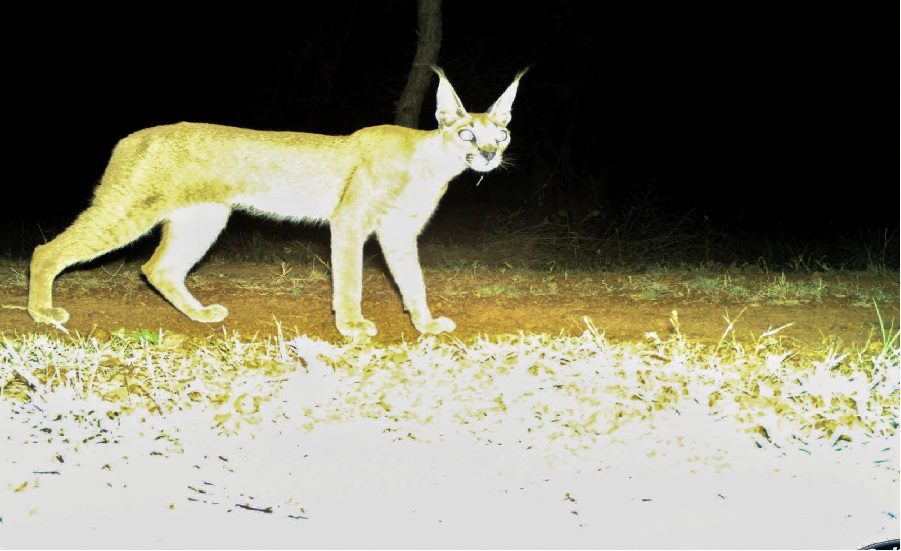
Gwalior: A significant wildlife sighting has been reported from Kuno National Park in Sheopur, Madhya Pradesh, where the presence of the rare wild cat species Caracal has been recorded. The sighting, confirmed by forest officials, comes after several years and is being seen as a major indicator of ecological restoration in the region.
Officials shared images of the animal on social media, confirming its presence within the park boundaries.
Rare Return After Years Strengthens Conservation Success
Forest department officials described the sighting as more than just the appearance of a rare species. According to them, it reflects positive ecological changes and improved habitat conditions within Kuno National Park.
The return of the Caracal after a long gap suggests that conservation efforts, habitat protection, and ecosystem management are yielding strong results in the region.
Read also: Kuno National Park Shock: 4 Cheetah Cubs Found Dead Near Den in MP; Predation Suspected
Improved Habitat Under Project Cheetah Boosts Biodiversity
Experts believe that the development of suitable habitats under Project Cheetah has significantly improved ecological balance in Kuno.
The park has witnessed:
- Better grassland and forest habitat restoration
- Improved water availability
- Strengthened wildlife monitoring systems
- Enhanced ecosystem stability
These improvements have created a more favorable environment not only for cheetahs but also for several other rare and endangered species.
Kuno Emerging as a Biodiversity Hotspot
Kuno National Park is increasingly being recognized as a successful biodiversity conservation model, beyond its role in Project Cheetah.
In recent years, the park has recorded sightings and activity of multiple rare species, including wild dogs and other wildlife, indicating a strengthening natural ecosystem.
Wildlife experts say the presence of apex and rare species is a key indicator of a healthy ecological balance.
Experts Call Caracal Sighting a Positive Ecological Indicator
According to wildlife researchers, the return of the Caracal suggests:
- Improved prey availability
- Better grassland ecosystems
- Reduced habitat degradation
- Strengthened natural biodiversity cycles
Experts added that such sightings often indicate that the forest ecosystem is stabilizing and becoming more self-sustaining.
What is a Caracal?
The Caracal is a rare wild cat species known for its:
- Long, slender body
- Exceptional speed and agility
- Distinct black tufts on its ears
It typically inhabits dry grasslands, scrub forests, and open woodland areas.
In India, the Caracal population has declined significantly over the years due to habitat loss, human encroachment, and environmental pressures, making it a highly rare and elusive species.
CM Mohan Yadav Highlights Conservation Efforts
Madhya Pradesh Chief Minister Mohan Yadav said that conservation initiatives undertaken under the guidance of Prime Minister Narendra Modi have created a favorable environment for wildlife in Kuno.
He added that Kuno is now evolving not just as a cheetah habitat, but as a multi-species conservation landscape supporting diverse wildlife populations.
Significance for Future Wildlife Conservation
Wildlife experts believe that the sighting of Caracal in Kuno could pave the way for:
- Increased biodiversity recovery
- Return of other rare species
- Strengthening of protected area ecosystems
- Long-term ecological stability
The development is being viewed as a strong validation of ongoing conservation strategies and habitat restoration efforts.
A Positive Sign for Ecological Balance
The reappearance of the Caracal in Kuno National Park on World Environment Day has been hailed as a symbolic and scientific milestone. It reflects the gradual restoration of ecological balance and reinforces the park’s growing importance as one of India’s leading conservation landscapes.