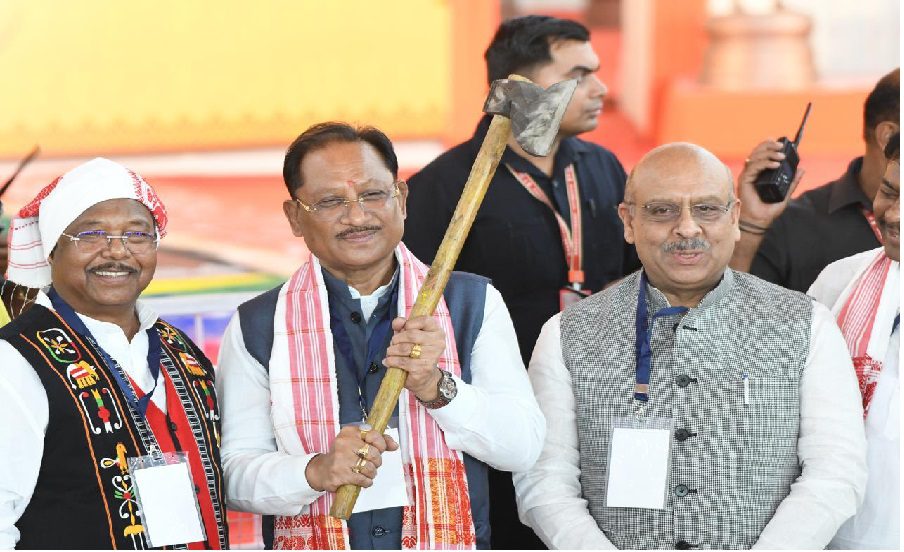
New Delhi: A grand celebration of tribal identity, cultural pride, and social awareness was witnessed at the historic Red Fort grounds in the national capital on Sunday during the National Tribal Cultural Gathering held on the occasion of the 150th birth anniversary year of Bhagwan Birsa Munda. The event brought together thousands of tribal representatives, youth, social workers, and community members from across India on a single platform.
Organized by the Tribal Security Forum and Tribal Awakening Committee, the event was attended by Union Home Minister Amit Shah as the chief guest. Chhattisgarh Chief Minister Vishnu Deo Sai also participated, along with state ministers Kedarnath Kashyap and Ramvichar Netam, adding political significance to the cultural event.
Cultural Convergence at Historic Red Fort
The Red Fort premises turned into a vibrant showcase of India’s tribal heritage, featuring traditional attire, folk instruments, dance forms, and cultural performances from multiple states. The event highlighted the richness of India’s indigenous traditions and sent a strong message on preserving tribal identity and cultural heritage.
Delhi Chief Minister Rekha Gupta also met Chhattisgarh Chief Minister Vishnudev Sai at the venue, marking a cordial interaction during the event.
“Tribal Society is the Cultural Soul of India” – CM Vishnudev Sai
Addressing the gathering, Chief Minister Vishnudev Sai described tribal communities as the oldest and most vibrant expression of India’s cultural soul. He said tribal societies have preserved a deep connection with nature by protecting water, forests, and land for centuries.
He emphasized that in today’s world facing environmental challenges, tribal lifestyles offer a sustainable model of development rooted in ecological balance and coexistence with nature.
Chhattisgarh’s Tribal Heritage Highlighted
CM Sai underlined that nearly 44% of Chhattisgarh’s geographical area is forest-covered, making tribal culture an integral part of the state’s identity. He highlighted the contributions of tribal heroes such as Bhagwan Birsa Munda and Veer Narayan Singh in India’s freedom struggle and nation-building.
He also said the state government is actively working to preserve tribal culture through initiatives like Adi Parv, Bastar Pandum, and Bastar Olympics, which promote tribal talent, traditions, and sports at a national level.
Focus on Tribal Languages and Cultural Preservation
The Chief Minister stressed that language is the foundation of cultural identity. The Chhattisgarh government is promoting education in tribal languages such as Gondi, Halbi, and Sargujiya to ensure younger generations remain connected to their roots.
He also highlighted efforts to conserve traditional sacred sites like Devgudi across Bastar and Surguja, aiming to strengthen cultural and spiritual heritage.
Unity in Diversity Reflected Through Performances
Artists from different states showcased traditional tribal dances, folk music, and cultural expressions, creating a vibrant atmosphere at the Red Fort. The rhythmic beats of drums and traditional instruments filled the venue, symbolizing India’s unity in diversity.
The event reflected the strength, creativity, and cultural richness of tribal communities across the country.
Tribal Society as Future Strength of India
CM Sai stated that tribal society is not only a part of India’s past but also a vital strength for its future. He said tribal values such as harmony with nature, community living, and cultural discipline can guide modern development toward a more balanced and humane direction.
The event concluded as a powerful national message on tribal unity, identity preservation, and cultural revival, reinforcing the importance of indigenous traditions in India’s development journey.