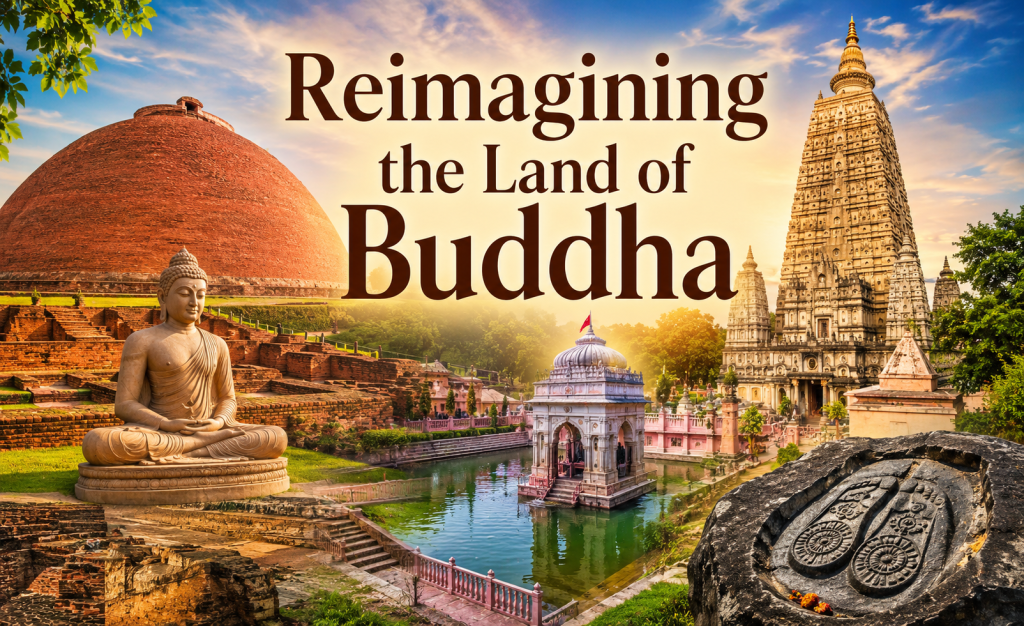
For over 2,500 years, pilgrims have travelled to Bodh Gaya in search of something far greater than sightseeing. They come to stand beneath the sacred Bodhi Tree, where Prince Siddhartha attained enlightenment and became the Buddha. It is one of the holiest places in the Buddhist world and a UNESCO World Heritage Site. Yet, despite its unmatched spiritual significance, the city around the Mahabodhi Temple has long struggled with congestion, inadequate visitor facilities and fragmented urban planning.
Bihar now wants to change that.
The state is preparing what could become one of its most ambitious tourism transformations. From redesigning the Mahabodhi Temple precinct and creating pedestrian-friendly pilgrimage zones to upgrading the entire Buddhist Circuit connecting Bodh Gaya, Rajgir, Nalanda, Vaishali and Kesaria, the vision is to make Bihar not just a place people visit, but a destination where they stay longer, explore deeper and return again.
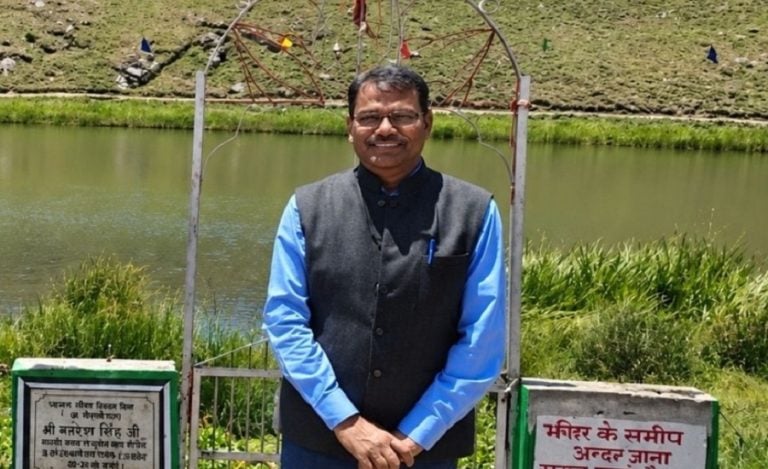
At the centre of this effort is Nand Kishore, Managing Director of the Bihar State Tourism Development Corporation (BSTDC), an Indian Forest Service (IFS) officer of the 2006 Bihar cadre, who spoke to Indian Masterminds about the state’s long-term vision for tourism.
A MASTER PLAN TO REIMAGINE BODH GAYA
The transformation begins with Bodh Gaya itself.
A comprehensive master plan has been prepared after months of detailed planning. One of its biggest highlights is the redevelopment of the area surrounding the Mahabodhi Temple.
The proposal seeks to integrate the temple complex with the nearby J.P. Udyan, creating a larger and more organised public space. Separate entry and exit routes will improve crowd management, while the expanded precinct will significantly increase the site’s carrying capacity during peak tourist seasons.
The approach roads leading to the temple are also set for a complete makeover. Informal roadside vendors will be shifted to well-planned shopping zones nearby, allowing the temple approach to become a pedestrian-only area.
The idea is simple: reduce congestion while making the spiritual experience more peaceful and organised.
Speaking to Indian Masterminds, Mr. Nand Kishore says,
“Our objective is not merely to beautify Bodh Gaya but to transform the entire visitor experience through integrated planning.”
Also Read – How Uttar Pradesh Is Preparing Its Youth for the AI Revolution
PUTTING PILGRIMS FIRST
The new plan goes far beyond beautification.
It focuses on making travel easier and more comfortable for every visitor.
Golf carts will help elderly and specially-abled pilgrims move around the temple complex without difficulty. Large container parking facilities will be created outside the main precinct so that private vehicles and buses remain away from the crowded temple area.
Roads connecting Bodh Gaya‘s airport, railway station and bus stand to major tourist attractions will be widened and upgraded. Better traffic management and smoother connectivity are expected to reduce travel time while improving the overall visitor experience.
The objective is to ensure that the journey becomes as memorable as the destination itself.
VISHNUPAD TEMPLE ALSO GETS A NEW VISION
The development plan extends beyond Bodh Gaya.
Just a few kilometres away lies the sacred Vishnupad Temple in Gaya, one of Hinduism’s most revered pilgrimage centres.
Every year, lakhs of devotees visit the temple during the Pitrapaksha Mela to perform rituals for their ancestors on the banks of the Falgu River.
Recognising its immense religious importance, Bihar has prepared a dedicated master plan for the Vishnupad Temple as well.
The proposal includes infrastructure upgrades, better pilgrim facilities and improved connectivity to enhance the overall experience for visitors.
BUILDING A WORLD-CLASS BUDDHIST CIRCUIT
Bihar’s vision is much larger than improving individual destinations.
The state wants to create a seamless Buddhist Circuit that connects Bodh Gaya with Rajgir, Nalanda, Vaishali and Kesaria. The long-term plan also looks beyond Bihar by integrating important Buddhist destinations in Uttar Pradesh, including Sarnath and Varanasi.
Officials are currently conducting a detailed gap analysis of the entire tourist journey.
The focus is not only on monuments but also on the visitor experience.
Where should travellers stop to rest? Where are quality restaurants needed? Are there enough washrooms? Is accommodation available throughout the circuit? Can international tourists travel comfortably from one destination to another?
These are the questions guiding the planning process.
The goal is to remove every obstacle that affects a pilgrim’s journey.
VAISHALI IS NO LONGER A HALF-DAY DESTINATION
Vaishali is also undergoing a remarkable transformation.
The state has developed Samyak Darshan, a sprawling 72-acre spiritual complex that includes meditation halls where visitors can stay for extended periods instead of making short visits.
Relics of Lord Buddha have been shifted from the ancient stupa to this new complex.
The surrounding area is also being developed with attractions such as the Shanti Stupa and Relic Stupa.
To encourage longer stays, nearly five acres of nearby government land are being developed through the PPP model for a five-star hotel.
The vision is to transform Vaishali into a destination where tourists can spend an entire day or even a weekend immersed in spirituality and history.
KESARIA’S BIG TRANSFORMATION
Another important project is unfolding at Kesaria. Believed to house the world’s largest Buddhist Stupa, the site remains only partially excavated.
The Tourism Department has requested further archaeological excavation, which could significantly enhance its global appeal. Meanwhile, a small hotel and accommodation facilities have already been developed for visitors.
Perhaps the most exciting addition is a new Buddhist experience centre being constructed opposite the stupa. The complex will feature immersive 7D shows, documentaries on Buddhism and scaled replicas of major Buddhist destinations, including Bodh Gaya, Dungeshwari and the Relic Stupa.
Expected to be completed within the next six to eight months, it aims to make Kesaria an engaging destination for pilgrims and tourists alike.
ENCOURAGING VISITORS TO STAY LONGER
The state’s strategy is not simply about increasing tourist arrivals. It is about increasing the duration of their stay. Many international visitors already spend several days in Bodh Gaya for meditation and spiritual retreats.
By improving roads, expanding air connectivity with Southeast Asian countries, creating better accommodation and developing nearby attractions, Bihar hopes visitors will explore multiple destinations instead of limiting themselves to a single pilgrimage stop. As connectivity improves, so too does the potential for higher tourist spending and stronger local economies.
“We want tourists to spend more time in Bihar by creating destinations that offer comfort, connectivity and meaningful experiences,” says the officer
A NEW CHAPTER FOR BIHAR’S TOURISM
The transformation underway is about much more than roads, hotels or urban redevelopment.
It is about reclaiming Bihar’s place on the global tourism map.
For centuries, this land has shaped the spiritual history of humanity. Now, it is building the infrastructure to match that legacy.
If these plans are realised, Bodh Gaya will become more than the place where Buddha attained enlightenment. It will become the heart of a world-class Buddhist tourism network that combines spirituality with comfort, heritage with modern infrastructure, and ancient wisdom with contemporary visitor experiences.
The ambition is larger than infrastructure. Bihar wants to become the world’s most complete Buddhist destination—not just the land where Buddha attained enlightenment, but the place where travellers choose to stay longer, explore deeper and return again.