On a battlefield, survival often depends less on the strength of your weapon and more on the freedom to choose your next move.
Every soldier understands one enduring principle of strategy: never surrender your freedom of action.
On the battlefield, the commander who retains the ability to manoeuvre usually shapes the outcome. The one constrained by rigid alliances, dwindling logistics or predictable decisions gradually loses the initiative. Strategic flexibility is often a greater force multiplier than numerical superiority.
The same principle increasingly defines international relations.
Also read: Breath Before Battle: What Yoga Day 2026 Means for an Ageing, Anxious World
The week ending o5 July 2026 reaffirmed a trend that has been steadily reshaping global geopolitics. The world is no longer divided into neat ideological camps. Instead, it is evolving into a complex landscape of overlapping partnerships, shifting interests and issue-based coalitions. In such an environment, countries that preserve strategic autonomy are often better positioned than those locked into inflexible alignments.
For India, this is not merely a diplomatic achievement. It is becoming one of the country’s most significant strategic assets.
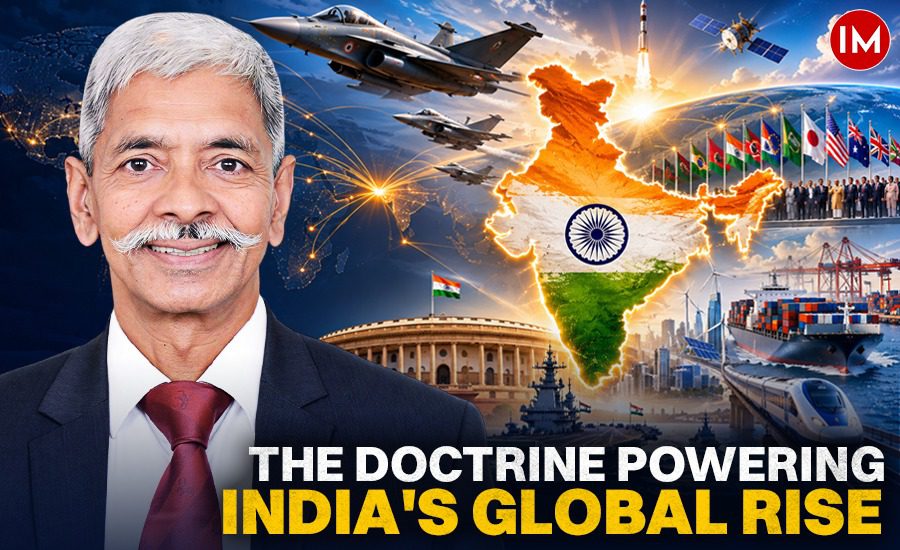
For decades after Independence, India’s foreign policy sought to maintain independent decision-making despite competing global blocs. During the Cold War, this approach was often interpreted as non-alignment. Today, however, strategic autonomy has acquired a new meaning. It is no longer about remaining equidistant from major powers. It is about engaging with all significant players while remaining dependent on none.
This distinction is important.
India today works closely with the United States in defence technology, maritime security and the Indo-Pacific. It continues to maintain longstanding defence ties with Russia. It has expanded economic engagement with Europe, strengthened energy partnerships across the Gulf, deepened cooperation with Japan and Australia, and emerged as an influential voice for the Global South.
Viewed individually, these relationships may appear transactional. Viewed collectively, they represent a carefully balanced national strategy.
The value of that strategy becomes most visible during periods of global uncertainty.
Recent geopolitical developments—from conflicts in Europe and West Asia to growing competition in the Indo-Pacific—have demonstrated how rapidly strategic circumstances can change. Nations that become excessively dependent on a single partner often discover that their policy options narrow precisely when flexibility matters most.
India has consciously avoided that trap.
Its growing diplomatic reach allows it to engage multiple centres of power without becoming captive to any one of them. This flexibility enhances not only foreign policy but also economic resilience, energy security and technological cooperation.
Strategic autonomy, however, should never be mistaken for strategic neutrality.
India has consistently demonstrated that independent decision-making does not imply indecision. Whether responding to security challenges, safeguarding maritime interests, strengthening defence preparedness or expanding indigenous manufacturing, the country has shown that autonomy can coexist with decisive action.
The emphasis on Atmanirbhar Bharat reflects this broader strategic philosophy. Self-reliance is not about economic isolation. It is about reducing vulnerabilities in sectors that directly affect national security and long-term competitiveness. Defence manufacturing, semiconductors, critical minerals, resilient supply chains and advanced technologies are no longer purely economic priorities; they are strategic necessities.
In many respects, the concept of national power itself is undergoing transformation.
Military strength remains indispensable. Yet military capability alone cannot guarantee national influence. Industrial capacity, technological innovation, institutional resilience, energy security and trusted partnerships increasingly determine how effectively a nation can withstand external shocks.
The lesson extends well beyond governments.
Corporate leaders face a remarkably similar challenge. Businesses operating in an interconnected global economy are exposed to geopolitical disruptions, supply chain interruptions, cyber threats and regulatory uncertainty. Organisations that depend excessively on a single market, supplier or technology platform expose themselves to unnecessary risk.
The most resilient enterprises are those that diversify partnerships, build redundancy into critical operations and retain the ability to adapt when circumstances change.
In that sense, strategic autonomy is as relevant in the boardroom as it is in diplomacy.
Boards today must ask difficult questions. How resilient are our supply chains? How dependent are we on one geography? Are we prepared for prolonged geopolitical disruption? Do our risk management frameworks adequately account for strategic uncertainty?
These are no longer hypothetical considerations. They are governance responsibilities.
India’s experience offers an instructive lesson.
The country’s success has not come from choosing between competing powers. It has come from strengthening its own capabilities while engaging constructively with all. Confidence has replaced dependence. Partnerships have replaced alignments. National interest has remained the guiding principle.
As the international order becomes more fragmented, countries will increasingly be judged by their ability to absorb shocks rather than simply project power. Those that preserve strategic flexibility will possess greater room to innovate, negotiate and lead.
For India, the challenge now is to convert diplomatic flexibility into enduring national capability. Investments in defence modernisation, advanced manufacturing, research and development, infrastructure, digital technologies and human capital will determine whether strategic autonomy becomes a sustainable competitive advantage.
History rarely rewards nations that merely react to global events. It favours those that prepare for them.
India has an opportunity to shape the emerging global order not by dominating others but by demonstrating that independence of judgement, backed by institutional strength and economic resilience, can itself become a source of influence.
The next chapter of India’s rise will not be written solely by military strength or economic growth. It will be written by the nation’s ability to make sovereign choices in an increasingly uncertain world.
That may well prove to be India’s greatest strategic advantage.
“In an era when many nations are choosing sides, India’s greatest strength may lie in retaining the ability to choose”.
(Colonel M V Shashidhar (Retd) is a Defence & Strategic Affairs Expert, Certified Independent Director (IICA), ESG Advocate and Governance Thought Leader)
Also read: Sovereignty First: Why India’s Defence Budget Signals a Strategic Shift in a Dangerous World