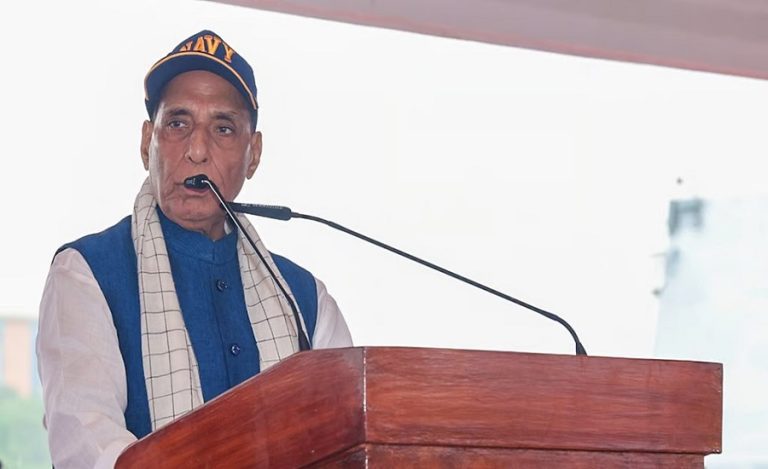
Twelve years in government is long enough to leave a lasting imprint on a nation’s institutions, economy, security architecture, and social landscape. As Prime Minister Narendra Modi completes 12 years at the helm of the Union government, the occasion offers an opportunity to look beyond political rhetoric and examine some of the most significant policy initiatives, structural reforms, and governance interventions undertaken during this period.
From redefining India’s response to cross-border terrorism and accelerating defence modernisation to building highways, airports, and digital infrastructure at an unprecedented scale, the past decade has witnessed changes that have altered the country’s developmental trajectory. Simultaneously, landmark initiatives in financial inclusion, taxation, welfare delivery, and digital governance have sought to transform the relationship between the state and its citizens.
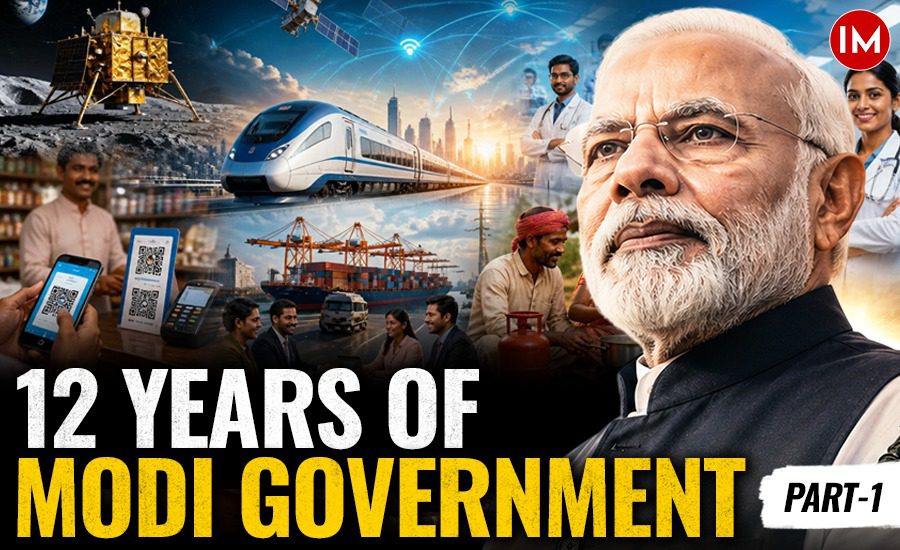
In this special three-part series, Indian Masterminds takes a closer look at 12 major achievements that have defined the Modi era. In Part I, we examine six key areas where the government’s impact has been particularly visible: India’s new defence doctrine, defence modernisation, infrastructure expansion, the Jan Dhan-UPI revolution, the implementation of GST, and large-scale welfare programmes aimed at improving the lives of millions.
Also read: MP CM Mohan Yadav Hails PM Narendra Modi’s 12-Year Tenure, Calls It Era of Transformational Development
India’s New Defence Doctrine
For decades, India’s response to cross-border terrorism followed a familiar and largely ineffective script: a strongly worded diplomatic protest, a summoning of the Pakistani High Commissioner, and an eventual return to the status quo. The Modi government decisively broke from this tradition, establishing a new doctrine of proactive military retaliation.
The shift began with the Uri surgical strikes of September 2016, when Indian Special Forces crossed the Line of Control and destroyed terrorist launch pads in Pakistan-occupied Kashmir — the first time India publicly acknowledged such an operation. The Balakot airstrike of February 2019 escalated this further, with Indian Air Force jets striking a Jaish-e-Mohammed camp deep inside Pakistan’s Khyber Pakhtunkhwa province — the first such strike inside Pakistan since 1971.
Operation Sindoor in May 2025 represented the most comprehensive expression of this doctrine, with precision strikes on nine terrorist sites across Pakistan and PoK, targeting Lashkar-e-Taiba and Jaish-e-Mohammed infrastructure. India had also conducted a cross-border operation into Myanmar in 2015, neutralising militant camps responsible for ambushing Indian Army personnel in Manipur.
The message is unambiguous: acts of terror originating from across India’s borders will no longer be met with diplomatic notes, but with direct and decisive military action.
Defence Modernisation
The Modi Government undertook a comprehensive overhaul of India’s defence ecosystem, focusing on operational readiness, self-reliance and indigenous capability development. Defence exports surged from ₹686 crore in 2013–14 to over ₹23,000 crore by 2024–25, with India exporting defence equipment and platforms to more than 85 countries.
Major structural reforms included the Agniveer military recruitment scheme, the creation of the post of Chief of Defence Staff, and the corporatisation of ordnance factories to improve efficiency, accountability and competitiveness. The 2016 surgical strikes across the Line of Control and the 2019 Balakot airstrike reflected a new doctrine of proactive deterrence and demonstrated India’s willingness to respond decisively to cross-border terrorism.
Simultaneously, extensive infrastructure development along the China and Pakistan borders—including strategic roads, tunnels, bridges and advanced logistics networks—significantly enhanced military mobility and operational preparedness. Under the Atmanirbhar Bharat initiative, Positive Indigenisation Lists restricted the import of hundreds of defence items, encouraging domestic design, development and manufacturing.
A notable outcome has been the emergence of a vibrant defence industrial ecosystem. Private sector companies, startups and MSMEs are now playing an increasingly important role in defence manufacturing, innovation and supply chains, transforming India from a major arms importer into a growing hub for indigenous defence production and exports.
Infrastructure Boom
One of the most visible legacies of the Modi Government is the unprecedented scale of infrastructure development across India. National highways expanded from roughly 91,000 km in 2014 to over 1,46,000 km by 2026, while daily highway construction rates tripled from about 12 km per day to over 36 km per day. Operational airports nearly doubled from 74 to more than 157, dramatically improving air connectivity to Tier-2 and Tier-3 cities.
The railways witnessed a transformation with the introduction of Vande Bharat Express trains, representing India’s indigenous semi-high-speed rail technology. Equally remarkable were engineering achievements that connected some of the country’s most challenging terrains. The completion of the Udhampur-Srinagar-Baramulla Rail Link, including the iconic Chenab Rail Bridge, integrated the Kashmir Valley with the national railway network, while the Bairabi-Sairang rail project brought Mizoram closer to full rail connectivity, ending decades of isolation.
Dedicated Freight Corridors, new expressways, modernised ports and multimodal logistics infrastructure have further strengthened India’s transport network. Together, these projects have reduced travel time and logistics costs, improved connectivity, enhanced national integration and boosted India’s economic competitiveness.
UPI and Jan Dhan
The Modi government engineered one of the world’s most remarkable financial inclusion drives. The Pradhan Mantri Jan Dhan Yojana (PMJDY) led to the opening of over 53 crore bank accounts, bringing millions of previously unbanked citizens — especially women and rural populations — into the formal financial system. Built on the JAM trinity (Jan Dhan–Aadhaar–Mobile), the Unified Payments Interface (UPI) transformed India into a global leader in real-time digital payments, recording billions of transactions every month. Direct Benefit Transfers (DBT) worth over ₹37 lakh crore were delivered directly to beneficiaries, significantly reducing leakages that plagued subsidy programmes for decades. India’s digital payments infrastructure is today studied and replicated by countries around the world.
GST – One Nation, One Tax
The implementation of the Goods and Services Tax (GST) in July 2017 was arguably the most ambitious tax reform in India since Independence. It replaced a labyrinthine web of over 17 central and state levies, eliminating the cascading effect of taxes and creating a unified national market. Despite initial disruptions for small businesses, GST has progressively widened the indirect tax base, formalised large segments of the economy, and improved ease of doing business. Monthly GST collections, which hovered around ₹90,000 crore in the early years, have consistently crossed ₹1.7–1.8 lakh crore in recent years, reflecting robust economic formalisation. The system has also empowered states with a stable, buoyant revenue stream.
Gareeb Kalyan
The Modi government launched an extensive portfolio of targeted welfare programmes designed to address basic human needs at scale. PM Awas Yojana delivered over 4 crore pucca (permanent) houses to homeless and under-housed families. The Ujjwala Yojana provided over 10 crore LPG cooking gas connections to women from Below Poverty Line households, protecting their health from toxic indoor cooking smoke. Ayushman Bharat–PM Jan Arogya Yojana extended health insurance coverage of ₹5 lakh per family per year to over 55 crore beneficiaries, making it the world’s largest government-funded health protection scheme. The Swachh Bharat Mission saw the construction of over 12 crore toilets, sharply reducing open defecation. The Jal Jeevan Mission extended tap water connections to over 14 crore rural households. PM-KISAN provided direct income support to farmers, while Pradhan Mantri Garib Kalyan Anna Yojana (PMGKAY) ensured free food grains for over 80 crore people.
Also read: Following PM Narendra Modi’s Call for Simplicity, CM Mohan Yadav Chooses Bus Ride in Singrauli