For years, electricity distribution in North Bihar faced a challenge that went far beyond wires and transformers.
Every monsoon, vast stretches of the region would become difficult to access. Meter reading, bill distribution, and revenue collection often turned into logistical nightmares. Delayed payments accumulated, billing disputes became common, and power utilities struggled to recover costs efficiently.
Today, that story is changing.
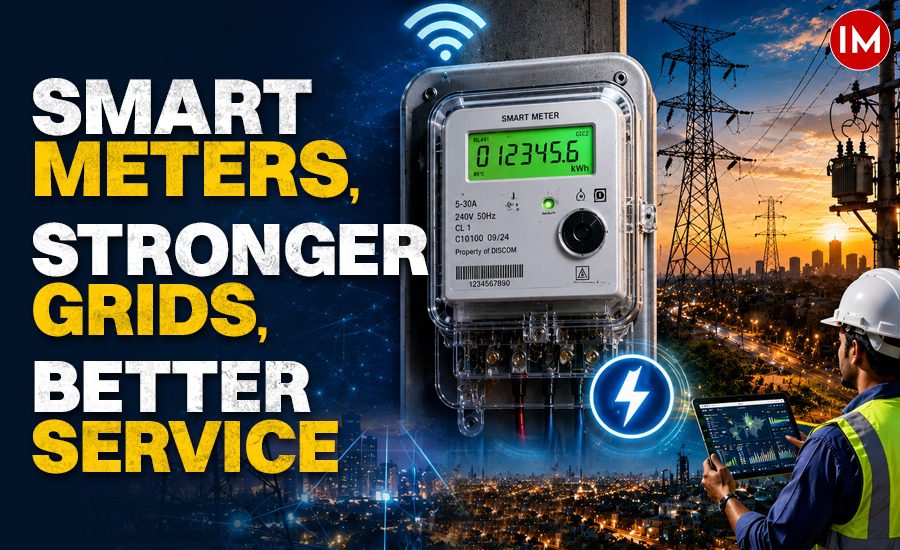
At the centre of this transformation is the large-scale rollout of Smart Prepaid Meters (SPMs), a reform that has reshaped how electricity is consumed, monitored, and paid for across North Bihar. Led by the North Bihar Power Distribution Company Limited (NBPDCL), the initiative is not only improving operational efficiency but also laying the foundation for a fully digital and consumer-centric power ecosystem.
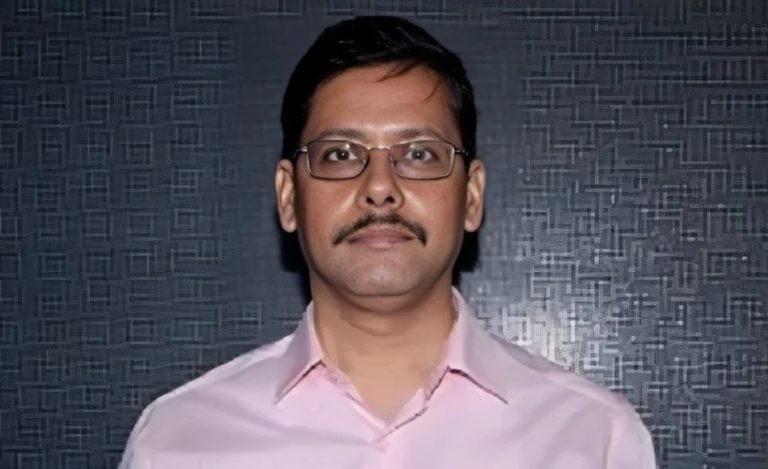
Under the leadership of Rahul Kumar, a 2011-batch IAS officer of the Bihar cadre and currently the Managing Director of NBPDCL, the utility is pursuing an ambitious vision that combines smart technology, modern infrastructure, and data-driven governance.
THE SMART METER REVOLUTION
Bihar has emerged as one of India’s leading states in smart meter deployment.
NBPDCL alone has installed nearly 60 lakh Smart Prepaid Meters, while Bihar as a whole has crossed the 90 lakh mark. The state has also installed more than 1.03 lakh distribution transformer meters, creating one of the country’s most extensive smart energy networks.
The impact has been significant.
Before smart meters, billing and collection depended heavily on manual processes. Human errors, delayed readings, inaccessible locations, and irregular payments often affected revenue collection.
The prepaid model has changed that equation completely.
Consumers now recharge electricity in advance, much like a mobile phone connection. Payments are collected digitally, billing delays have been eliminated, and the cycle of growing consumer arrears has largely been broken.
The results are visible in the numbers. Billing efficiency has improved to 89.58 percent in FY26, nearly ten percentage points higher than FY20. Collection efficiency has reached 97.63 percent, reflecting stronger financial discipline across the system.
“Smart prepaid metering has been genuinely transformative for NBPDCL. It has eliminated commercial leakage, removed manual billing challenges, improved collection efficiency, and empowered consumers to monitor their electricity consumption in real time,” Rahul Kumar told Indian Masterminds.
CHANGING CONSUMER BEHAVIOUR
Perhaps the most remarkable change has occurred at the consumer level.
Through the Suvidha App, consumers can now track daily electricity consumption, monitor balances, review recharge history, and better understand their energy usage patterns.
This visibility is encouraging households to use electricity more efficiently.
The system also offers incentives that make adoption attractive. Consumers receive a smart-meter rebate of ₹0.25 per unit, while advance recharges earn interest benefits. For consumers carrying older dues, the transition to smart meters provides an opportunity to clear liabilities through structured installment plans.
Importantly, NBPDCL has focused heavily on trust-building during the transition.
Door-to-door awareness campaigns, panchayat-level outreach programmes, local support teams, and extensive Information, Education and Communication campaigns have helped address public concerns. Consumers were even encouraged to compare readings from old and new meters to verify accuracy.
Additional safeguards, such as grace periods and restrictions on automatic disconnections during nights and weekends, have further increased public confidence.
What began as apprehension has gradually evolved into acceptance across much of North Bihar.
BUILDING THE POWER BACKBONE
While smart meters are transforming the consumer interface, NBPDCL is simultaneously strengthening the state’s transmission infrastructure.
Demand for electricity in Bihar has increased dramatically over the last two decades. Peak demand has grown thirteen-fold since 2005, reaching 8,822 MW. To support this growth, transmission infrastructure is being expanded at an unprecedented pace.
One of the most significant projects underway is the 400/220/132 kV Katasa (Chhapra) Grid Substation, currently about 50 percent complete and expected to be operational by March 2027.
The project will be complemented by the 220/132/33 kV Mairwa Substation in Siwan and fourteen additional 132/33 kV grid substations across NBPDCL’s service area.
These investments are expected to strengthen power reliability while supporting industrial estates, food processing units, MSME clusters, and future renewable energy projects across North Bihar.
For investors, reliable electricity remains one of the most important indicators of a region’s readiness for growth. The expansion of transmission infrastructure is therefore as much an economic initiative as it is a power sector reform.
A HISTORIC IPO AND A NEW INVESTMENT ERA
Another major milestone is the proposed Initial Public Offering (IPO) of Bihar State Power Transmission Company Limited (BSPTCL).
If completed, BSPTCL could become India’s first publicly listed state-owned transmission utility.
The IPO is expected to support an ambitious capital expenditure programme worth ₹16,194 crore, funding new substations, upgraded transmission corridors, and further expansion of Bihar’s high-voltage transmission network.
Beyond raising capital, the listing is expected to introduce greater transparency, accountability, and market discipline into Bihar’s power sector.
For a state that has spent years modernising its electricity infrastructure, the IPO represents a significant step towards institutional transformation.
THE VISION: A FULLY DIGITAL DISCOM
For Rahul Kumar, the smart meter programme is only the beginning.
NBPDCL’s long-term roadmap focuses on becoming a “100 percent smart, 100 percent digital, 100 percent reliable” utility.
Universal smart meter coverage, single-digit AT&C losses, real-time energy accounting, Geographic Information Systems, Enterprise Resource Planning systems, digital asset management, cyber-security frameworks, and advanced analytics are all part of the transformation plan.
“Our goal is clear—to make NBPDCL the benchmark DISCOM of eastern India and a model for rural-majority utilities across the country. Every unit of power and every rupee collected should be traceable in near real time,” he said.
As North Bihar embraces digital power management, the transformation is becoming about much more than electricity.
It is about building a utility that is transparent, efficient, financially sustainable, and ready for the future. From smart meters in villages to high-capacity substations powering industrial corridors, the region’s energy story is increasingly becoming a story of modern governance itself.
Read Also: Should the Indian Army Revisit Its Stand on Anonymous Complaints?