What happens when a police force decides that preventing crime is not enough? What if it begins shaping futures before crime ever finds a foothold?
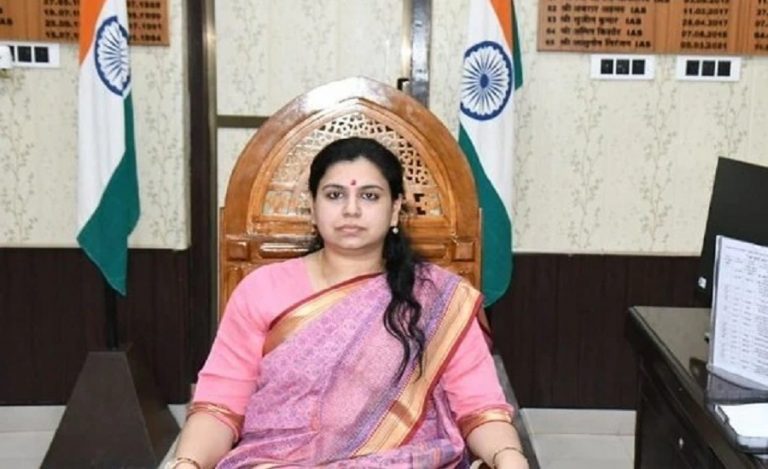
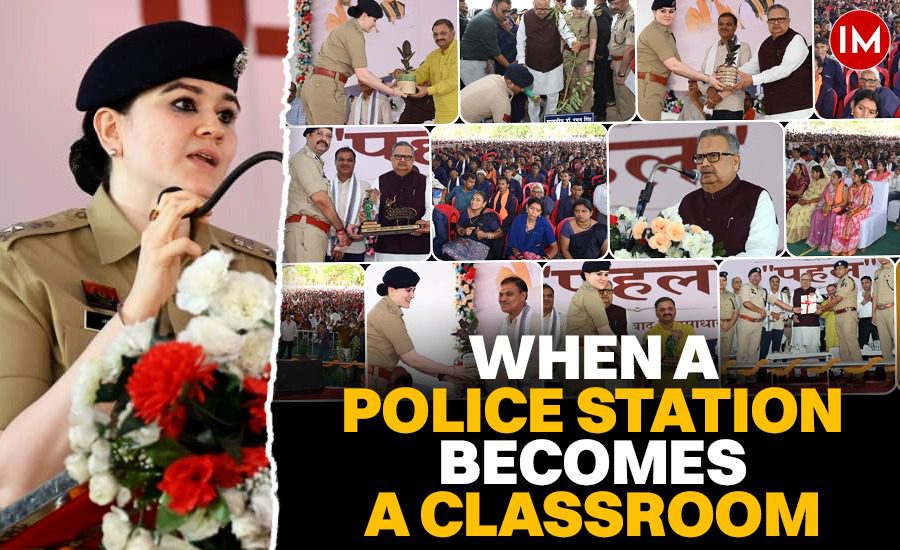
In Rajnandgaon, Chhattisgarh, the answer is taking shape through an ambitious initiative called “Pahal”. Launched by Rajnandgaon Police under the leadership of Superintendent of Police Ankita Sharma, a 2018-batch IPS officer of the Chhattisgarh cadre, the programme seeks to transform the relationship between the police and society. It is not merely about law enforcement. It is about education, mentorship, community participation, and creating opportunities where they are needed the most.
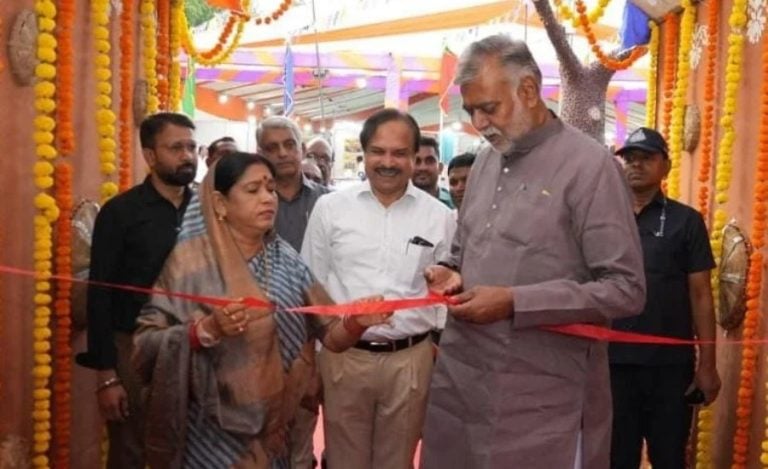
The initiative was formally launched on June 15 at the Rajnandgaon Police Lines in the presence of Chhattisgarh Legislative Assembly Speaker Dr. Raman Singh, Member of Parliament Santosh Pandey, district MLAs, and Mayor Madhusudan Yadav. The event drew nearly 2,600 participants, reflecting widespread community support.
But beyond the numbers lies a larger story—one of hope, aspiration, and social change.
REIMAGINING THE ROLE OF POLICING
For decades, policing has largely been viewed through the lens of crime control and law enforcement. “Pahal” attempts to widen that lens.
Also Read – Anurag Dhankar: The Investigator Who Travelled from Kosovo’s Conflict Zones to the Command of Tripura Police
The programme brings together villagers, students, volunteers, local leaders, and police personnel on a common platform. Around 550 Kotwars, 1,000 villagers including representatives from crime-free villages, 400 aspirational students, over 500 Traffic Mitras, and 111 Good Samaritans participated in the launch event.
The idea is simple yet powerful: stronger communities create safer societies.
Speaking to Indian Masterminds, SP Ankita Sharma explained the vision behind the initiative.
“Policing is not only about responding to crime. It is also about creating opportunities, building trust, and empowering communities. Through Pahal, we want to support young people, strengthen community participation, and encourage positive social change that lasts for generations.”
FROM BARRACKS TO BOOKS
One of the most innovative components of Pahal is the creation of Pahal Reading Rooms for students preparing for competitive examinations such as NEET, JEE, PSC, Vyapam, Police Constable, and Sub-Inspector recruitment exams.
The idea emerged from a simple observation. Many students living in slums, Atal Awas colonies, and economically weaker neighbourhoods struggle to find a quiet place to study. Families often live in single-room houses. Domestic disputes, alcoholism, substance abuse, overcrowding, and financial pressures make focused preparation difficult.
To address this challenge, Rajnandgaon Police has converted barracks that were once used by District Reserve Guard personnel. With Chhattisgarh now largely free from Left Wing Extremism, these facilities are being repurposed for social development.
The reading rooms provide students with a safe, peaceful, and inspiring environment where they can study with dignity.
Interestingly, one of the strongest demands for such facilities came from the Chikhli Police Station area, traditionally considered one of the district’s more challenging policing zones. The overwhelming response revealed an important truth: even in areas facing social and crime-related challenges, young people carry big dreams and are eager to build better futures.
CREATING NEW ROLE MODELS
The vision extends beyond examination success.
Rajnandgaon Police wants these students to become future role models. In communities where criminal elements sometimes become visible influences, the initiative aims to create alternative symbols of achievement through education, public service, and professional success.
The hope is that these young achievers will inspire younger children and gradually reshape community aspirations.
To strengthen this effort, Rajnandgaon Police is launching a free coaching institute at the Police Lines. Classes will be held daily from 7:00 AM to 10:00 AM. Newly recruited Sub-Inspectors and external subject experts will teach students preparing for competitive examinations.
A Pahal Mentorship Programme will also connect newly posted police officers with aspirational students. The mentors will guide students who are preparing for exams, planning to start preparation, seeking career advice, or struggling with motivation.
HONOURING COMMUNITIES THAT CHOOSE PEACE
Another unique aspect of Pahal is its focus on recognising positive community behaviour.
As part of the Crime-Free Village campaign, trees will be planted in the names of 164 villages that remained crime-free during 2024, 2025, and 2026. The plantations will take place at Police Lines and police station premises across the district.
The initiative symbolically celebrates villages that have demonstrated social harmony, vigilance, and collective responsibility.
A special conference also brought together Sarpanches, Patels, villagers, and community representatives from these villages to share experiences and encourage community-led approaches to peace and security.
CELEBRATING UNSUNG HEROES
The launch event also highlighted the importance of citizen participation in public safety.
More than 500 Traffic Mitras attended the programme. These volunteers include petrol pump workers, e-rickshaw drivers, mechanics, dhaba owners, vendors, and others who are often the first people to witness road accidents.
Their contribution during the critical “Golden Hour” can mean the difference between life and death.
The programme also honoured 111 Good Samaritans whose timely actions helped save accident victims during 2025. Their recognition served as a reminder that public safety is a shared responsibility.
A SMALL STEP WITH A BIG VISION
The word “Pahal” means an initiative, a beginning. In Rajnandgaon, it represents much more than a government programme.
It is an attempt to shift policing from being solely reactive to becoming deeply preventive and community-oriented. It is about turning police campuses into learning spaces, police officers into mentors, and ordinary citizens into partners in development.
If successful, Pahal could become a model for how policing can contribute not only to law and order, but also to education, aspiration, and long-term social transformation.
In Rajnandgaon, the police are not just trying to prevent crime. They are trying to build futures.
Also Read – How Anju Yadav Overcame Social Barriers and Became a Deputy Superintendent of Police