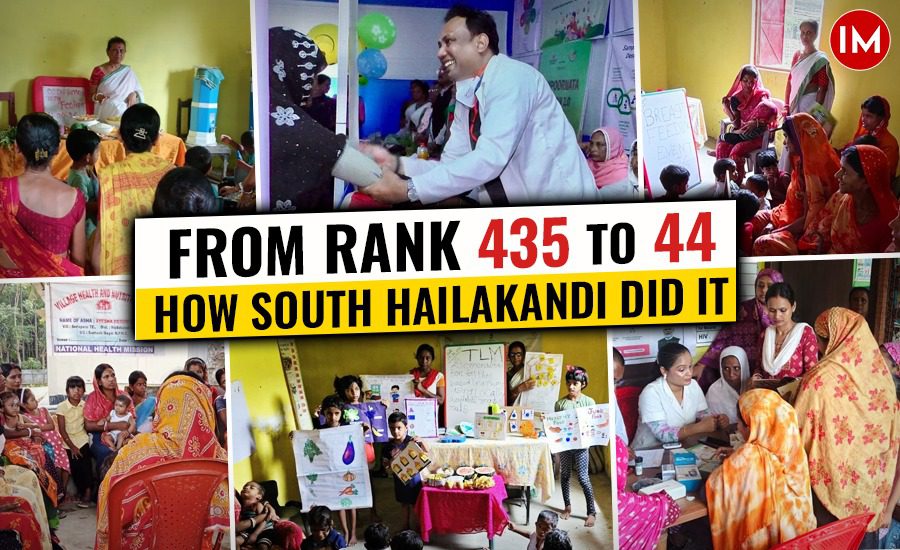
South Hailakandi Aspirational Block in Assam’s Hailakandi district has achieved one of the most significant turnarounds in the Aspirational Blocks Programme (ABP), recording a dramatic rise in the latest DELTA rankings released by NITI Aayog for the October–December 2025 quarter.
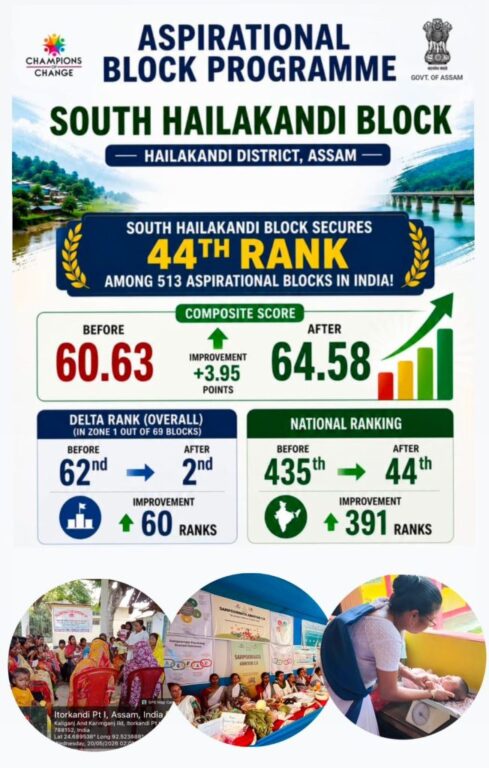
The block climbed from 62nd to 2nd position among 69 aspirational blocks in Zone 1, which covers the northeast, hilly regions and islands. At the national level, its ranking surged from 435th to 44th among 513 Aspirational Blocks across the country.
The achievement reflects a coordinated governance effort undertaken under the overall leadership and guidance of the Assam government, with active contributions from the district administration led by District Commissioner Abhishek Jain, IAS (Assam-Meghalaya Cadre, 2020 batch); frontline workers; Panchayati Raj institutions; and local communities.
Rather than focusing on isolated departmental successes, the administration adopted a comprehensive strategy aimed at improving outcomes across all key performance indicators under the Aspirational Blocks Programme.
A Shift Towards Outcome-Based Governance
The journey began with a detailed diagnostic assessment of all 38 indicators tracked under the programme. Instead of relying solely on aggregate data, officials identified specific service-delivery gaps, low-performing sectors and bottlenecks affecting outcomes at the grassroots level.
Based on this assessment, departments prepared targeted action plans with clearly defined responsibilities, timelines and measurable goals. Particular attention was given to indicators carrying higher weightage and areas where rapid improvement could be achieved through focused interventions.
“The key lesson from South Hailakandi’s success was the shift from a scheme-centric approach to an outcome-centric approach, where every intervention was linked to measurable improvements in ABP indicators and citizen service delivery,” Abhishek Jain, IAS, shared in a conversation with Indian Masterminds.
This approach helped transform administrative reviews from routine meetings into performance-focused exercises where progress was continuously tracked and corrective action was taken whenever required.
Strong Gains in Health and Nutrition
Much of South Hailakandi’s progress was driven by substantial improvements in health and nutrition indicators.
First-trimester antenatal care registration increased from 93.60 percent to 97.30 percent. The proportion of National Quality Assurance Standards (NQAS)-certified health facilities more than doubled, rising from 15.38 percent to 36.36 percent.
Non-communicable disease screening also witnessed a sharp jump. Hypertension screening coverage increased from 19.70 percent to 37.94 percent, while diabetes screening rose from 11.32 percent to 38.70 percent.
The nutrition sector recorded equally impressive gains. The percentage of pregnant women regularly receiving supplementary nutrition through ICDS increased from 53.51 percent to 68.89 percent. Functional drinking-water facilities at Anganwadi Centres improved from 81.48 percent to 96.64 percent.
These improvements were supported by extensive capacity building of frontline workers, including ASHAs, Anganwadi workers and ANMs. Detailed analysis of health facility performance, strengthened reporting systems under platforms such as POSHAN 2.0 and regular field-level reviews helped ensure that interventions translated into measurable outcomes.
Beyond Health: Progress Across Sectors
The turnaround was not limited to health indicators.
Housing completion under PMAY-G increased from 48.11 percent to 78.58 percent, reflecting better beneficiary tracking and implementation support.
The percentage of self-help groups receiving revolving funds rose dramatically from 37.65 percent to 98.92 percent. Livestock-related interventions also delivered results, with additional bovine units increasing from 48.61 percent to 62.83 percent.
These gains were made possible through close coordination between departments, local institutions, banks, frontline workers and community organisations.
Officials worked to remove bottlenecks, improve service delivery and ensure that eligible beneficiaries received timely access to schemes and services.
Data-Driven Monitoring at the Core
A key factor behind South Hailakandi’s rise was the district administration’s emphasis on continuous monitoring and accountability.
Every priority indicator was assigned to a specific department and functionary, creating clear ownership of outcomes. Dedicated cohort-wise review mechanisms were introduced, allowing clusters of related indicators to be assessed together.
Rather than treating the block as a single unit, health facilities and service-delivery centres were reviewed individually. This enabled officials to identify underperforming institutions and provide targeted support where needed.
Performance data was regularly compared with field realities. If a particular intervention failed to generate expected results, strategies were modified during the quarter itself instead of waiting until the end of the review cycle.
“The most important lesson from South Hailakandi is that transformational improvements in development outcomes are possible even in resource-constrained settings when governance is data-driven, accountable, collaborative and focused on last-mile delivery,” says Abhishek Jain.
The Role of ‘Sampoornata Panchang’
Another notable element of South Hailakandi’s strategy was the locally developed “Sampoornata Panchang” initiative.
Introduced as part of preparations for Sampoornata Abhiyaan 2.0, the framework served as a planning, convergence and monitoring tool. It helped departments synchronise activities, sequence interventions effectively and maintain focus on achieving saturation across critical indicators.
The initiative encouraged departments to work collectively rather than in silos, strengthening coordination at both administrative and field levels.
Officials say the framework helped convert broad development goals into structured action plans that could be tracked and reviewed regularly.
Frontline Workers and Community Participation
While data systems and monitoring mechanisms played a crucial role, the administration acknowledges that the real progress happened on the ground.
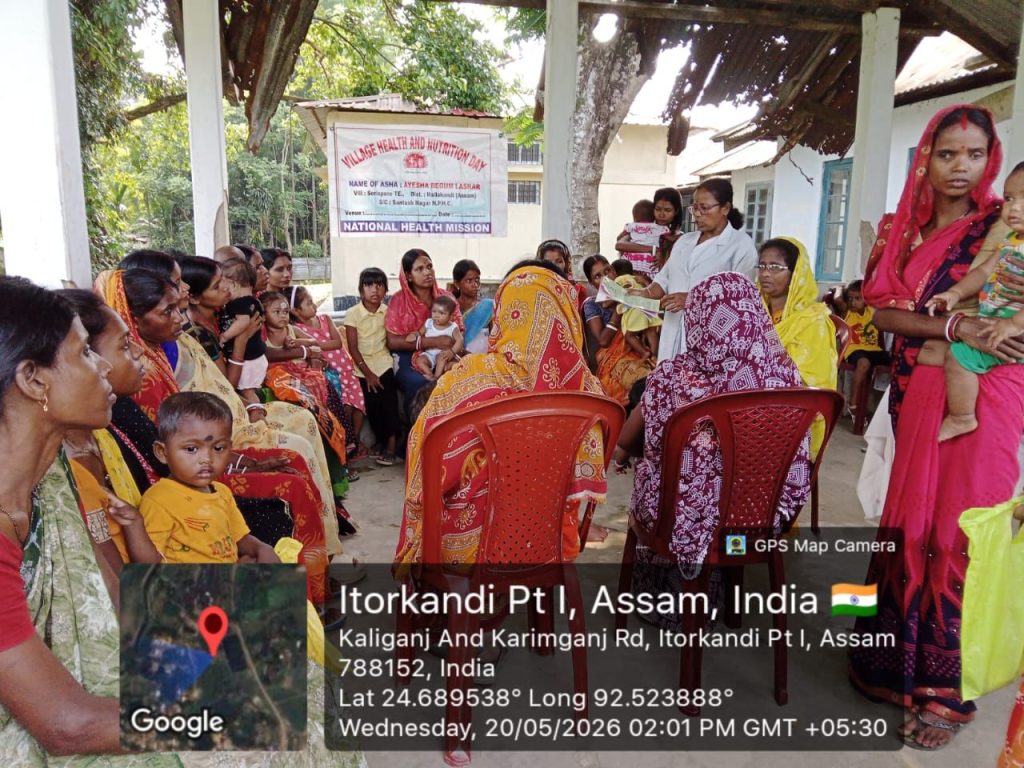
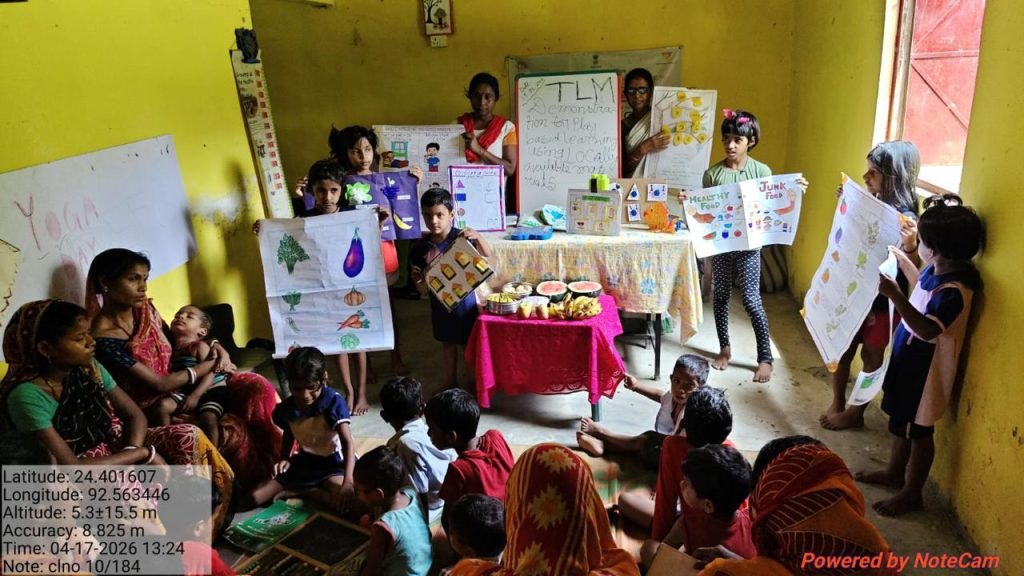
Frontline workers were central to implementation efforts. ASHAs, Anganwadi Workers and ANMs intensified outreach activities, mobilised beneficiaries and improved service uptake across villages.
Panchayati Raj institutions assisted in beneficiary identification, verification and monitoring of local development projects. Community participation was encouraged through awareness campaigns, health screening drives and village-level outreach programmes.
The administration’s message remained consistent: every stakeholder had a measurable role in improving the block’s performance.
A Model for Aspirational Blocks Across India
South Hailakandi’s rise from 435th to 44th nationally demonstrates what focused governance and coordinated execution can achieve within a relatively short period.
The experience offers important lessons for other Aspirational Blocks. It highlights the value of data-driven decision-making, inter-departmental convergence, continuous monitoring, strong frontline institutions and active community participation.
Most importantly, it shows that substantial improvements do not always require extraordinary resources. Often, better coordination, accountability and targeted interventions can generate remarkable outcomes.
As South Hailakandi continues its development journey, its transformation is emerging as a noteworthy example of how focused administrative effort, community engagement and outcome-oriented governance can deliver measurable change at the grassroots level.