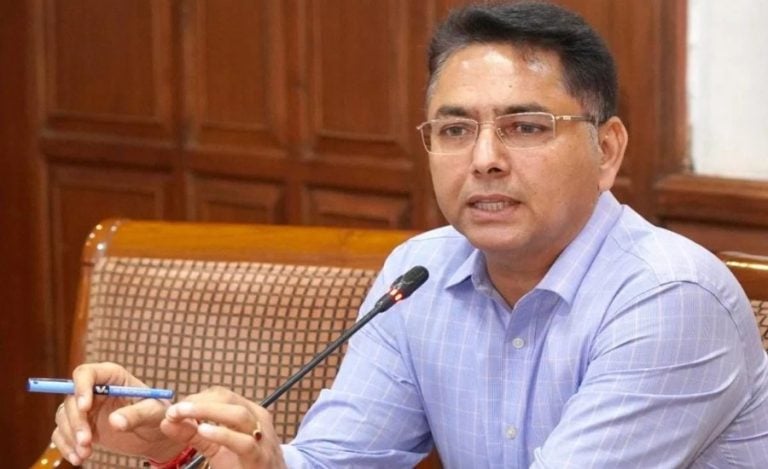
2023-batch Rajasthan cadre IPS officer Abhijeet Tulshiram Patil is proving that age is no barrier to fearless policing. From dismantling gangster networks to exposing a human trafficking racket that allegedly sold hundreds of young women under the guise of marriage, the young officer has already built an impressive record. In an exclusive conversation with Indian Masterminds, he shares what policing on the ground has taught him.
WHEN A 22-YEAR-OLD TOOK CHARGE
Most 22-year-olds are still deciding what they want to do with their lives. Abhijeet Tulshiram Patil was already wearing the IPS uniform.
The 2023-batch Indian Police Service officer of the Rajasthan cadre, who cleared the UPSC Civil Services Examination in his very first attempt, is among the youngest IPS officers in the country. But despite his age, he has handled assignments that demand courage, patience and sharp decision-making.
Currently posted as Assistant Superintendent of Police (ASP), Rajgarh Circle and Chief of the Anti-Gangster Task Force (AGTF), Churu. His work has ranged from taking on organised crime syndicates to rescuing victims of human trafficking.
Speaking to Indian Masterminds, the young officer says policing is much more than enforcing laws.
“Effective policing is not just about making arrests; it is about understanding criminal ecosystems, acting proactively, and building public confidence. Leadership means setting a clear vision, empowering the team, and ensuring every action contributes towards creating a safer environment for the community.”
BREAKING THE GANGSTER ECOSYSTEM
For years, Rajgarh and Churu have remained associated with organised crime. The region has produced several notorious gangsters, while violent gang rivalries have often made headlines.
Instead of responding only after crimes took place, Patil decided to attack the entire criminal ecosystem.
He launched Operation Clean Sweep, a campaign aimed not only at gang members but also at those who helped them survive.
The results were remarkable.
Within just nine months, his team arrested more than 100 gangster supporters, seized over 30 illegal weapons, and cracked down on social media accounts that glorified gang culture.
But the achievement he values the most is something that cannot be measured only by statistics.
During his tenure as ASP Rajgarh, there was no incident of gang violence and no murder in his jurisdiction—a region once known for frequent violent crimes.
Later, while leading the Anti-Gangster Task Force in Churu, Patil supervised operations that dismantled a major gangster-linked network. The team seized counterfeit currency worth more than ₹3 crore and launched a strong crackdown on families and associates connected to the Rohit Godara gang, exposing how organised crime often extends far beyond violent offences.
A HUMAN TRAFFICKING RACKET EXPOSED
One of the most sensitive investigations handled by Patil came during his training posting as ASP (Under Training) in Jaipur.
The case began with what appeared to be the rescue of a single minor girl. But her statement opened the doors to a much larger and disturbing network.
The investigation revealed that an NGO named Sarvasamaj Gayatri Foundation was allegedly trafficking girls from states like Uttar Pradesh, Bihar, Jharkhand, West Bengal and Chhattisgarh.
Poor families were promised jobs for their daughters. Instead, many girls were allegedly brought to Rajasthan, their identities manipulated, and they were sold into forced marriages. Several victims were later pushed into exploitation and abuse.
Police rescued victims from the NGO premises and arrested four accused, including the woman who allegedly operated the racket.
Investigators found that vulnerable families had been targeted through agents. Victims were allegedly confined, assaulted and even sedated if they resisted. According to the investigation, marriages were arranged for amounts ranging from ₹1.5 lakh to ₹3 lakh.
The operation highlighted the ugly face of human trafficking hidden behind the appearance of social work.
For Patil, it reinforced the importance of listening carefully to every victim and following every lead, no matter how small it may seem.
LEARNING BEYOND THE ACADEMY
Like every young IPS officer, Patil entered the field after completing rigorous training. But he says nothing truly prepares an officer for real policing until they step into the field.
“The Academy teaches the law and ideal procedures, but field policing is far more dynamic. Every situation has its own social and cultural context. Effective policing is as much about understanding people as it is about enforcing the law. That is something no classroom can fully teach.”
According to him, field experience has strengthened his empathy, improved his public interaction and taught him the importance of balancing law with human sensitivity.
TECHNOLOGY IS THE NEW BATTLEFIELD
Crime today is changing rapidly.
Gangsters are no longer limited to physical territories. They use encrypted communication, social media and digital financial networks to recruit members and coordinate criminal activities.
Patil believes policing must evolve at the same pace.
He says Rajasthan Police is increasingly relying on technology platforms such as NATGRID, CRIMAC and the Interoperable Criminal Justice System (ICJS) to improve intelligence sharing and coordination between agencies.
His policing model combines technical intelligence (TECHINT), human intelligence (HUMINT) and constant monitoring of social media platforms.
The objective is simple—stop crime before it happens.
Rather than waiting for criminals to strike, intelligence-driven policing allows officers to identify threats early and act proactively.
Age is just a number.
Being one of India’s youngest IPS officers naturally attracts attention. But Patil prefers letting his work speak for itself.
Whether it is dismantling gangster networks, exposing organised trafficking syndicates or building safer communities through intelligence-led policing, his focus remains firmly on public service.
His journey also carries an important message for UPSC aspirants.
Clearing the examination may earn someone the uniform, but earning public trust requires courage, compassion and consistency every single day.
At just the beginning of his career, IPS officer Abhijeet Tulshiram Patil has already shown that determined leadership is not defined by age. It is defined by action. And if his early years in service are any indication, Rajasthan’s young officer is only getting started.