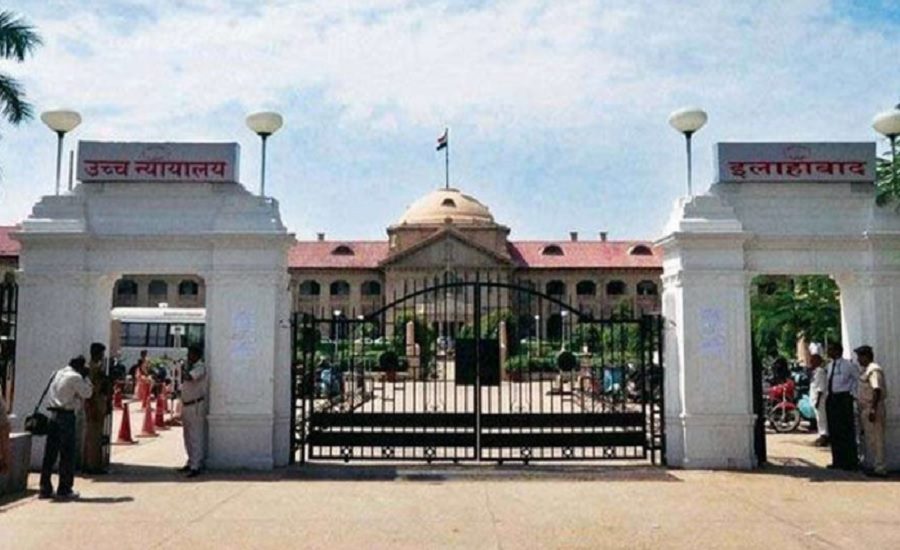
Prayagraj: The Allahabad High Court has directed Uttar Pradesh DGP Rajeev Krishna (IPS: 1991: UP) to consider making audio-video recording of witness statements under Section 180 of the Bharatiya Nagarik Suraksha Sanhita (BNSS) mandatory for investigating officers.
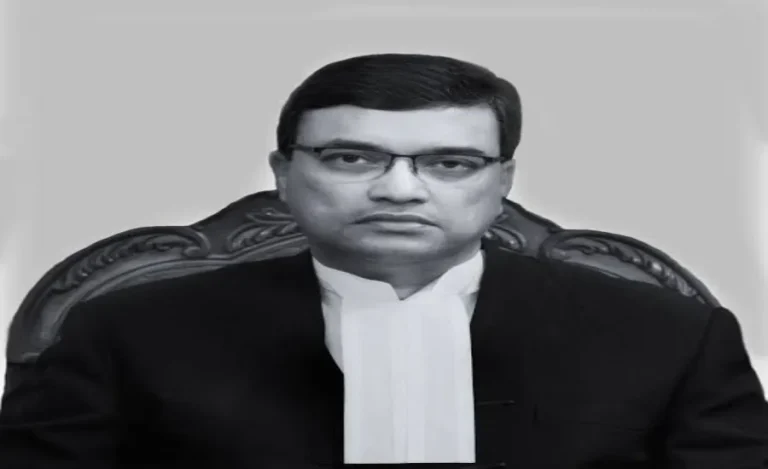
Justice Arun Kumar Singh Deshwal issued the direction while hearing a bail application in a dowry-related case from Agra. The court observed that recording witness statements through audio-video means could make investigations more transparent and fair and assist courts during bail and other judicial proceedings.
Court Flags Non-Recording of Witness Statements
During the hearing, the investigating officer appearing before the court admitted that he had not made an audio-video recording while recording the first informant’s statement under Section 180 BNSS.
Read Also: Allahabad High Court Delivers Key Ruling On Goondas Act And Personal Freedom
The officer subsequently tendered an unconditional apology after the court referred to directions issued by the UP DGP regarding audio-video recording of statements.
Under Section 180(3) BNSS, an investigating officer may record a witness statement through audio-video electronic communication. Rule 20(1) of the BNSS Rules, 2024 also provides for such recording.
The court said it had encountered several cases where investigating officers had not used the audio-video recording facility.
It observed that officers sometimes avoided recording statements “just to save themselves from the allegation that the statements of the witnesses under section 180 BNSS are written by IOs themselves by copying the FIR itself”.
DGP Circular Already Covers Rape-Victim Statements
The High Court noted that DGP Circular No. 24/2025 had made audio-video recording of a rape victim’s statement compulsory.
However, recording of other witness statements under Section 180 BNSS had remained optional. The court observed that this option “has been widely misused by several Investigating Officers”.
Against this background, the court directed the DGP to consider extending mandatory audio-video recording to statements recorded under Section 180 BNSS.
“Therefore, this Court directs the DGP, U.P. to consider, making it mandatory to prepare audio-video of statements recorded under Section 180 BNSS, so as to make the investigation more transparent and fair and same would also be helpful to the Court while deciding the bail application and other judicial proceedings.”
Court Issues Wider Investigation Guidelines
The High Court also issued directions concerning the manner in which investigating officers should record and collect evidence.
The guidelines include:
- Recording the first informant’s and other witnesses’ statements as early as possible, preferably through the e-Sakshya App.
- Recording statements of independent witnesses wherever possible.
- In rape and sexual-assault cases, recording the victim’s statement at her residence or another place of her convenience by a woman police officer.
- Producing victims before a magistrate for recording their statements in specified serious offences.
- Collecting mobile-phone and forensic evidence in cases involving alleged obscene videos.
- Obtaining call-detail records where relevant to the investigation.
- Conducting test identification parades and property-identification procedures in accordance with the applicable rules.
DGP Asked to Circulate Guidelines to Investigating Officers
The court directed the DGP to apprise investigating officers of the guidelines.
It said the objective should be to ensure that the “real culprit may be brought to justice and innocent person may not be subject to harassment due to faulty investigation.”
The order was passed in Chandrakanta v. State of Uttar Pradesh, a bail matter arising from a dowry-related case in Agra. The court also granted bail to the applicant after considering the material before it.
Read Also: UP DGP Rajeev Krishna Appears Before Allahabad HC Over Police Compliance With Court Orders