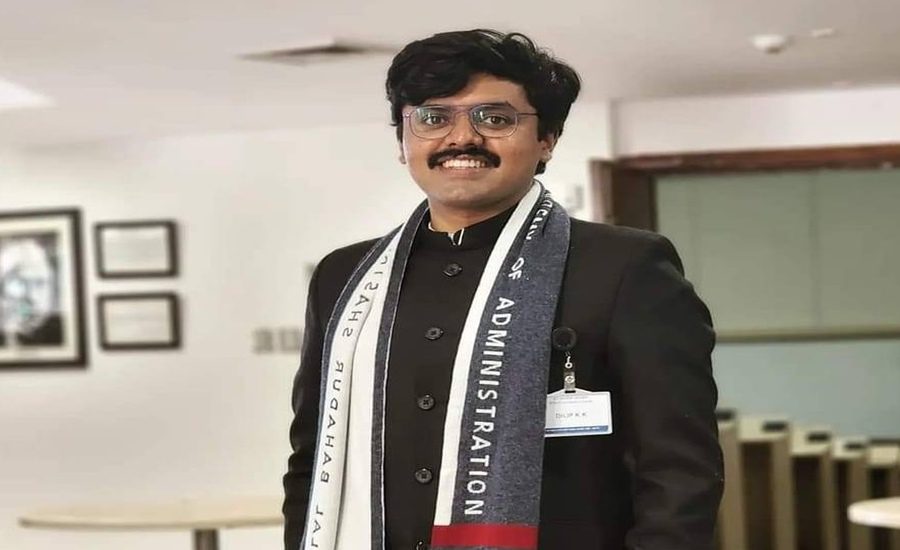
Thiruvananthapuram: A wide-ranging reform wishlist shared by young IAS officer Dilip K Kainikkara has ignited one of Kerala’s most intense post-election public debates, with strong reactions over proposals such as bifurcating Malappuram district, raising the retirement age of government employees, expanding English-medium education, and promoting nightlife to boost tourism.
Mr Kainikkara, a 2022-batch IAS officer currently serving as Sub Collector of Tirur, published the suggestions in a Facebook post soon after the United Democratic Front (UDF) secured a decisive victory in the Kerala Assembly elections.
He argued that the newly elected government has a rare three-year window without elections until 2029 to undertake politically difficult but long-term structural reforms.
“Retiring People at 56 Is Irrational,” Says IAS Officer
The most controversial suggestion was Kainikkara’s call to raise the retirement age of Kerala government employees from 56 to 58 years.
According to him, Kerala’s high life expectancy and strong health indicators make early retirement financially and administratively unsustainable.
“Retiring people at 56 and immediately starting pension payments is irrational in every sense,” he wrote.
The proposal triggered sharp reactions from job aspirants and PSC rank holders, many of whom expressed concern that higher retirement ages could delay recruitment and reduce job opportunities.
Proposal to Bifurcate Malappuram District
Kainikkara also recommended splitting large districts such as Malappuram to improve administrative efficiency and public access to services.
He suggested that a district covering around seven Assembly constituencies—roughly equivalent to a Lok Sabha constituency—would represent an ideal administrative size.
Supporters argued that smaller districts would improve governance, while critics questioned whether Kerala could afford the recurring costs of creating additional districts.
English-Medium Expansion Sparks Language Debate
Another proposal that generated intense discussion was his suggestion that Malayalam-medium education should largely be limited to lower primary classes, with upper primary and higher levels gradually shifting to English-medium instruction.
Kainikkara said the move would reduce educational inequality and better prepare students for global opportunities.
The idea drew strong resistance from those who viewed it as undermining Kerala’s linguistic identity, while others argued that broader English proficiency is increasingly essential.
Nightlife Proposal Divides Public Opinion
The IAS officer also advocated for encouraging nightlife and associated economic activity to strengthen tourism and attract investment.
Supporters described the idea as a progressive step that could boost Kerala’s service economy, while opponents argued that such changes must be balanced with local cultural norms and law-and-order considerations.
School Reforms, AI Education and Grading Changes Suggested
Kainikkara criticized the widespread awarding of A+ grades, saying it has diluted academic standards.
He proposed:
- Reforming the grading system
- Reviewing the all-pass policy
- Ensuring minimum learning outcomes
- Introducing AI, robotics and 3D printing into school curricula
- Expanding vocational and practical life-skills education
The post sparked broader public suggestions on entrepreneurship, first aid, waste management and flexible higher education pathways.
Political and Public Reactions Intensify
As the debate spread online, reactions ranged from supportive and analytical to sarcastic and ideological.
Some accused the officer of proposing impractical ideas disconnected from Kerala’s economic realities, while others praised him for initiating discussion on issues that many public officials avoid addressing openly.
Supporters said his post reflected administrative insight and encouraged meaningful public engagement.
A Rare Bureaucratic Intervention in Public Policy Debate
Dilip K Kainikkara’s Facebook post has evolved into one of Kerala’s most significant post-election discussions, touching on governance, education, employment, language, culture and economic development.
Whether or not the UDF government acts on any of these ideas, the debate has revealed deep divisions and strong public interest in the future direction of the state.