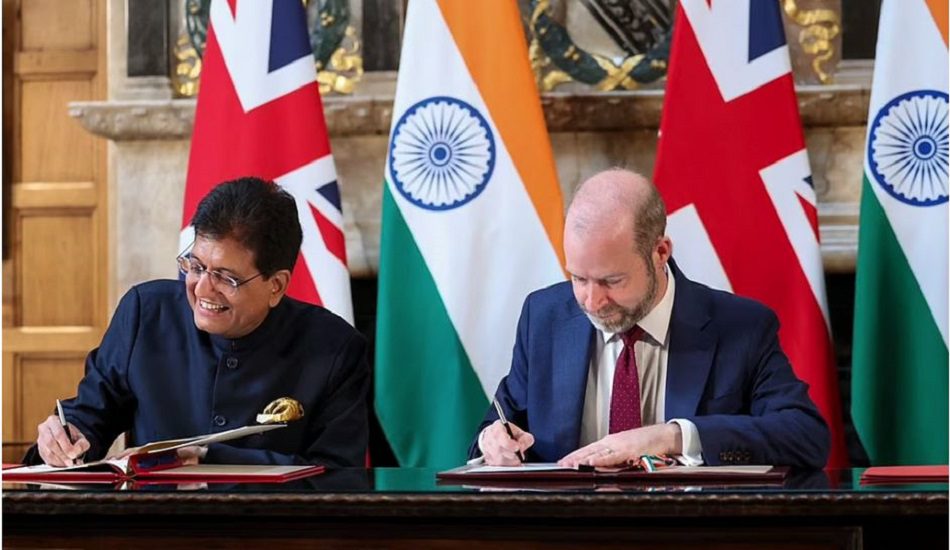
New Delhi: India-UK CETA will officially come into effect on July 15, 2026, along with the Double Contribution Convention (DCC). Union Commerce and Industry Minister Piyush Goyal said the two agreements will strengthen trade, promote innovation, attract investment, and support long-term economic growth between India and the United Kingdom.
The announcement came after Goyal’s meeting in London with UK Secretary of State Peter Kyle, where both leaders discussed new opportunities to deepen economic cooperation between the two countries.
India-UK CETA: Piyush Goyal Highlights Stronger Partnership
Sharing details of the meeting on X, Piyush Goyal said he had meaningful discussions with Peter Kyle on expanding India-UK trade and investment.
Read also: Trade, Energy and Growth: Why India-Oman CEPA Is Making Headlines Across the Gulf
He said both countries remain committed to building an ecosystem that encourages innovation, investment, and holistic growth once the agreements become operational on July 15, 2026.
What is the India-UK CETA
The Comprehensive Economic and Trade Agreement (CETA) is a major trade agreement between India and the UK. Its main goal is to:
- Increase bilateral trade.
- Improve market access for businesses.
- Strengthen cooperation in goods and services.
- Encourage investment and innovation.
- Expand opportunities for companies in both countries.
According to the Ministry of Commerce, CETA will provide zero-duty access for nearly 99% of Indian exports to the UK by trade value and expand services trade across several sectors, including IT, education, and professional services.
What is the Double Contribution Convention (DCC)
The Double Contribution Convention (DCC) is a social security agreement designed to make it easier for professionals working temporarily between India and the UK. Under the agreement:
- Employees and employers will pay social security contributions in only one country at a time.
- Workers on temporary overseas assignments can continue contributing to their home country’s social security system.
- The exemption period for detached workers will increase from 52 weeks to 60 months (5 years), reducing unnecessary financial burden.
What are the Benefits for Businesses and Professionals
The implementation of CETA and DCC is expected to:
- Boost trade and investment.
- Reduce business costs.
- Improve mobility for Indian professionals.
- Strengthen economic cooperation.
- Create new business and employment opportunities in both countries.
Official Government View
The Ministry of Commerce and Industry has described the agreements as a major milestone in India-UK economic relations. The government believes the trade pact will support India’s long-term economic goals while making trade and professional movement between the two nations easier and more efficient.
Read also: Big Boost For Indian Marine Export: EU Opens Doors for Continued Agri and Marine Exports