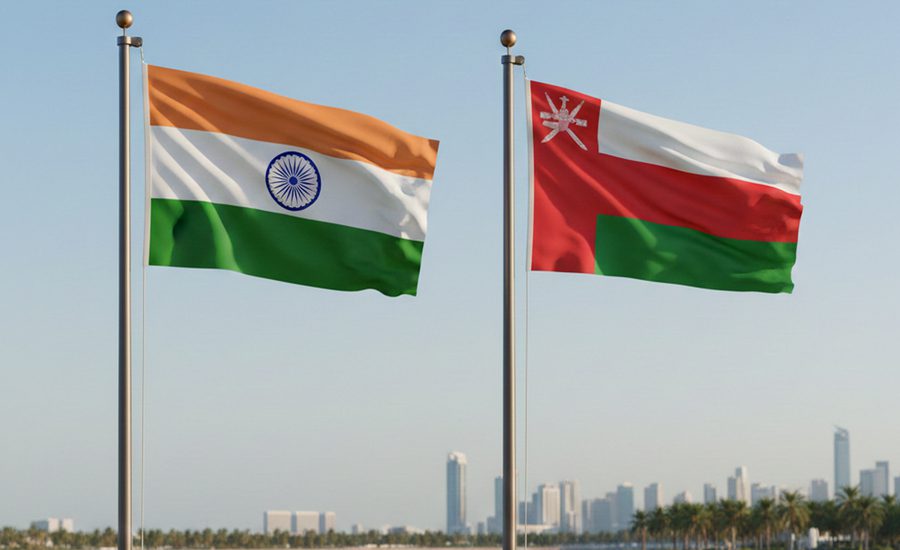
New Delhi: The India-Oman CEPA (Comprehensive Economic Partnership Agreement), which comes into force on June 1, 2026, is expected to strengthen India’s energy security, improve trade resilience, and create new export opportunities across multiple sectors.
According to official government information and industry reports, the agreement will deepen economic ties between India and Oman while giving Indian businesses wider access to Gulf markets.
What is India-Oman CEPA?
The India-Oman CEPA is a comprehensive trade agreement covering:
- Trade in goods and services
- Investment cooperation
- Professional mobility
- Regulatory cooperation
- Supply-chain integration
- Market access improvements
Read also: India-Oman CEPA: Nearly All Indian Goods to Enter Oman Duty-Free from June
The agreement is considered one of India’s most important trade deals in the Gulf region.
Key Highlights of the India-Oman CEPA
1. Massive Duty-Free Market Access
Under the agreement:
- Oman will provide 100% duty-free market access across 98.08% of tariff lines.
- The coverage accounts for 99.38% of India’s export value.
- Benefits will become effective from the first day of implementation.
2. Major Export Opportunities for India
Indian exporters are expected to benefit in sectors such as:
- Pharmaceuticals
- Engineering goods
- Chemicals
- Textiles
- Electronics
- Agriculture and processed food
- Marine products
- Gems and jewellery
- Plastics
Products that earlier faced tariffs of up to 5% will now gain improved competitiveness in the Omani market.
3. Stronger Energy Security for India
Oman has become increasingly important in India’s energy ecosystem.
According to trade data:
- India’s petroleum gas imports from Oman nearly doubled from around USD 0.7 billion in FY2022 to USD 1.4 billion in FY2026.
- Oman emerged as India’s largest LNG supplier during March and April 2026.
- The country accounted for approximately 30–31% of India’s total LNG imports during that period.
Experts believe the agreement will help India diversify energy sources and reduce supply-chain risks in the Gulf region.
Strategic Importance Beyond Trade
Alternative Route for Energy Supplies
Recent disruptions around the Strait of Hormuz highlighted the need for diversified energy routes.
Oman’s geographic location provides:
- Faster access to India’s western coast
- Reduced shipping risk
- Alternative supply routes during regional disruptions
- Greater energy security for Indian importers
This makes Oman a strategic partner for India’s long-term energy planning.
What is Middle East-India Deepwater Pipeline (MEIDP)
The CEPA also aligns with India’s long-term connectivity plans.
A proposed 2,000-km Middle East-India Deepwater Pipeline (MEIDP) connecting Oman to Gujarat is under consideration.
Key details include:
- Estimated project cost: USD 4.7–4.8 billion
- Expected gas supply: around 31 mmscmd
- Direct connection to Gujarat
- Reduced dependence on the Strait of Hormuz
Industry reports suggest the project could significantly improve India’s future energy security.
India-Oman Trade Performance
Trade between the two countries has shown steady growth.
Bilateral Goods Trade
| Financial Year | Total Trade |
| FY2022 | USD 10.0 Billion |
| FY2026 | USD 11.2 Billion |
The growth reflects increasing economic cooperation and stronger commercial ties between the two nations.
India’s Exports to Oman
Major export items include:
- Refined petroleum products
- Aluminium oxide
- Rice
- Ships and vessels
- Steel pipes
Refined petroleum products now account for a larger share of India’s exports to Oman compared with previous years.
Why the India-Oman CEPA Matters
The India-Oman CEPA is expected to:
- Increase bilateral trade
- Reduce tariffs on Indian goods
- Improve supply-chain resilience
- Strengthen energy cooperation
- Support Indian exporters
- Expand India’s presence in Gulf markets
- Encourage investment flows between both countries
Analysts believe the agreement could become a major pillar of India’s Gulf economic strategy in the coming years.
Official Outlook
The Ministry of Commerce and Industry has stated that the agreement will provide immediate market access advantages for Indian exporters while protecting sensitive domestic sectors through a calibrated approach. The CEPA is also expected to create new opportunities for MSMEs and labour-intensive industries.