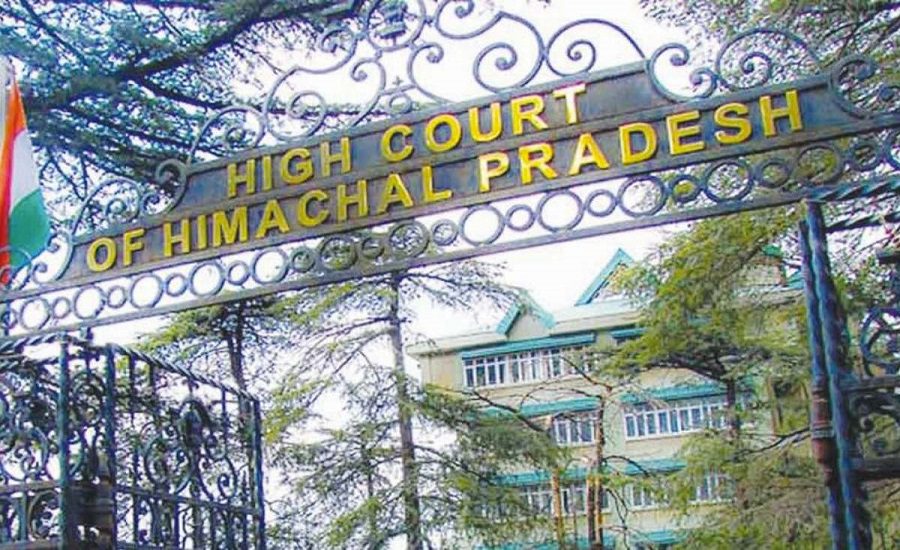
Shimla: The Himachal Pradesh High Court has directed the state’s Director General of Police Ashok Tiwari (IPS: 1993: HP) to circulate the provisions of Section 94 of the Juvenile Justice (Care and Protection of Children) Act, 2015, along with necessary guidelines, to all investigating officers in the state.
The direction came while the court was considering an application in Kulwinder Singh v. State of Himachal Pradesh & Ors., concerning additional evidence to establish the age of a minor victim in a POCSO case. The order was delivered on September 15, 2026, by a Division Bench of Justice Vivek Singh Thakur and Justice Bhupesh Sharma.
Court Flags Repeated Lapses in Collecting Age Evidence
The Bench noted that it had come across a number of criminal appeals and revisions where prosecution cases had faced difficulties because investigating officers had failed to properly collect evidence relating to the age of child victims and children in conflict with law.
The court remarked:
“To avoid similar lapse in investigation, Director General of Police, Himachal Pradesh is directed to circulate provisions of Section 94 of the Juvenile Justice Act, 2015 alongwith necessary guidelines/instructions to all Investigating Officers in Himachal Pradesh.”
The court directed that the instructions should ensure investigating officers follow the requirements of Section 94 while collecting age-related evidence.
Court Allows Additional Evidence to Establish Victim’s Age
The case arose from an appeal against the conviction of Kulwinder Singh in a case originating from FIR No. 25/2020 at Police Station Kot-Kehloor in Bilaspur.
The accused had been convicted under Sections 354A, 354D, 376 and 506 of the IPC and Section 4(2) of the POCSO Act and sentenced to 20 years’ rigorous imprisonment under the POCSO provision, along with additional sentences under the IPC.
During the appeal, the State sought permission to introduce the victim’s Matriculation Certificate and school records, which had not been produced during the trial.
The High Court allowed the State to lead the additional evidence, holding that it was necessary for a just decision and did not change the prosecution’s case. The accused would also have an opportunity to cross-examine the relevant witnesses.
Evidence the Court Wants Investigators to Collect
The court directed investigators to make efforts to obtain:
- School records and the Matriculation or equivalent certificate
- Birth certificates issued by the competent municipal or panchayat authority
- Other available documents supporting the date of birth
- Appropriate age-determination tests where documentary evidence is unavailable or doubtful, subject to the required orders
Investigating officers were also directed to identify and cite witnesses who can establish the authenticity and contents of such records, including record custodians and certificate-issuing officials.
DGP Asked to Issue Instructions by October 15
The High Court directed that the necessary instructions should be issued at the earliest and latest by October 15, 2026.
The order also directed the State to transmit a copy of the judgment to the DGP for compliance. The court will subsequently consider the recording of the additional evidence in the case.
The court said the objective of the directions was to prevent investigative lapses relating to age proof from adversely affecting prosecution cases and to ensure that courts have the necessary evidence to determine the age of child victims in accordance with law.
Read Also: Can Consent and Protection Coexist? The Case for Reforming POCSO