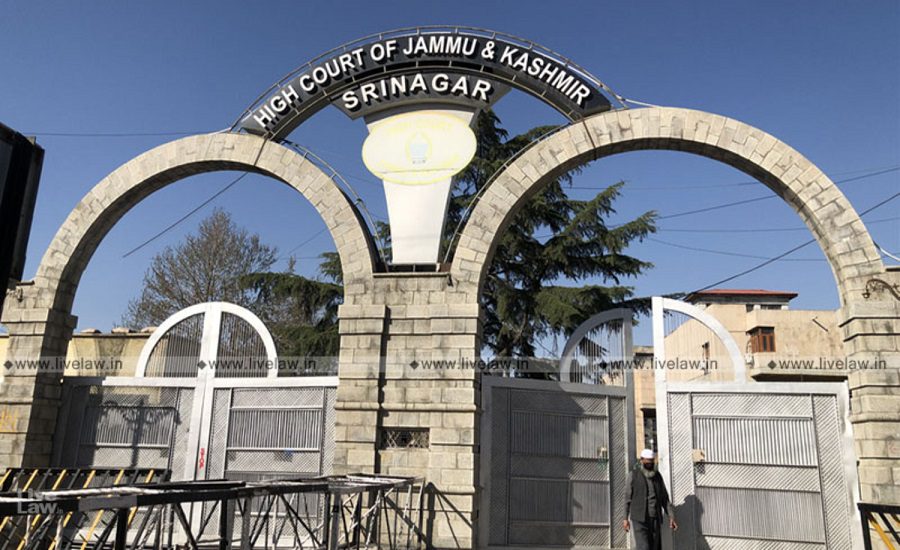
Ladakh: J&K High Court quashes preventive detention after finding that the Jammu and Kashmir Home Department failed to produce the complete detention record before the Court. In an important judgment, the High Court said submitting incomplete records or photocopies through officials is not enough. The Court stressed that preventive detention directly affects personal liberty and authorities must strictly follow constitutional and legal requirements.
Background of the J&K High Court Cancels Preventive Detention Ruling
The High Court of Jammu & Kashmir and Ladakh heard a habeas corpus petition filed on behalf of Mudasir Ahmad Mir, who challenged his preventive detention under the Jammu & Kashmir Public Safety Act, 1978 (PSA).
Read also: J&K High Court Recruitment Case: Everything You Need to Know About the Illegal Appointments
The petition questioned the detention order issued by the District Magistrate, Srinagar. The petitioner argued that the detention was illegal and that the authorities had not followed the required legal procedure.
Why Was The Petitioner Detained
According to the authorities, the petitioner had allegedly:
- Developed links with active terrorists and overground workers of The Resistance Front (TRF).
- Provided logistical support to militant activities.
- Faced an FIR registered at Police Station Panthachowk, though he had later been released on bail.
- During the 2024 Assembly Elections, allegedly attempted to disrupt the electoral process, leading to preventive action under the Bharatiya Nagarik Suraksha Sanhita (BNSS).
The authorities claimed that normal criminal law was not sufficient to prevent his alleged activities and therefore preventive detention was necessary.
What Did The Petitioner Argue
The petitioner challenged the detention on several grounds. He argued that the police dossier was prepared mechanically without proper evidence.
It was also argued that the District Magistrate merely approved the police proposal without independently examining whether preventive detention was actually required.
J&K High Court Cancels Preventive Detention: Key Observations
Justice Rahul Bharti made strong observations on the responsibility of the Home Department. The Court said that when a constitutional court asks for the detention record, authorities must place the entire original record before the Court.
Simply forwarding photocopies through a clerk or government advocate without proper verification cannot satisfy this constitutional duty.
The Court also noted that although the detention had been approved and extended from time to time, the respondents failed to produce the latest detention extension order, making it impossible for the Court to examine the legality of the continued detention.
Court Criticises Home Department
The High Court expressed serious concern over the casual manner in which the Home Department handled the judicial process. It observed that production of detention records cannot be treated as a routine administrative formality because preventive detention involves deprivation of a person’s liberty, which receives constitutional protection.
The Court further said that the Commissioner/Secretary of the Home Department has a personal responsibility to ensure that the complete detention file reaches the Court. This responsibility cannot be shifted to junior staff or fulfilled by sending incomplete photocopies.
What is the Reason of J&K High Court Cancels Preventive Detention Ruling
The High Court held that failure to produce the complete detention record struck at the very legality of the detention. Without the complete record, the constitutional court could not properly examine whether the detention continued lawfully. As a result, the preventive detention order became legally unsustainable.
What is the Importance of J&K High Court Cancels Preventive Detention Ruling
This ruling reinforces an important constitutional principle that personal liberty cannot be restricted without strict compliance with legal safeguards.
The judgment makes it clear that government departments must produce complete and verified detention records whenever courts examine preventive detention cases.
It also serves as a reminder that procedural safeguards under preventive detention laws are mandatory and cannot be ignored.