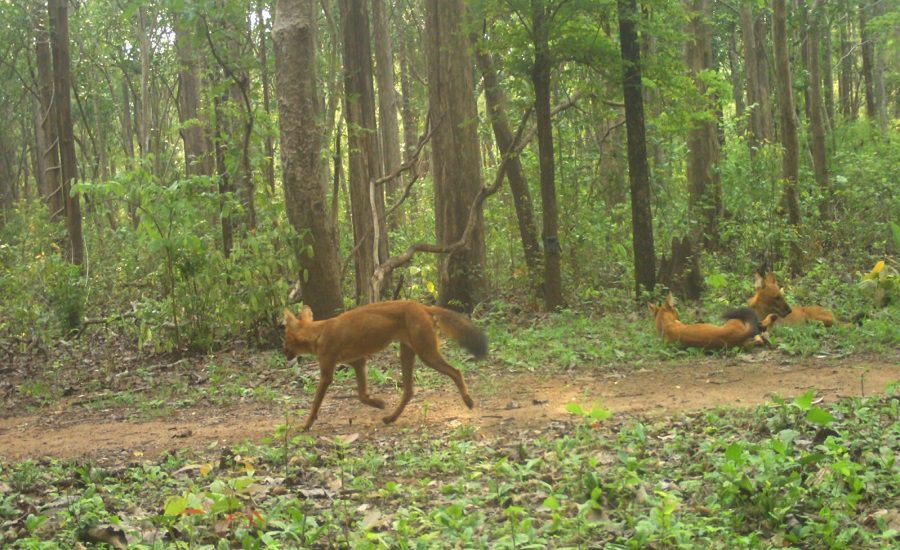
Raipur/Gariaband (Chhattisgarh): In a significant boost to wildlife conservation in Central India, a pack of four endangered Indian wild dogs (Dholes) has been recorded on camera traps inside the Udanti-Sitanadi Tiger Reserve (USTR) during the ongoing All India Tiger Estimation (AITE) 2026. The rare sighting is being celebrated by the Forest Department as a major indicator of ecological recovery and the growing health of one of Chhattisgarh‘s most important protected forest landscapes.
Forest officials have attributed the return of the elusive apex predator to sustained conservation efforts, including aggressive anti-poaching operations, large-scale habitat restoration, technological surveillance and community participation, which have collectively strengthened the reserve’s biodiversity and prey base.
Rare Dhole Pack Captured During AITE 2026
The four-member Dhole pack was documented through the reserve’s extensive camera trap network during the nationwide All India Tiger Estimation (AITE) 2026 exercise.
Wildlife experts consider the presence of Dholes an important ecological indicator because the species thrives only in forests that possess a healthy prey population, minimal human disturbance and well-connected habitats.
According to forest officials, the sighting confirms that the ecological conditions inside the Udanti-Sitanadi Tiger Reserve have improved significantly in recent years, making the reserve increasingly suitable for sustaining endangered carnivores.
Dhole: One of India’s Most Endangered Carnivores
The Indian Wild Dog (Cuon alpinus), popularly known as the Dhole, is among India’s most threatened carnivorous mammals.
The species is classified as “Endangered” on the International Union for Conservation of Nature (IUCN) Red Listand receives the highest legal protection in India under Schedule I of the Wildlife (Protection) Act, 1972.
Known for their remarkable teamwork and social behaviour, Dholes live and hunt in highly organised packs. Unlike solitary predators, they rely on coordinated hunting strategies that make them exceptionally effective predators.
Why Dholes Are Vital to Forest Ecosystems
Wildlife biologists consider Dholes a keystone species because they play an essential role in maintaining ecological balance.
By naturally regulating populations of herbivores such as:
- Chital
- Sambar
- Wild boar
the predators prevent excessive grazing pressure on forests. This allows native vegetation to regenerate naturally, supports biodiversity and contributes to the long-term health of the ecosystem.
The return of Dholes therefore reflects not only the recovery of a single species but also the strengthening of the reserve’s entire food chain.
Conservation Measures Behind the Ecological Revival
Forest officials attribute the success to a series of intensive conservation initiatives undertaken over the past several years.
Large-Scale Anti-Encroachment Drive
One of the most significant interventions involved reclaiming approximately 956 hectares of forest land from illegal encroachments.
Following the eviction drives, the reclaimed land underwent ecological restoration, helping revive natural habitats and reconnect important wildlife corridors that had previously been fragmented.
The restored landscape has improved habitat connectivity, allowing wildlife to move more freely across the reserve.
Strong Crackdown on Wildlife Crime
The Forest Department also launched extensive anti-poaching operations to eliminate illegal hunting and wildlife trafficking.
According to officials:
- More than 550 wildlife offenders, smugglers and poachers have been arrested and jailed.
These enforcement actions have significantly weakened local poaching networks and enhanced protection for vulnerable wildlife species.
Technology-Driven Forest Protection
The reserve has substantially upgraded its wildlife monitoring system through the deployment of:
- Extensive camera trap networks
- Advanced surveillance systems
- Improved intelligence gathering
- Round-the-clock anti-poaching monitoring
These technological interventions are complemented by active cooperation from local villagers and indigenous communities, who continue to play an important role in reporting suspicious activities and supporting conservation efforts.
Healthy Prey Base Signals Ecological Recovery
The reappearance of Dholes is closely linked to the remarkable improvement in the reserve’s herbivore population.
With stricter protection against poaching and better habitat conditions, populations of prey species have grown steadily, creating favourable conditions for apex predators to return naturally.
Wildlife experts note that carnivores such as Dholes can only survive where prey availability is sufficient, making the sighting an important ecological indicator of a thriving forest ecosystem.
Forest Department Hails the Achievement
Reacting to the development, the Deputy Director of the Udanti-Sitanadi Tiger Reserve said the success should be viewed as evidence of the overall health of the forest ecosystem rather than focusing solely on tiger numbers.
“The success of any forest ecosystem is measured not just by the presence of tigers, but by the health of its entire food chain and biodiversity. Thanks to strict security protocols, encroachment clearance and scientific management, a highly sensitive and endangered species like the Dhole is thriving here today. It is a powerful testament to the ground-level success of our conservation policies.”
The official added that the documented presence of the four-member Dhole pack demonstrates that the reserve’s prey base and ecological food web are healthier than they have been in years.
Udanti-Sitanadi Emerging as a Conservation Success Story
The latest discovery further strengthens the reputation of the Udanti-Sitanadi Tiger Reserve as one of Central India’s emerging biodiversity hotspots.
Supported by decisive administrative action, habitat restoration, scientific wildlife management and strong political commitment toward conservation, the reserve is steadily evolving into one of the safest habitats for endangered wildlife in Chhattisgarh.
The successful documentation of the rare Dhole pack during AITE 2026 highlights the effectiveness of integrated conservation strategies and reinforces the importance of sustained protection efforts for preserving India’s rich wildlife heritage.