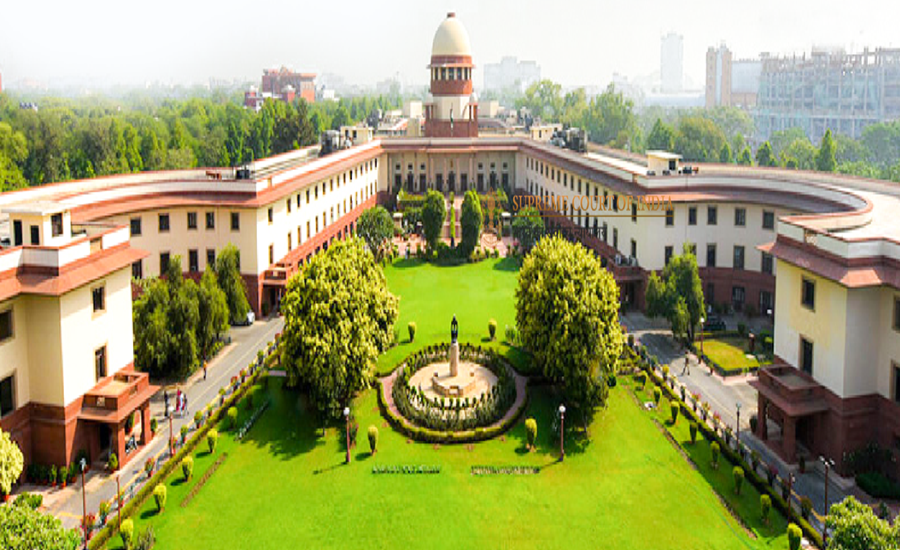
New Delhi: The Supreme Court of India has ruled that court’s permission is necessary for further investigation once the police have filed a final report under the Criminal Procedure Code (CrPC) and the Bharatiya Nagarik Suraksha Sanhita (BNSS), 2023.
Background: Legal Framework on Investigation
India’s criminal justice system is governed by the Code of Criminal Procedure (CrPC) and, since July 1, 2024, the Bharatiya Nagarik Suraksha Sanhita (BNSS) — a modernised legal statute that replaced parts of the CrPC.
Under Section 173(2) CrPC, police must submit their investigation report (charge sheet or closure report) to the Magistrate once investigation is complete. However, Section 173(8) CrPC and Section 193(9) BNSS relate to further investigation after the final report is filed.
Over the years, courts differed on whether police could initiate this further investigation without judicial permission. The Supreme Court’s latest decision now settles this controversy.
What is Section 173(2) CrPC
Section 173(2) CrPC means: After police finish investigating a crime, they must submit a final report to the court, telling what they found, who is accused, and whether the case should go to trial.
Facts of the Case: Pramod Kumar & Ors. v. State of U.P. & Ors.
The dispute arose from a decade-old gang rape case in Firozabad, Uttar Pradesh. After the police completed their initial probe, they filed a closure report in May 2014. The Magistrate accepted it in September 2015 because the complainant neither appeared nor filed objections.
Years later, based on a complaint to the National Human Rights Commission (NHRC), the police ordered “further investigation” and collected DNA samples in 2019 and 2021 — without seeking court permission.
The accused challenged this action before the Allahabad High Court, which allowed further investigation on the basis that a protest petition had been filed. The accused then approached the Supreme Court.
Supreme Court’s Key Finding
In a judgment by a bench led by Justice Rajesh Bindal and Justice Vijay Bishnoi, the Supreme Court held:
Court Permission Is Mandatory
The Court clearly ruled that once the final investigation report is filed under Section 173(2) CrPC, the police or investigating agency cannot proceed with further investigation without first obtaining leave of the Magistrate or appropriate court.
Magistrate/Court Has Sole Discretion
The judgment emphasised that only the Magistrate/Court has the power to decide whether further investigation should be ordered. Police cannot, on their own, decide to restart or expand investigation.
The Court explained that if police believe more investigation is needed, they must file an application before the Magistrate/Court explaining the reasons. The court will then use its judicial discretion to grant or refuse further investigation.
Legal Reasoning: Why This Interpretation?
The Supreme Court referred to earlier decisions, including Vinay Tyagi v. Irshad Ali (2013), where it was noted that though Section 173(8) CrPC does not explicitly require court permission for further investigation, it was a well-accepted practice to seek leave of court. This practice reflects judicial understanding and must be followed.
The bench also relied on past rulings — including cases where police authorities attempted to order further investigation without court direction — to reinforce that such orders are invalid unless sanctioned by the court.
What This Means for Law Enforcement
This ruling clarifies that:
- Police cannot independently order further investigation after submitting a final report.
- A formal application to the Magistrate/Court is required to seek permission.
- This strengthens judicial oversight over investigation and protects accused persons from indefinite or unilateral probes.
However, petitions for further investigation may still be entertained if substantiated by fresh evidence or new circumstances, but only after court approval.
Read also: Who Can Investigate Corruption Cases Against Central Officers? Supreme Court Explains the Law