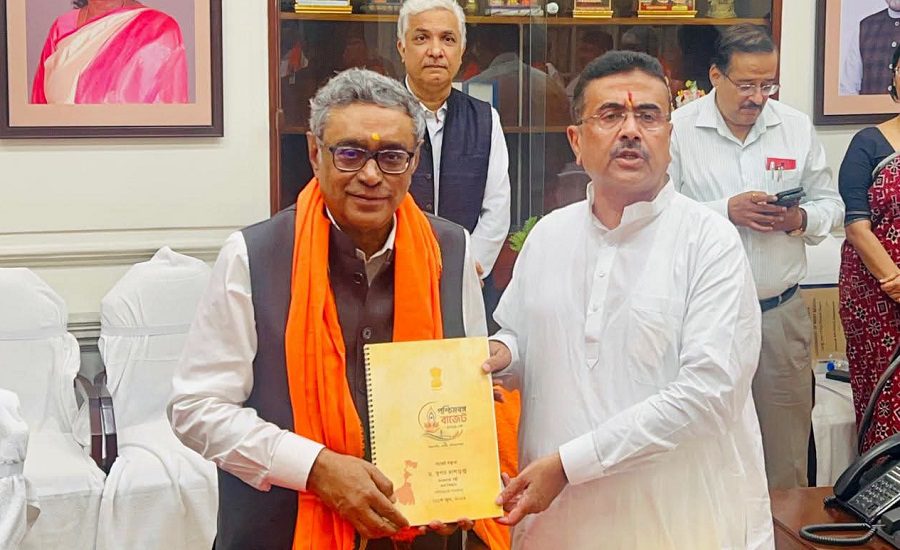
Kolkata: The new BJP-led government in West Bengal has presented its first full state budget, marking a significant policy shift with sweeping administrative, economic, and governance reforms. The budget was presented by Finance Minister Swapan Dasgupta under the guidance of Chief Minister Shubhendu Adhikari.
The budget has been described as a transformational blueprint aimed at restructuring governance, boosting employment, and accelerating industrial growth in the state.
Five New Districts and Administrative Overhaul in West Bengal
One of the biggest announcements in the budget is the creation of five new districts, including Kolkata, Bashirhat, Sundarbans, Jangipur, and Arambagh.
Kolkata to Become Full-Fledged District
Kolkata will now be formally converted into a complete administrative district with a District Magistrate (DM) and Sub-Divisional Magistrates (SDMs). This move aims to streamline governance and improve direct public service delivery.
Previously, Kolkata functioned under a different administrative structure, leading to coordination gaps between citizens and government departments.
Read also: West Bengal Tourism Plans 90-Day Action Plan and Targets Threefold Rise in Tourist Arrivals
Major Infrastructure Push: New Airport and Transport Expansion
To reduce pressure on Netaji Subhas Chandra Bose International Airport, a new greenfield international airport will be developed near Kalyani in Nadia district on 1,000–1,500 acres of land.
Additional developments include:
- New civil airports in Purulia, Balurghat, and Malda under the UDAN scheme
- Expansion of Cooch Behar airport with ₹10 crore allocation
- Upgradation of Hasimara and Kalaikunda Air Force stations through land support
Revival of Calcutta Stock Exchange and Startup Push
The government has announced the revival of the Calcutta Stock Exchange (CSE), which has remained inactive since 2013.
Other financial reforms include:
- A new startup policy within three months
- Focus on making Kolkata a financial hub for eastern India
- Improved capital access for MSMEs and startups
24×7 Economy: Night Life and Business Liberalisation
The budget introduces major reforms to promote a 24×7 “night economy.”
Key changes include:
- Shops, restaurants, and establishments allowed to remain open round-the-clock
- Boost to tourism, hospitality, and logistics sectors
- Strict labour safety and regulatory framework
However, liquor outlets will remain restricted near schools, hospitals, and religious places, with a minimum distance rule of 500 meters in Kolkata.
Anti-Syndicate Law and Land Reform Measures
The government plans to introduce a strict anti-syndicate law to eliminate extortion and improve ease of doing business.
Other reforms include:
- Review of Urban Land Ceiling Act, 1976
- Reclamation of unused industrial land for investment
- Focus on industrial expansion and transparency
Massive Recruitment Drive: 1 Lakh Government Jobs
A major highlight of the budget is the announcement of 100,000 government jobs across sectors.
Recruitment Breakdown:
- 50,000 jobs in education sector (teachers and non-teaching staff)
- 20,000 jobs in police department
- Remaining posts across various departments
Additionally:
- 16,000 police constables to be recruited before Durga Puja
- 33% reservation for women in government jobs
- Formation of a transparent UPSC-style recruitment board
Special women police stations will also be established to enhance safety.
Welfare Schemes and Social Sector Spending Increased
The government has announced continuation and expansion of welfare schemes, including maternity benefits, pension hikes, and student incentives.
Key allocations include:
- Women & Child Development: ₹52,308 crore
- Panchayat & Rural Development: ₹51,836 crore
- School Education: ₹44,948 crore
Hospital food budgets have been doubled, and ISKCON will handle a mid-day meal pilot project in Kolkata.
Agriculture Budget Reduced, Industrial Spending Increased
While agriculture allocation has been reduced to ₹8,565 crore, the government has significantly increased spending in industrial and infrastructure sectors.
- Industry & Commerce: ₹3,267 crore (up from ₹1,484 crore)
- IT & Electronics: ₹506 crore (more than double previous allocation)
- Home Affairs: ₹17,925 crore
Fiscal Outlook and Economic Indicators
The budget projects improvement in fiscal health:
- Revenue deficit reduced to 1.02% of GSDP (from 2.07%)
- Fiscal deficit estimated at 2.91%
- State debt reduced slightly to 37.98% of GSDP
Sports, Infrastructure and Other Key Announcements
Additional announcements include:
- ₹150 crore Sports University
- ₹100 crore for Rabindra Sarobar Stadium redevelopment
- Grants of ₹1 crore each to major football clubs including East Bengal and Mohun Bagan
- Electricity subsidy of ₹2 per unit for farmers
- Construction of Ganga Sagar bridge with underwater rail/tunnel proposal
Shift in Policy Priorities
The budget signals a clear shift towards industrialisation, employment generation, infrastructure expansion, and administrative restructuring, while continuing welfare schemes for vulnerable sections.
It also reflects a strong focus on job creation, governance reforms, and economic modernization as central pillars of the new government’s agenda.
Read also: West Bengal CM Suvendu Adhikari Meets IAS Probationers, Pushes Citizen-Centric Governance