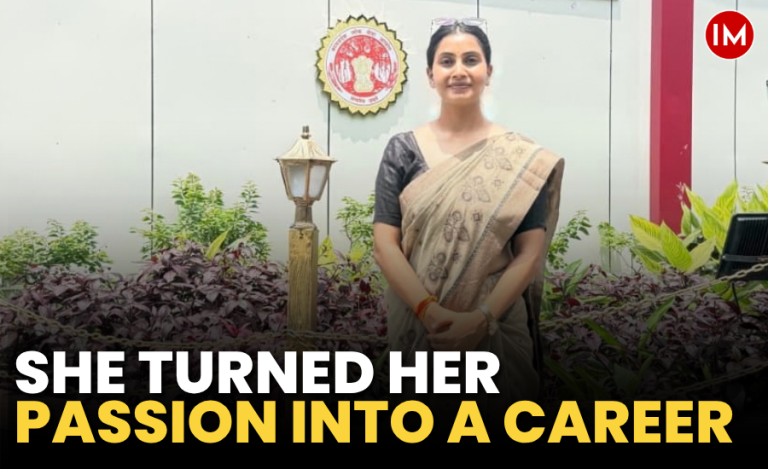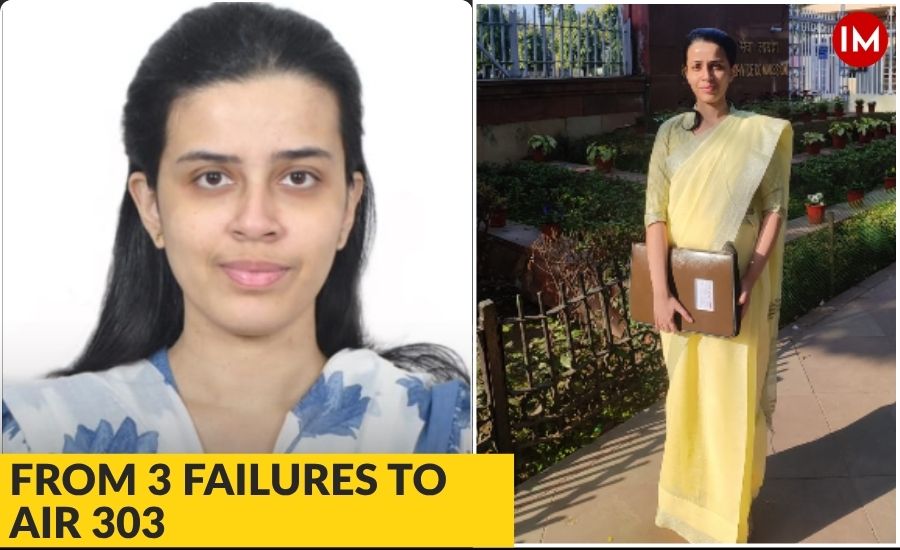
For many aspirants, cracking the UPSC Civil Services Examination is a dream. For Liza Garga, it became a test of endurance, patience, and self-belief. Securing All India Rank 303, Liza’s journey is not just about success—it is about surviving repeated failures and still choosing to move forward.
Hailing from the Northeast, from Assam, Liza represents a region where awareness about UPSC is still growing. Her story is not only inspiring but also deeply relatable for thousands of aspirants navigating uncertainty.
“This exam is like a chakravyuh—you can enter it easily, but exiting it is very difficult,” she told Indian Masterminds.
ROOTS IN ASSAM, DREAMS BEYOND LIMITS
Liza was born in Nagaon and later moved to Guwahati, where she completed her schooling at St. Mary’s Convent. Coming from an academically strong family, her father is a surgeon and her mother a physics professor at Cotton University.
She later pursued her B.Tech from National Institute of Technology Silchar. Like many engineering graduates, she initially considered going abroad for higher studies. But the COVID-19 pandemic changed her perspective.
“Why go outside when there is so much to do in our own country?” she reflected.
Her involvement with the Rotary Club and teaching underprivileged children further strengthened her resolve to serve society. That is when the idea of civil services took root.
THREE FAILURES AND A TURNING POINT
Liza’s journey was far from smooth. She failed to clear the prelims in her first three attempts. For many, that would have been the end of the road. But for her, it became a turning point.
“The demotivation, anxiety, overthinking—everything is real. Every serious aspirant goes through it,” she admitted.
These failures forced her to introspect. Instead of blaming the system or luck, she changed her approach.
Her biggest shift? Moving away from multiple resources and focusing on limited, high-quality material.
“This time, I focused on PYQs, revision, and strategy rather than running after too many sources,” she said.
That change worked. She cleared prelims with a margin of 10 marks above the cutoff.
MASTERING MAINS IN JUST 75 DAYS
After clearing prelims, Liza had only 75 days for Mains preparation. She knew this stage would define her final result.
Her strategy was clear:
- Focus deeply on her optional subject
- Practice answer writing extensively
- Ensure completion of papers within time
“Optional is a deciding factor. It can make you or break you,” she explained.
She wrote as many answers as possible to build speed and precision. This helped her structure answers better and present them effectively under time pressure.
THE INTERVIEW EDGE: OWN YOUR STORY
In the personality test, Liza scored an impressive 198 marks. Her preparation focused heavily on her Detailed Application Form (DAF), home state, and current affairs.
Being from the Northeast, many questions revolved around the region.
She was asked about:
- Cultural icons like Bhupen Hazarika
- Historical issues like the Sylhet referendum
- India’s foreign relations
- Her own social work
“Interview is about being honest. Don’t bluff. Say what you know clearly,” she advised.
WHY UPSC IS A ‘CHAKRAVYUH’
One of the most powerful insights from Liza’s journey is her comparison of UPSC to a “chakravyuh.”
“You enter the preparation cycle easily. But after multiple attempts, the stakes become very high. Exiting becomes difficult,” she said.
She explained how aspirants often reach a stage where:
- They have already invested years
- They lack a backup plan
- The pressure to succeed increases
At that point, the exam becomes not just a goal—but a necessity.
“You did not come this far only to come this far,” she emphasized.
THE IMPORTANCE OF BACKUP AND UPSKILLING
Unlike many aspirants who completely isolate themselves, Liza now advises a more balanced approach.
She believes that cutting off from the world is a mistake.
“LinkedIn is not a distraction. Keep your profile updated. Upskill yourself,” she suggested.
Her advice is practical:
- Maintain professional networks
- Learn new skills alongside preparation
- Be ready for alternative career paths
This approach reduces anxiety and provides a safety net.
CHOOSING PSIR OVER ENGINEERING
Despite having a background in civil engineering, Liza chose Political Science and International Relations (PSIR) as her optional.
Her decision was strategic and interest-driven.
“Your optional should be something you connect with,” she explained.
Her reasons included:
- Strong overlap with General Studies
- Help in essay and ethics papers
- Personal interest in political thought
She enjoyed studying thinkers like Aristotle, Plato, and Kautilya, which made preparation engaging.
“I felt that with PSIR, I could clear in one go—and it worked,” she said.
WHY IRS OVER IPS OR IFS?
With her rank, Liza is likely to get the Indian Revenue Service (IRS), which she has kept as her preference.
She believes service choice is deeply personal.
According to her:
- Not everyone is suited for policing roles
- Some prefer work-life balance
- Others want to work in financial intelligence
“The calling is completely personal,” she said.
She also pointed out that changing job dynamics and the rise of financial crimes have made IRS more appealing.
LESSONS FOR ASPIRANTS
Liza’s journey offers clear, actionable lessons:
For Prelims:
- Focus more on static subjects
- Revise multiple times
- Do not ignore CSAT
For Mains:
- Practice answer writing daily
- Build depth in understanding
- Make concise notes
For Interview:
- Be honest and clear
- Read editorials
- Watch quality debates
“UPSC rewards depth. The more you understand, the better you score,” she said.
A STORY OF GRIT FROM THE NORTHEAST
Liza Garga’s success is more than a personal milestone. It is a story of representation from the Northeast, where awareness and access to guidance are still evolving.
From failing three prelims to securing AIR 303, her journey proves one thing—persistence matters more than perfection.
“If it takes more attempts, don’t isolate yourself. Prepare smartly and stay connected to opportunities,” she advised.
In the end, her story is not just about cracking UPSC. It is about staying in the fight—even when the odds seem overwhelming.