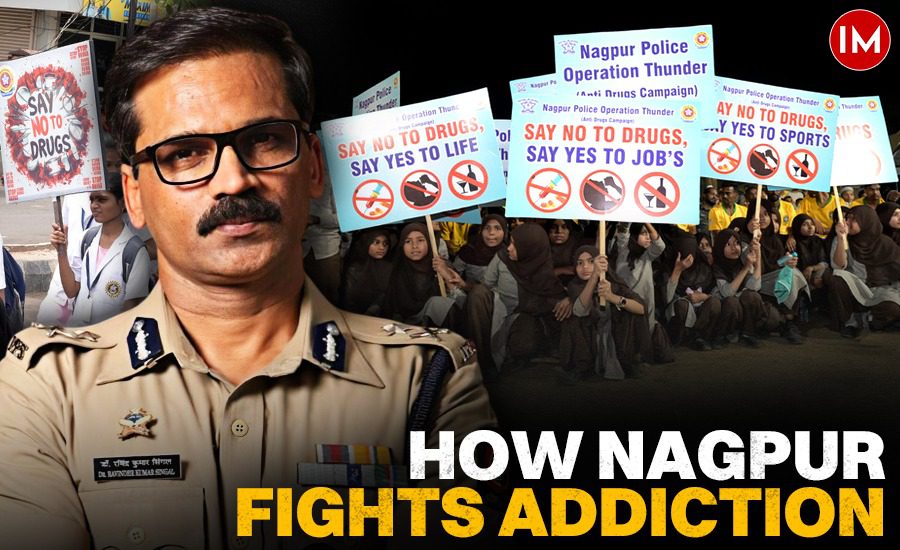
The woman waited quietly outside the Police Commissioner’s office in Nagpur. When her turn came, she requested a private conversation. Inside the room, she spoke about her 16-year-old son.
“He takes drugs. He steals money from home. He raises his hand on us. He doesn’t listen to anyone anymore.”
For the 1996 batch IPS officer of the Maharashtra cadre, Ravinder Singal, it was not just another grievance. It was a warning.
The officer had recently taken charge in Nagpur. As he listened, he realised that behind the story of one family could be a much larger crisis silently spreading through the city.
That conversation would eventually become the starting point of one of Maharashtra’s most ambitious anti-drug campaigns: Operation Thunder, about which he exclusively spoke with Indian Masterminds.
Also read: IPS Ravinder Singal: From Upholding the Law to Conquering Endurance Challenges
LOOKING BEYOND CRIME STATISTICS
Most narcotics cases enter police records as seizures, arrests, or FIRs.
What concerned Ravinder Singal was what was happening behind those numbers.
Families were breaking down. Teenagers were slipping into addiction. Parents were often too afraid, or too ashamed, to speak openly.
“We started gathering information from schools, colleges and different sources. We realised drugs were becoming a serious problem,” recalls Singal.
The challenge was not just drug trafficking. The challenge was convincing society that a problem existed.
Many parents dismissed warning signs. Others preferred silence over social stigma. The issue remained hidden in homes until it became impossible to ignore.
Singal believed that before the city could fight drugs, it had to acknowledge the threat.
WHY IT WAS CALLED ‘OPERATION THUNDER’
The campaign needed a name that would create impact. A name that would send a message to drug peddlers and attract public attention.
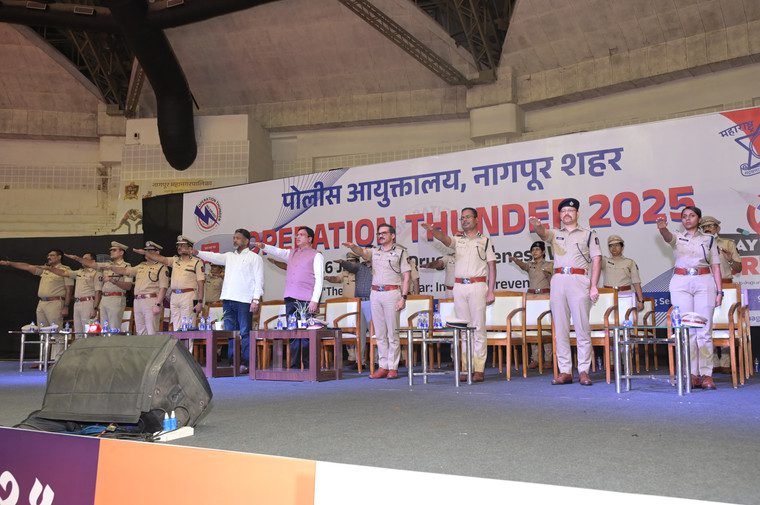
Thus emerged Operation Thunder.
The first phase itself was massive. More than a hundred identified suspects and individuals linked to drug activities were brought under scrutiny. Their records were verified, photographs documented, and intelligence networks activated.
The objective was clear: create visibility, create deterrence, and send a signal that the city was watching. What started as a police operation soon began evolving into something much larger.
MORE THAN RAIDS AND ARRESTS
Many anti-drug drives focus primarily on enforcement. Operation Thunder was designed differently.
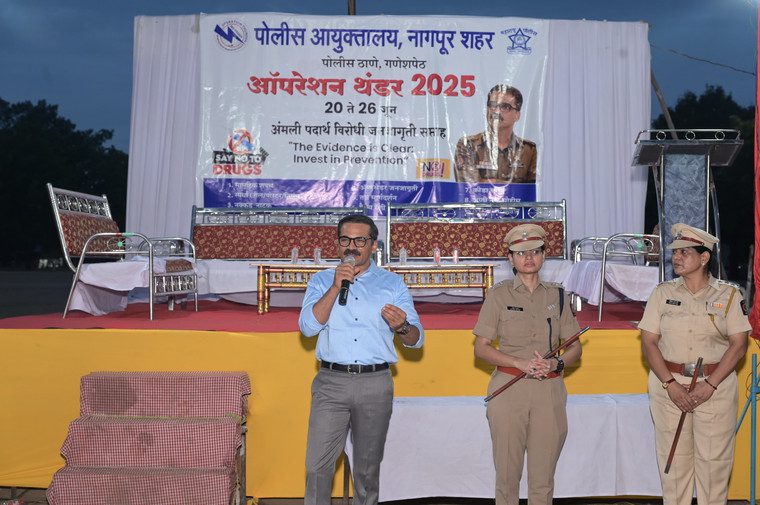
For Ravinder Singal, action against suppliers was only one part of the solution. The campaign brought together police officers, educational institutions, NGOs, rehabilitation centres, parents, and community volunteers under a common platform.
“As I always say, this is a comprehensive programme. It’s not about taking action one day and forgetting about it. Public involvement, NGOs, rehabilitation centres… everyone has to be part of it,” he told Indian Masterminds.
The approach rested on three pillars:
1. Enforcement
Nagpur Police intensified intelligence gathering and targeted drug supply networks. Large quantities of narcotics were seized, and sustained action was taken against peddlers and distributors.
2. Rehabilitation
Recognising addiction as both a law-enforcement and public-health issue, many affected individuals were connected to rehabilitation facilities.
The focus shifted from punishment alone to recovery and reintegration.
3. Awareness
Perhaps the most ambitious aspect of Operation Thunder was its outreach.
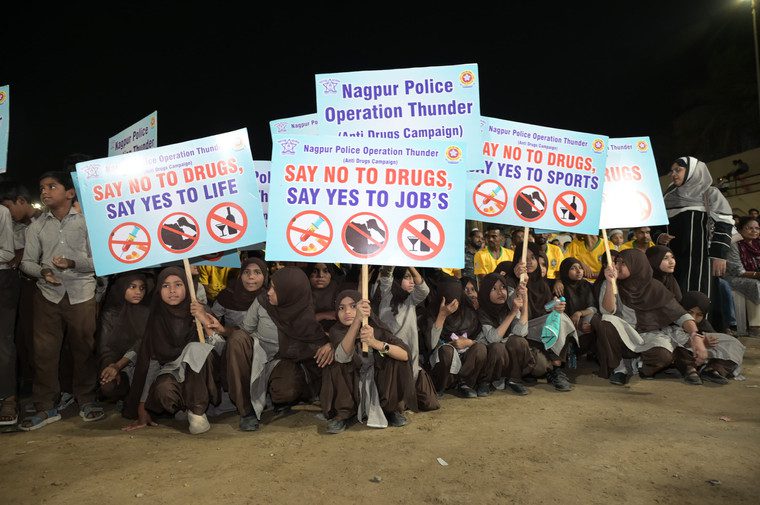
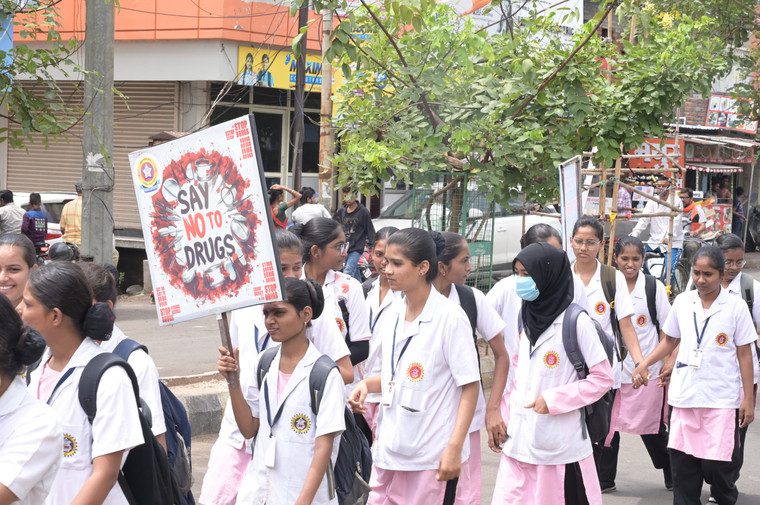
Police teams entered schools and colleges across the city. Awareness sessions were conducted on a large scale.
According to Singal, the campaign has reached nearly 1.5 lakh students, helping young people understand the dangers of substance abuse before they become victims.
FOLLOWING THE DRUG TRAIL WITH TECHNOLOGY
Modern drug networks rarely operate in plain sight. From encrypted communication to online deliveries and dark-web transactions, narcotics trafficking has become increasingly sophisticated.
To counter this, Operation Thunder relies heavily on technology.
Whenever a drug case is detected, investigators map the entire chain, from manufacturer to supplier, vendor, and consumer.
“Technology is basic to modern policing now. We trace where the drugs originated, who supplied them, how they reached the consumer and who was involved at every stage,” explains Singal.
Forensic laboratories, chemical analysis, digital tracking, and intelligence databases have become critical tools in identifying larger networks rather than merely catching individual offenders.
The police are also monitoring online and dark-web-linked supply channels that have emerged in recent years.
“We keep a close watch on these networks and where such activities originate,” he says.
NEW MACHINES, NEW METHODS
Operation Thunder continues to evolve.
Nagpur Police recently introduced specialised narcotics detection equipment capable of identifying drug consumption that traditional alcohol breath analysers cannot detect.
The technology has already started producing results.
Individuals who previously escaped detection are now being identified through targeted anti-narcotics checks.
Every new tool, according to Singal, increases the campaign’s ability to stay ahead of emerging trends in substance abuse.
BREAKING THE SILENCE AROUND ADDICTION
Perhaps the campaign’s biggest achievement has not been a seizure or an arrest. It has been changing attitudes.
When Operation Thunder began, many parents were reluctant to acknowledge addiction within their families. The fear of social judgment often prevented them from seeking help.
Today, more families are coming forward. More parents are reporting concerns. More conversations are happening openly.
“The biggest challenge initially was getting people to accept that this problem existed. Parents often wouldn’t talk about it. That stigma is reducing now, and people are coming forward,” says Singal.
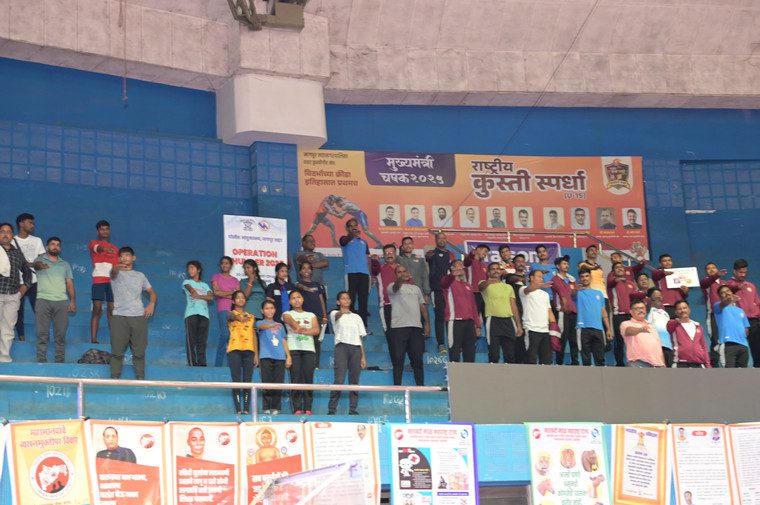
As awareness increased, the campaign transformed into a public movement rather than a police initiative. Parents became more vigilant. Communities became more alert. Conversations that once happened behind closed doors started moving into the open.
A LONG-TERM VISION BEYOND POLICING
For Ravinder Singal, success will not be measured solely by the number of arrests. His vision extends much further.
He wants accessible rehabilitation systems for those who genuinely wish to recover but cannot afford expensive treatment. He wants families to remain actively involved in their children’s lives. He wants communities to identify warning signs early. And he wants society to stop treating addiction as a topic that must be hidden.
“We need good rehabilitation centres where people who want to come out of addiction can get support. Families must interact with their children, understand their friend circles, and share information whenever they see warning signs,” he shared with Indian Masterminds.
The campaign, in his view, is not a short-term operation. It is an ongoing effort that requires persistence, vigilance, and public participation.
A MESSAGE TO INDIA’S YOUTH
As the conversation draws to a close, Singal’s message becomes direct.
He worries about a growing mindset among some young people that experimenting with drugs is normal, fashionable, or harmless.
He believes that perception is one of the greatest dangers.
“Don’t get into this ‘it’s okay’ attitude. Many people think it’s cool because others are doing it. But once you get trapped, it affects your future, your family, your health and your entire life.”
His warning is simple. Drug addiction is not just an individual problem. It can destroy careers, relationships, finances, and family stability. And that is precisely why Operation Thunder continues.
Because for every narcotics seizure made by the police, there is also a family somewhere hoping that their child finds a way back.
And for IPS Ravinder Singal, that hope remains the strongest reason to keep fighting.
Also read: Devangi Meena: The UPSC Candidate Who Stopped Studying to Start Understanding Herself