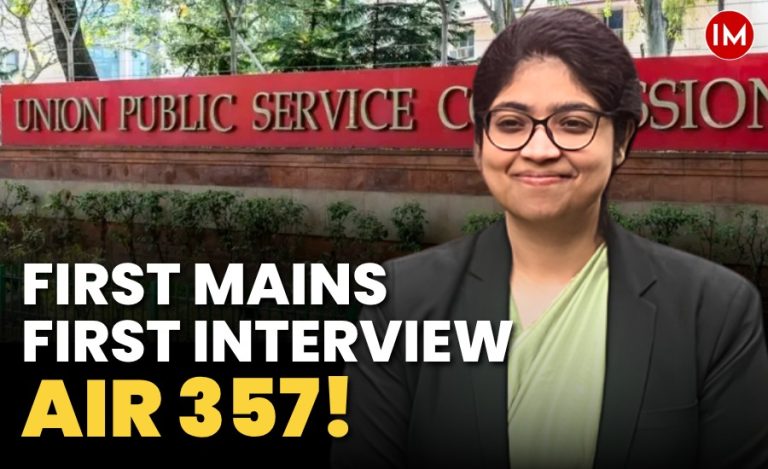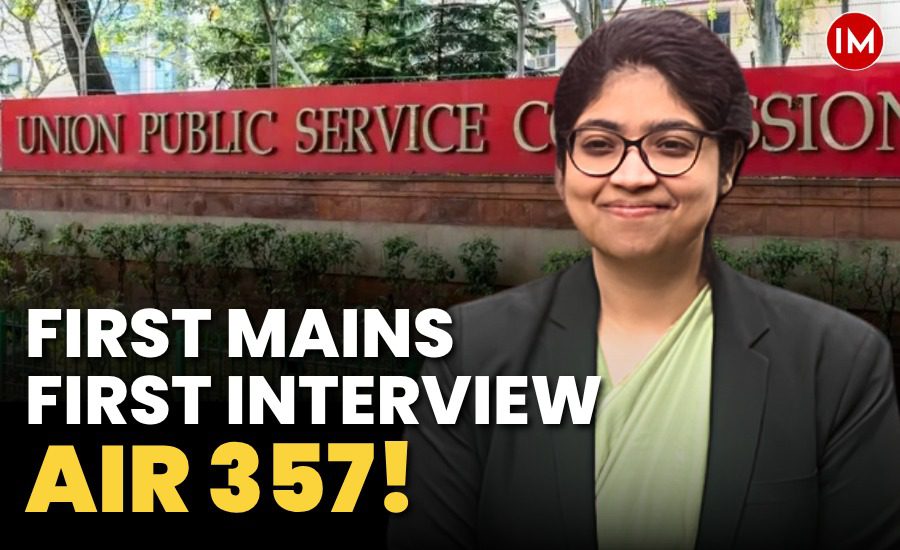
Every year, thousands of aspirants dream of seeing their names in the UPSC Civil Services Examination final list. For many, the journey stretches across multiple attempts, years of preparation, and countless challenges. For Shreya Jha, however, the path was marked by focused effort, continuous learning, and a clear understanding of why she wanted to join the civil services.
Securing AIR 357 in UPSC CSE 2025, Shreya transformed years of academic curiosity about law, governance, and public institutions into a remarkable achievement. A law graduate with a strong interest in public policy, she approached the examination not merely as a competitive test but as an opportunity to prepare herself for a career dedicated to public service.
A Childhood Across India, Rooted in Bihar
Originally from Bihar, Shreya’s upbringing was shaped by experiences from different parts of the country. As the daughter of a banker, she spent her formative years in cities such as Guwahati, Kolkata, Raipur, and Ahmedabad before pursuing higher education in Delhi.
“I had an opportunity to stay in various parts of the country because of my father’s profession. Those experiences helped me understand India’s diversity beyond textbooks,” Shreya shared in an exclusive conversation with Indian Masterminds.
Her academic journey led her to Guru Gobind Singh Indraprastha University, New Delhi, where she completed her BA LLB (Hons). During law school, she developed a deep interest in governance, institutions, and the role public administration plays in shaping citizens’ lives.
Why UPSC?
Unlike many aspirants who identify a single defining moment or role model, Shreya’s decision emerged gradually through her academic experiences.
While studying law, she became increasingly interested in how institutions function and how policies affect society.
“During my legal education, I developed a strong interest in public institutions, governance, and the interaction between law and society,” she says.
For her, the appeal of the civil service lay in its diversity.
“The civil services offer a unique opportunity to work across diverse sectors—from taxation and economic administration to public service delivery.”
She was also influenced by officers whose work reflected professionalism, integrity, and empathy.
Cracking UPSC CSE 2025 with AIR 357
One of the most notable aspects of Shreya’s success story is that UPSC CSE 2025 was her first experience of appearing in both the mains examination and the personality test.
Like every successful candidate, she continuously refined her preparation strategy throughout the process. Rather than following a rigid formula, she focused on understanding the demands of each stage of the examination and adapting accordingly.
“This was my first go at the mains and interview rounds. The process involved continuous refinement of my preparation strategy, particularly in answer writing and my optional subject, law.”
Her achievement demonstrates that effective preparation is often about improving one’s approach rather than endlessly increasing study hours.
Preparation Strategy: Different Approach for Every Stage
Shreya treated each stage of the UPSC examination as a separate challenge requiring a distinct strategy.
For the preliminary examination, she focused on building conceptual clarity through standard resources. Revisions, previous-year questions, and mock tests formed the backbone of her preparation.
When it came to the Mains Examination, answer writing became her priority. She concentrated on syllabus-oriented preparation and enriched her answers with examples, case studies, and contemporary references.
“As a law graduate with a law optional, I focused on integrating legal principles with contemporary developments and landmark judgments.”
For the Personality Test, her preparation revolved around understanding her Detailed Application Form (DAF), staying updated with current affairs, and developing balanced opinions on issues of national importance.
Mock interviews helped her improve communication skills and maintain composure under pressure.
Law Optional and the Self-Study Route
Shreya chose law as her optional subject, a natural choice considering her academic background.
Her familiarity with core legal concepts provided a strong foundation. However, she emphasises that understanding the syllabus and presenting answers effectively remained equally important.
Notably, her preparation was primarily based on self-study.
Rather than depending heavily on coaching institutions, she relied on disciplined study, consistent revision, and careful analysis of the examination’s requirements.
Her journey serves as an encouraging example for aspirants who may not have access to extensive coaching resources.
The Interview Experience
The UPSC Personality Test is often considered one of the most unpredictable stages of the examination. For Shreya, however, the experience turned out to be engaging and comfortable.
“The interview was cordial and conversational. The board created a comfortable atmosphere.”
The discussion covered topics related to her legal education, public policy, governance, and current affairs. Her preparation helped her approach the interaction with confidence and clarity.
Rather than treating the interview as a test of factual knowledge alone, she viewed it as an opportunity to demonstrate balanced thinking and awareness.
Finding Balance Through Reading and Cooking
Preparing for UPSC can become mentally demanding, making it important for aspirants to maintain activities outside academics.
For Shreya, books and cooking provided that balance.
She enjoys reading history beyond the UPSC syllabus, exploring topics out of genuine curiosity rather than examination requirements.
Cooking, meanwhile, became a welcome break from long study sessions.
“I believe maintaining a hobby is important during a long preparation journey. Cooking is particularly therapeutic for me.”
These interests helped her stay refreshed and maintain perspective throughout the preparation process.
Her Message to UPSC Aspirants
Having successfully navigated one of India’s most competitive examinations, Shreya’s advice is both practical and insightful.
“UPSC is a test of consistency, judgement, and patience. My suggestion would be to understand the examination before trying to conquer it.”
She believes that improvement often happens gradually and may not always be immediately visible.
“The progress is often gradual and becomes visible only in hindsight.”
As AIR 357 in UPSC CSE 2025, Shreya Jha’s journey highlights an important lesson for aspirants: success is not determined by background, coaching, or shortcuts. It comes from understanding the examination, building strong fundamentals, and staying committed to the process.