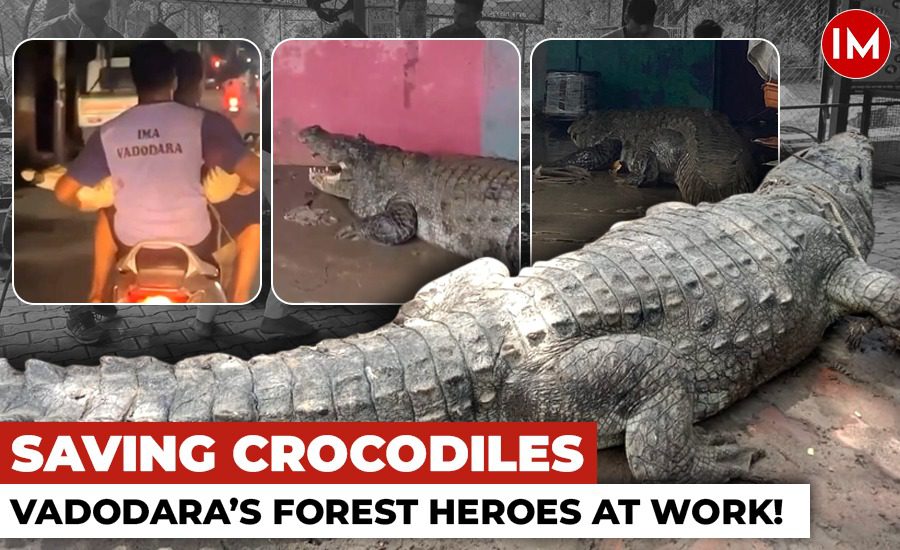
On the night of August 28th, after a relentless downpour had finally ceased amidst the heavy flooding in Vadodara, Gujarat, the city was gripped by a pervasive sense of fear and panic that left many residents sleepless. Rajan, a 50-year-old resident of Sayajibaug, emerged from his home only to be met with a sight that was both shocking and terrifying: a 12-foot-long crocodile was slithering down the street toward him. Overcome with dread, Rajan immediately shouted a warning to others and sought refuge in a safer location.
Meanwhile, Suman, who lived in Gorwa, witnessed two crocodiles making their way along the road from the vantage point of her rooftop and swiftly alerted the Forest Department. In the Kamnath Nagar area near Fatehgunj, residents were stunned to find a crocodile that had navigated through the floodwaters and ended up at a house in their colony. For many, this was an unprecedented sight.
The devastating floods and continuous rains that struck Gujarat in the last week of August had submerged numerous cities and caused widespread destruction. In Vadodara, the situation was further exacerbated by crocodiles displaced from the Vishwamitri River due to the flooding. However, the swift response of the Forest Department proved instrumental in alleviating the city’s fears. In just three days, they successfully rescued over 45 crocodiles roaming the city. An additional 5 to 7 crocodiles were captured subsequently. Unfortunately, three crocodiles lost their lives after being struck by a train while on the railway tracks. The Forest officials conducted health checks on all the rescued crocodiles before releasing them to safer locations.
To gain deeper insights into the rescue operations, Indian Masterminds spoke with Mr. Agneeshwar Vyas, an IFS officer from the 2014 batch and the head of the Vadodara South division. He provided valuable information on the crocodile rescue efforts, the number of crocodiles involved, and the nature of these formidable creatures.
THE VISHWAMITRI RIVER: THE NATURAL HABITAT OF CROCODILES
The recent devastating floods in Vadodara have driven aquatic animals, including large crocodiles, into residential areas, instilling fear and concern among residents. In response, the Forest Department and animal activists have mobilized to rescue these creatures and relocate them to safer environments.
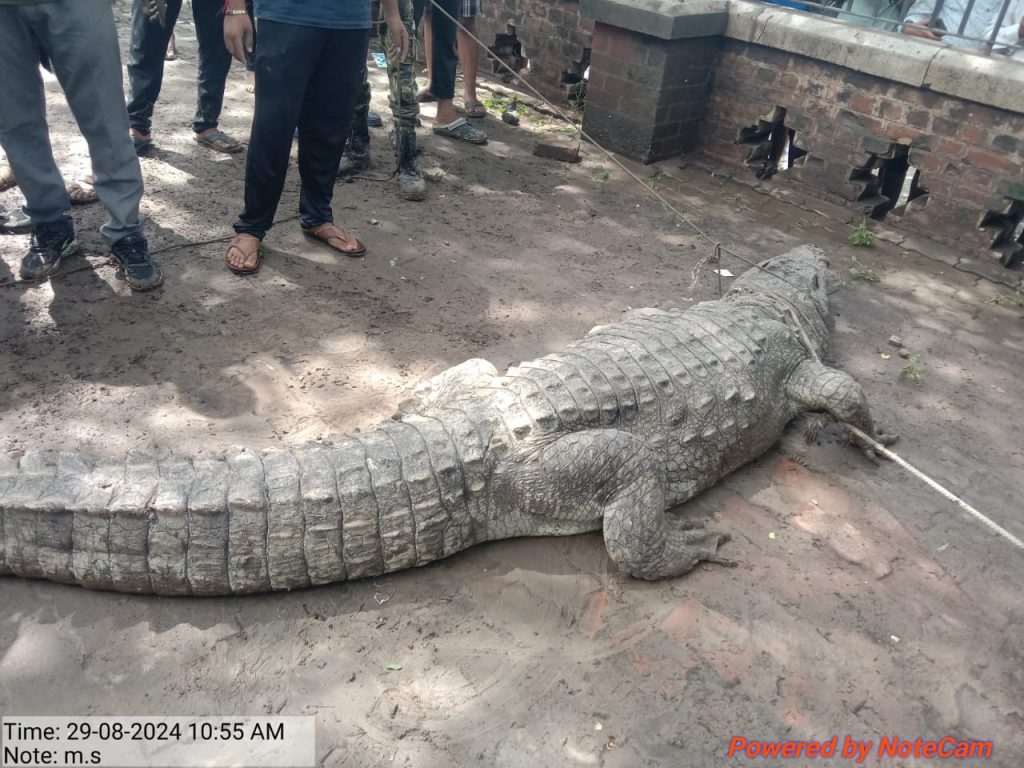
The first sighting of a crocodile within the city was reported during the night of August 27-28. The Vishwamitri River, which flows through the heart of Vadodara, serves as a natural habitat for a substantial population of crocodiles. Crocodiles are classified as a Schedule I species under the Wildlife Protection Act, and the Vishwamitri River is known to host a significant number of them. According to the last census conducted in 2021, the river is home to over 700 crocodiles.
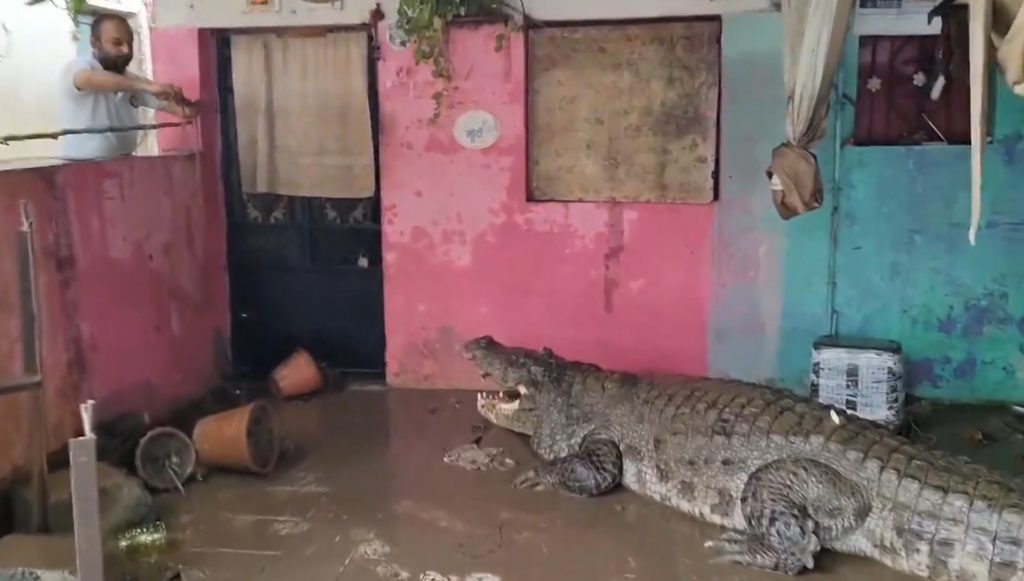
When the water levels in the river rise, the banks overflow, forcing crocodiles to leave their natural habitat and venture into human-populated areas. While this is a common occurrence during the monsoon season, the situation this year was exacerbated by the unprecedented scale of the floods. The severity of the flooding caused water to spread extensively across the city, leading crocodiles to roam far beyond their usual territory.
RESTRAINING CROCODILES
To manage the crocodile rescue efforts, the Forest Department organized specialized teams led by range officers and supported by numerous volunteers. They also established helplines—9409027166 and 9825011117—for residents to report crocodile sightings within the city. When a call was received, the nearest staff would quickly respond to the location, aiming to manage the situation without escalating conflict with the crocodile.
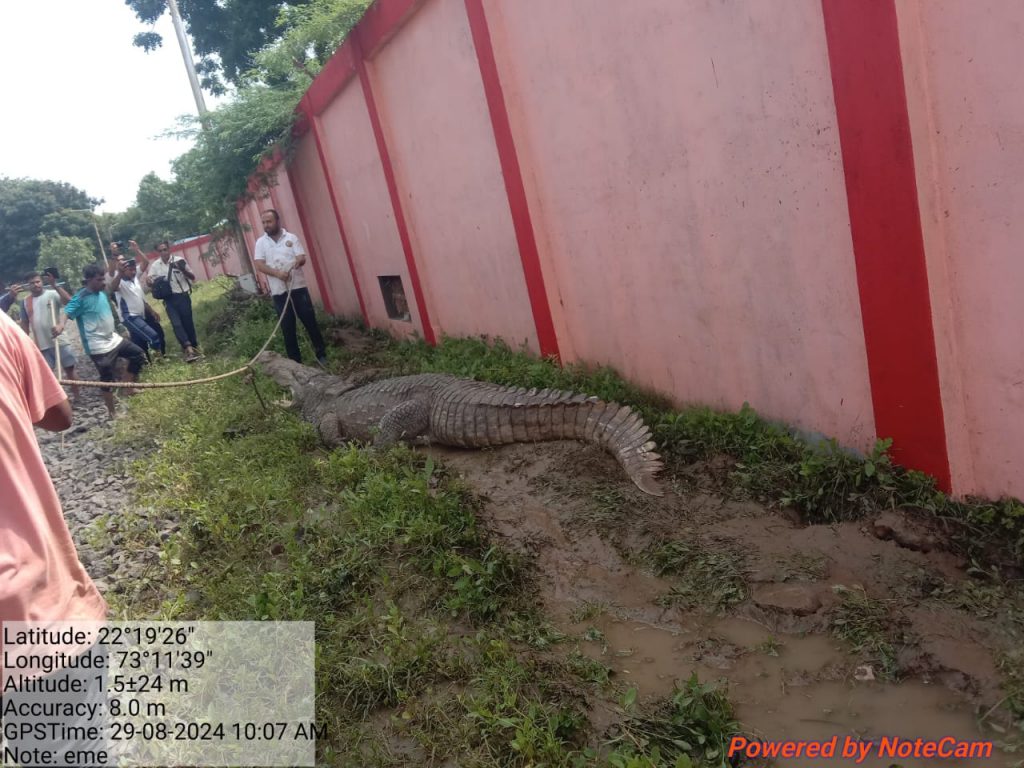
“Crocodiles are difficult to handle, as they cannot be tranquilized or subdued with traditional methods,” Mr. Vyas explained.
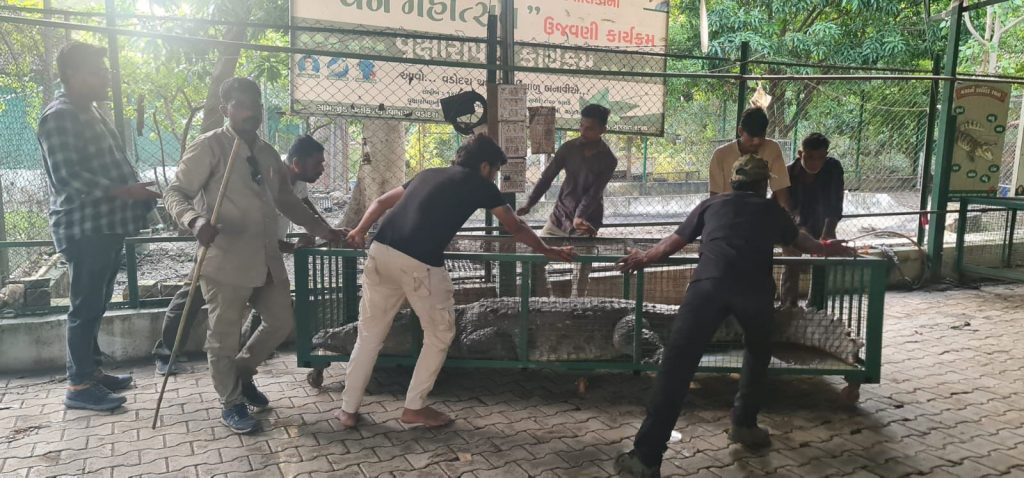
“Instead, the Forest Department uses ropes, nets, and other equipment to capture them. The most challenging aspect of capturing a crocodile is managing its powerful jaws. If the crocodile’s mouth is open and it grabs something, it becomes extremely difficult to control and increases the risk of injury to humans. Therefore, the first step is to cover and secure the crocodile’s jaws, then close its eyes to minimize shock. Once the animal is calm, it is safely captured and transported in a cage.”
After capture, crocodiles are taken to rescue centers where they undergo a thorough physical examination to ensure they are uninjured and healthy. If they pass the health assessment, they are then released back into their natural habitat, ensuring their return to a safe and familiar environment.
EFFORTS & CHALLENGES
Regarding efforts and challenges, Mr. Vyas stated, “As a forest officer, I cannot determine how far the river water has reached. We respond as we receive information. Although we conducted over 45 rescues in the first three days, we received only 5 rescue calls in the subsequent three days. This suggests that we have likely rescued nearly everyone who was initially affected.” However, the flood has not entirely ended, and there is still some water near the riverbank. If there are still people left and we receive a call, forest officials will continue to respond.
TERRITORIAL NATURE OF CROCODILES
Crocodile is a territorial animal. Many crocodiles cannot live at one place, otherwise the bigger crocodile will chase away the smaller one after a fight. Hence, each crocodile has to be released at a different place. There are many patches in the river where they reside. They live there and are released there. The river is deep at some places and shallow at other places. Hence, there are changes in it every year and the territory of crocodiles also keeps on changing. And these crocodiles distribute themselves among themselves. The team decides which crocodile should be released in which patch.
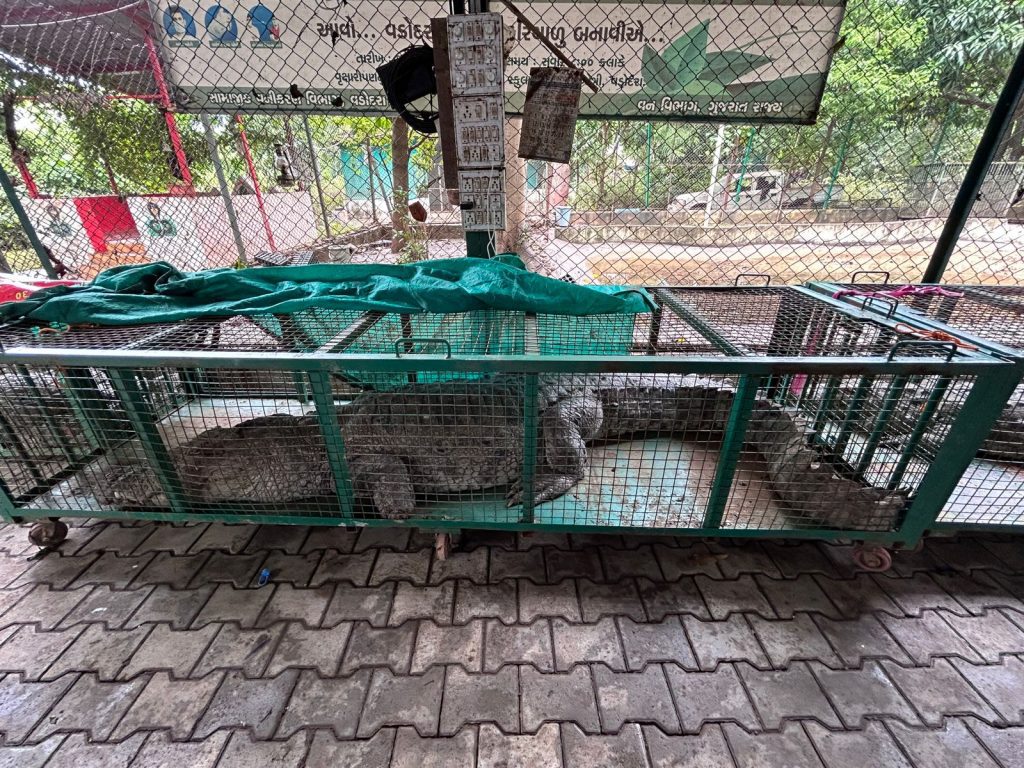
“Wild animals have different natures. It can attack suddenly or can also take time. And it can also happen that it is near you and no one attacks. Crocodile is exactly like this. By looking at it no one can tell how it will behave,” Mr Vyas said.