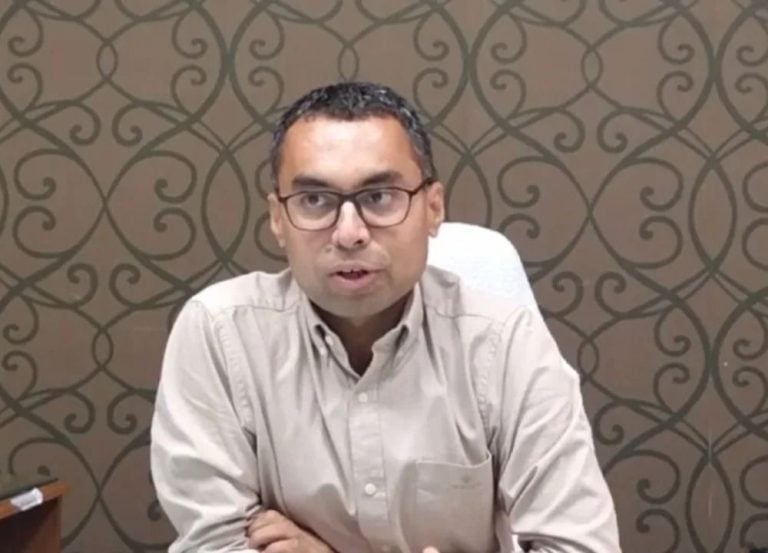
Parikshit Khatana is a 2020-batch Indian Administrative Service (IAS) officer of the Uttar Pradesh cadre, currently serving as the Chief Development Officer (CDO) of Azamgarh. Born on November 19, 1995, and hailing from Haryana, he secured an All India Rank of 184 in his first attempt. After completing his training, he began his administrative career as a joint magistrate in Agra before being posted as CDO Azamgarh in October 2023.
Known for his focus on grassroots governance and field-driven solutions, Parikshit Khatana has been actively working on innovative models like Godhan Sankalp.
“Life of an IAS officer is occupied in files and daily routines, but this kind of initiative has given me immense satisfaction as a civil servant – that a rural economy can generate revenue at scale from something as simple as gobar.” says Parikshit Khatana in an exclusive conversation with Indian Masterminds.
Problem that Sparked the Idea: A Silent Sanitation Crisis
“When I visited ‘gaushalas’ and interacted with Gram Pradhans, it became evident that we were treating resources as a liability. I felt there had to be a way to convert this challenge into an opportunity.”
Azamgarh’s vast network of over 8000 gaushalas had inadvertently created a decentralised sanitation challenge. With traditional uses of cow dung declining due to LPG penetration, large quantities of waste accumulated daily without structured processing mechanisms. Gram Panchayats, though responsible, lacked technical frameworks for scientific waste management.
This not only led to unhygienic conditions but also represented a systemic inefficiency, where a potentially valuable organic resource remained underutilised. The issue, therefore, was not merely about disposal but about realigning governance through resource optimisation.
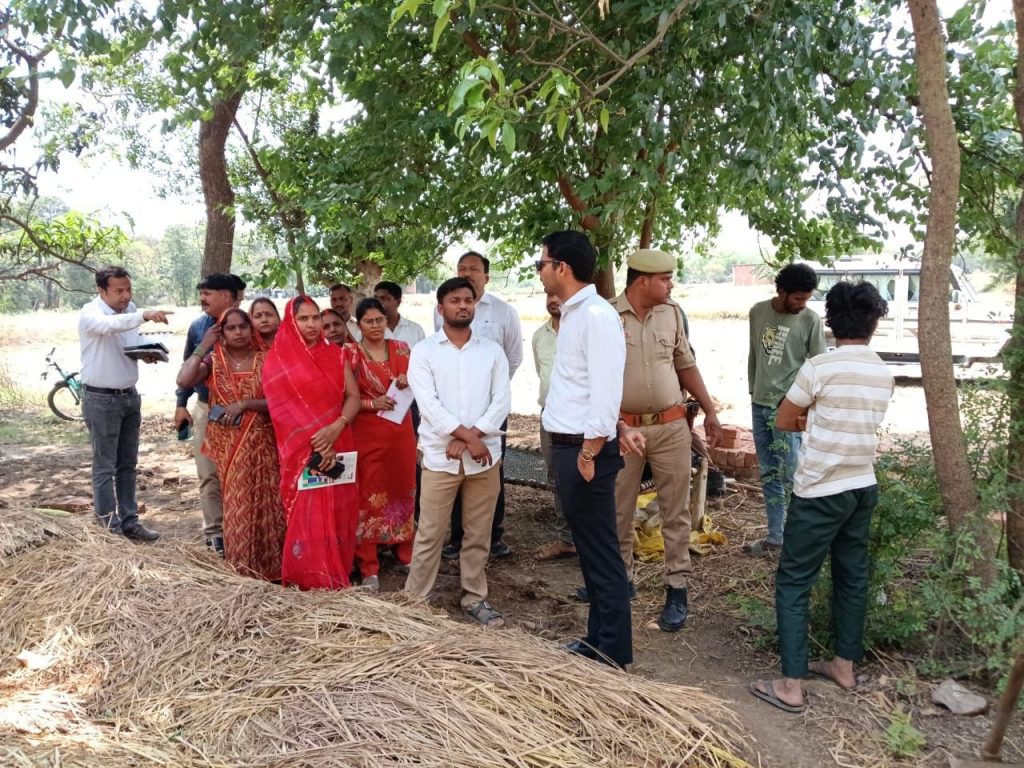
Convergence in Action: Breaking Departmental Silos
“This initiative is a result of convergence – rural development, Panchayati Raj, and revenue departments working together with a shared objective rather than in isolation.”
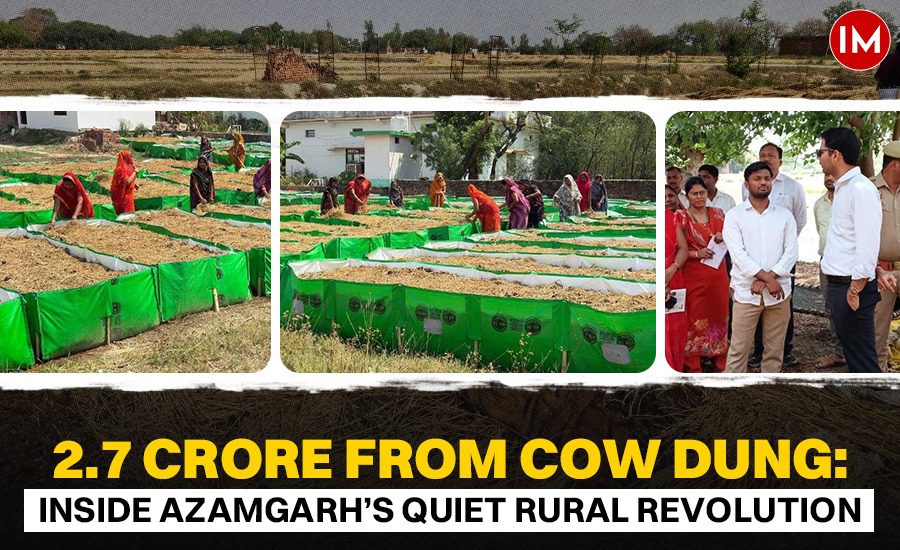
Godhan Sankalp derives its administrative strength from convergence, aligning departmental mandates into a unified execution framework. Nearly 1800 self-help groups were systematically mapped to gaushalas, establishing a decentralised production ecosystem.
The design ensures that procurement, production, and utilisation are institutionally linked. SHGs procure cow dung at ₹0.50 per kg and convert it into vermicompost, eliminating logistical inefficiencies.
Capacity building was institutionalised through Krishi Vigyan Kendras, where scientific training ensured quality production. Further, the identification of nodal SHGs at the block level created a cascading support structure, enabling both supervision and peer learning.
A ₹2.7 Crore Micro-Economy: Assured Market, Assured Income
“The turning point was assuring SHGs that their product would have a guaranteed market. Once that confidence was established, participation and scale followed naturally.”
One of the most critical interventions under Godhan Sankalp is the creation of a demand-driven ecosystem. By integrating SHG production with Gram Panchayat procurement, the initiative eliminates the uncertainty of market access, a common bottleneck in rural livelihood programs.
Gram Panchayats, traditionally reliant on low-quality compost, have been nudged to adopt vermicompost for plantation activities. This transition is supported by a structured procurement system at ₹10 per kg, with payments routed digitally through Gram Nidhi accounts.
The result is a self-sustaining local economy projected to generate ₹2.70 crore annually for rural women. Simultaneously, gaushalas benefit from monetising cow dung, earning an additional ₹32.30 lakh, thereby improving their financial viability.
This closed-loop model exemplifies how state demand can catalyse grassroots economic activity.
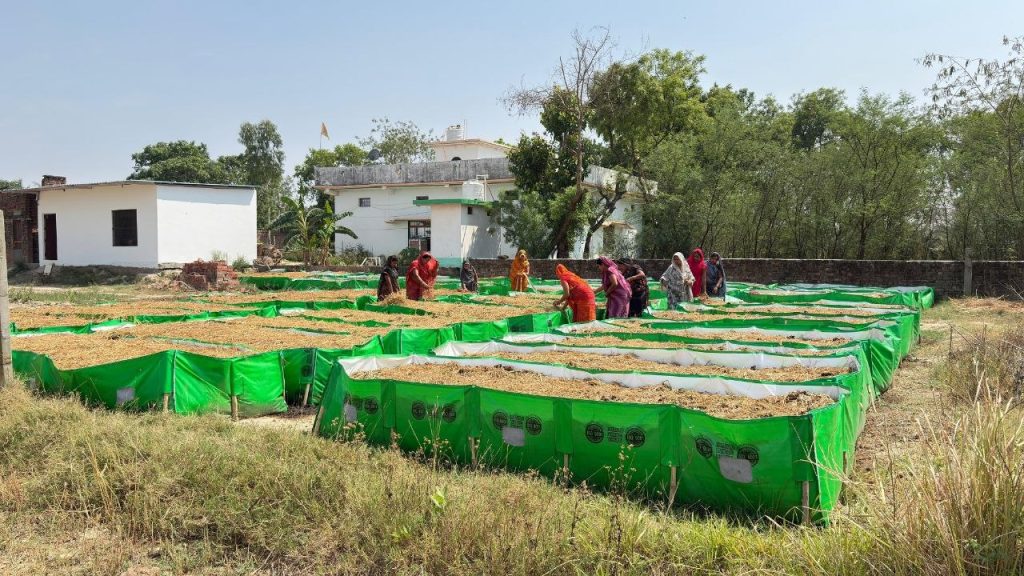
Environmental Impact: Improving Survival, Not Just Plantation
“Our focus is not just on plantation numbers but on ensuring survival. Better inputs like vermicompost directly enhance soil health and plant longevity.”
Environmental sustainability within ‘Godhan Sankalp’ is designed through input quality enrichment. Vermicompost, being nutrient-rich, significantly improves soil structure, microbial activity, and water retention capacity.
With a plantation target exceeding 27 lakh saplings for 2026-27, the use of high-quality compost ensures higher survival rates, thereby translating plantation drives into tangible ecological outcomes.
The initiative thus bridges the gap between intent and impact, where environmental goals are supported by scientific inputs and local economic participation.
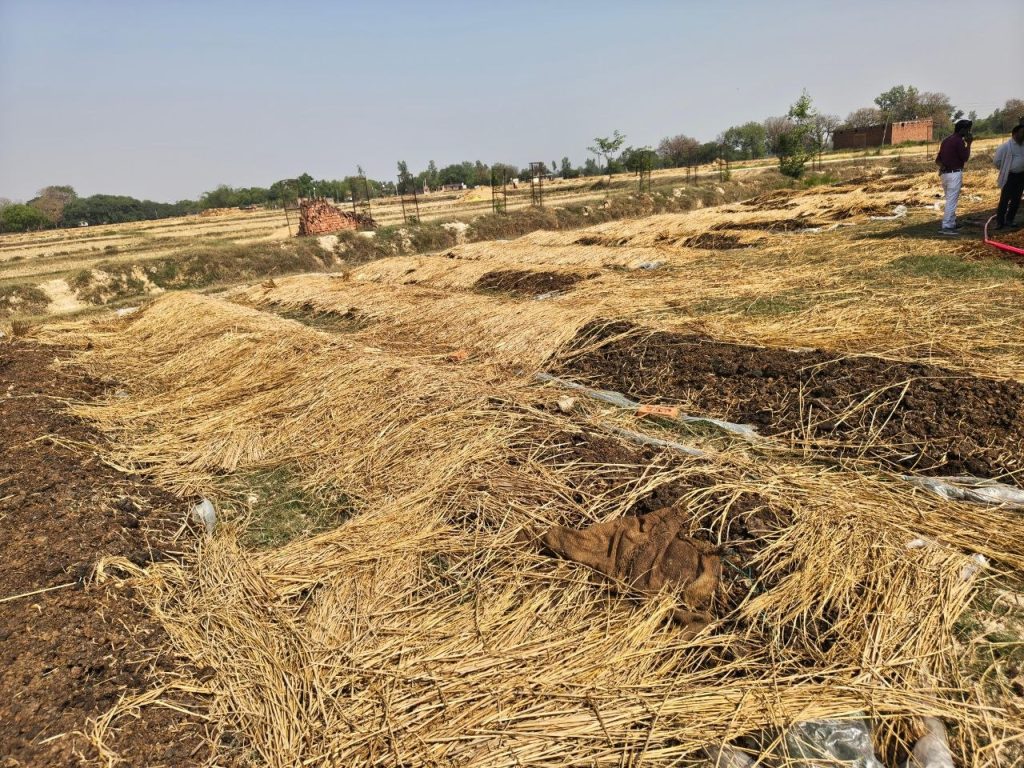
Implementation on Ground: Science, Structure, and Scale
“We designed the system to be low-cost, scientifically robust, and easily scalable so that it can be replicated without heavy administrative overhead.”
Operational efficiency of the initiative is the flagbearer of success. SHGs were selected based on prior engagement in green or waste management activities, ensuring baseline familiarity. Training through Krishi Vigyan Kendras introduced scientific rigour into production processes.
The vermicomposting cycle, spanning 60-70 days, has already yielded nearly 1000 quintals of compost within the initial months of implementation. Digital integration through ‘Karyayojana’ uploads on Gram Nidhi platforms ensures that production aligns with demand projections.
Direct Benefit Transfer (DBT)-based payments enhance transparency, while additional income streams, such as the sale of earthworm culture at ₹300 per kg, further strengthen financial sustainability.
The model’s scalability lies in its simplicity and reliance on existing institutional frameworks.
Human Stories: Changing Mindsets, Building Confidence
“Initially, there was hesitation among SHG didi, but once we assured them of complete procurement and they started seeing results, confidence grew organically.”
At its core, Godhan Sankalp is as much a social transformation as it is an administrative innovation. The initial scepticism among SHG members reflected a broader challenge, risk aversion in rural livelihoods due to uncertain markets.
Through consistent assurance and institutional backing, this hesitation gradually transformed into participation. An example is that of an SHG led by a woman whose son, trained in agriculture, encouraged her to adopt vermicomposting. The group went on to produce 300 quintals of compost worth ₹3 lakh, says Parikshit Khatana, Chief Development Officer, Azamgarh.
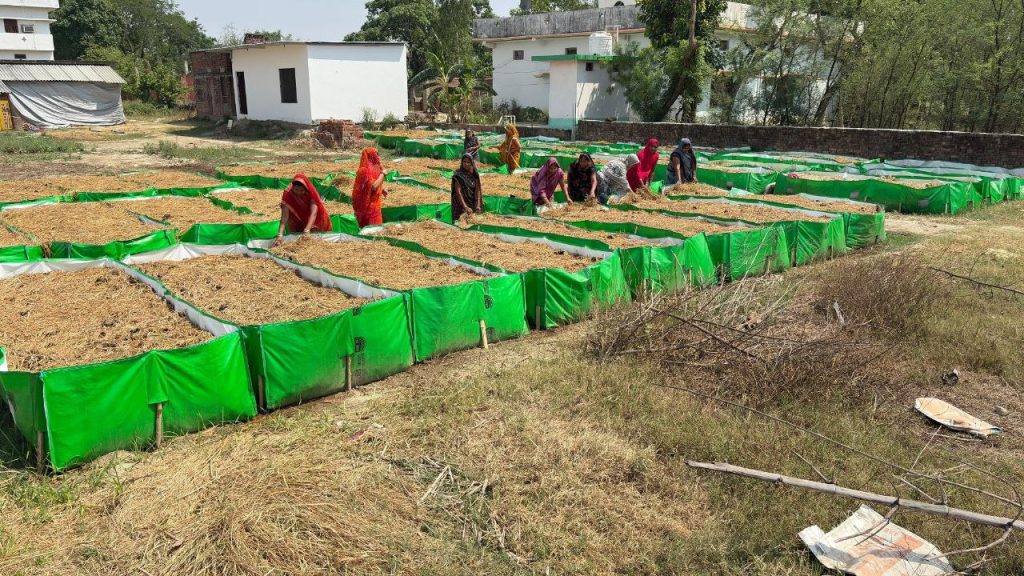
The Road Ahead: A Replicable Governance Model
“If policy convergence is implemented effectively, even a simple resource like cow dung can drive large-scale economic and environmental impact.”
The success of Godhan Sankalp positions it as a scalable model for other districts. Its design, leveraging existing resources, institutional frameworks, and government demand, ensures that replication does not require significant additional investment.
Talking to Indian Masterminds, Parikshit Khatana said that the initiative has already been presented to senior state leadership, including the Rural Development Commissioner and the Chief Secretary, indicating potential for wider adoption.
In an era where governance often struggles with fragmentation, this model offers a blueprint for integrated, outcome-oriented administration.
Beyond Governance: A Civil Servant’s Fulfilment
“Life of an IAS officer is often confined to files and routines, but initiatives like this provide immense satisfaction that something as simple as gobar can generate a thriving rural economy.”
For Parikshit Khatana, Godhan Sankalp is more than an administrative success; it represents the essence of public service. By aligning governance with grassroots realities, the initiative is an example of how innovative thinking within existing systems can deliver transformative outcomes.
It is a reminder that meaningful governance is not always about large-scale schemes but about reimagining everyday challenges into opportunities for collective progress.