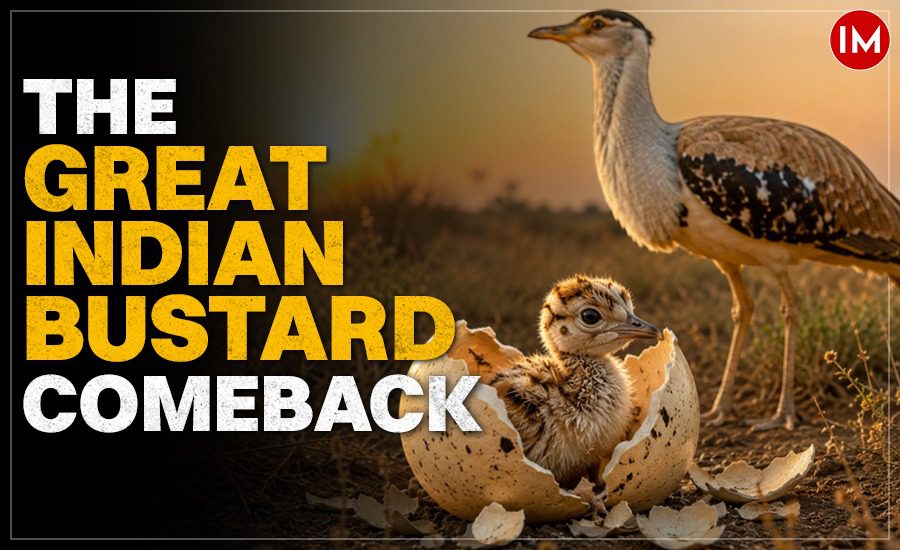
History has been made. Quietly but clearly. Human intervention has ensured survival of a bird – Great Indian Bustard – which was on the verge of extinction. The story of their breeding in the wild with human intervention is as astonishing as interesting and gripping. Let us dive into it straightaway.
For decades, the bird—once a proud symbol of India’s grasslands and tipped to become National Bird of India —has been slipping towards extinction. Numbers dwindled. Less than 100 birds were left. Habitats shrank. Power lines turned into invisible killers. And in places like Gujarat, the crisis reached a point where, by 2017, not a single male bustard remained.
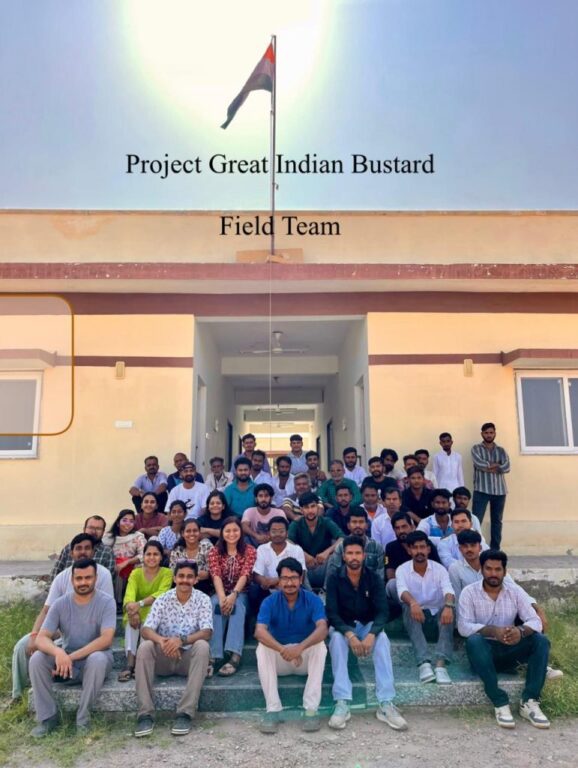
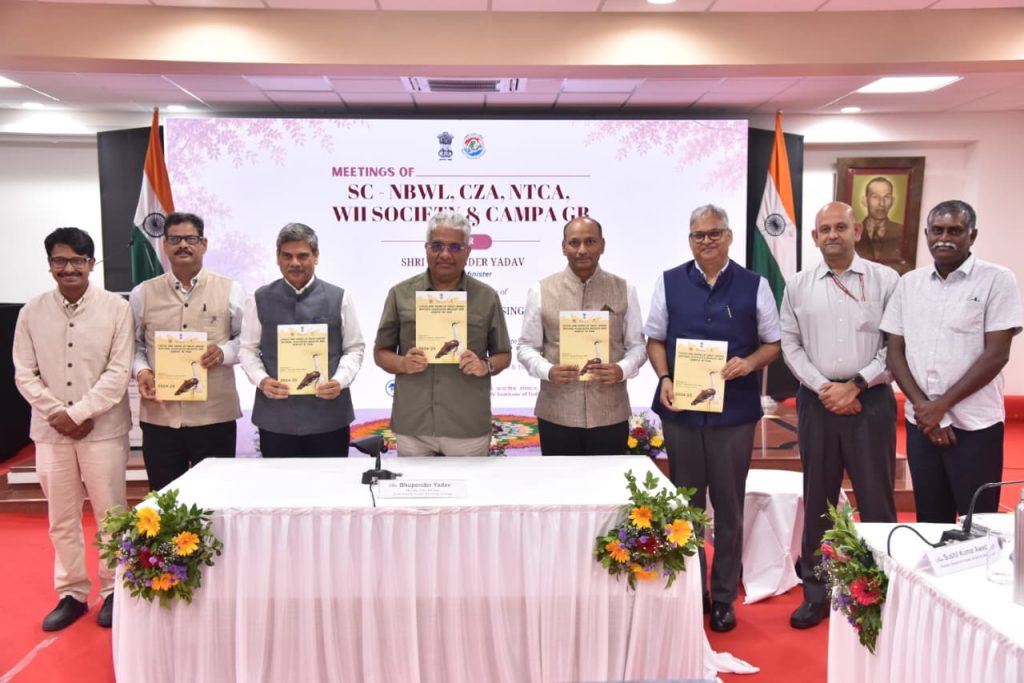
That should have been the end of the story. Instead, it became the beginning of one of India’s most audacious conservation experiments. Under guidance of Prime Minister Narendra Modi and Forest & Environment Minister Bhupender Yadav — a team led by scientists from Wildlife Institute of India like its director, Dr Gobind Sagar Bhardwaj, lead scientist on the project, Dr Sutirtha Dutta and IFS officers like ADG (Forest) Dr Ramesh Pandey, Chief Wildlife Warden (CWLW) Rajasthan KCA Arun Prasad, CWLW Gujarat Dr. Jaipal Singh and Chief Conservator of Forest (CCF), Kutch Dr Dheeraj Mittal, embarked on a journey of the unknown.
Racing Against Extinction
The challenge was stark: how do you save a species that barely reproduces? The Great Indian Bustard has a painfully slow breeding cycle. A female lays just one egg at a time—occasionally two or three in an entire season that spans barely a few months between February and April. Every egg is precious. Every chick is a miracle. And yet, survival in the wild is brutally uncertain.
Recognising the urgency, the Government of India launched a 10-year conservation programme around 2016 with two clear pillars—protect habitats in Rajasthan’s grasslands and begin conservation breeding. The idea was simple in theory, but radical in execution: bring birds into controlled environments, use artificial insemination, incubate eggs, raise chicks, and then release them back into the wild.
India had never attempted anything like this for such a delicate species.
Building a Bustard Nursery
The heart of this effort took shape in Rajasthan—inside facilities near the Desert National Park and Ramdevra near Pokhran. Here, conservationists recreated a bustard’s world from scratch. Food? Live insects were bred. Habitat? Carefully designed enclosures. Breeding? Artificial insemination. Incubation? High-precision monitoring.
Eggs were collected, incubated, and hatched. Chicks were raised with extreme care. Because this is not just any bird. The bustard is extraordinarily sensitive. Touch it, and it may abandon its nest forever. Disturb it, and it may never return. Stress alone can kill it. Despite these challenges, results began to show.
From near-zero controlled breeding success, the programme slowly built a captive population—reaching around 68 birds, and then climbing further towards 80 in subsequent seasons. For the first time, India had a “safety stock” of a species that was vanishing in the wild.
The Imprinting Problem
But breeding birds is only half the battle. The real challenge begins after birth.
Chicks raised by humans develop what scientists call “human imprinting.” They begin to associate humans with food and safety. Release them into the wild, and they may walk straight into villages instead of avoiding danger.
That’s a death sentence. So the team innovated. Instead of feeding chicks by hand, they used specially designed tools shaped like a bustard’s beak—ensuring the chicks never “saw” a human caregiver. The goal was psychological deception: let the bird believe it is being raised by its own kind. It’s painstaking work. Delicate. Almost theatrical. But essential.
Because only birds that are free of human imprinting can be released back into the wild—a process known as rewilding.
The Real Gamble Began in Gujarat
While Rajasthan showed promise, Gujarat posed an entirely different challenge. Here, the population had collapsed even further. By 2017, only a handful of females remained—no males. Natural breeding was impossible. That’s when the team decided to attempt something unprecedented: “jump-starting” a population.
The idea, as Dr. Pandey describes, is similar to jump-starting a dead car battery—give it an external push to restart the system. But how do you do that with birds in the wild?
The 700-Kilometre Gamble
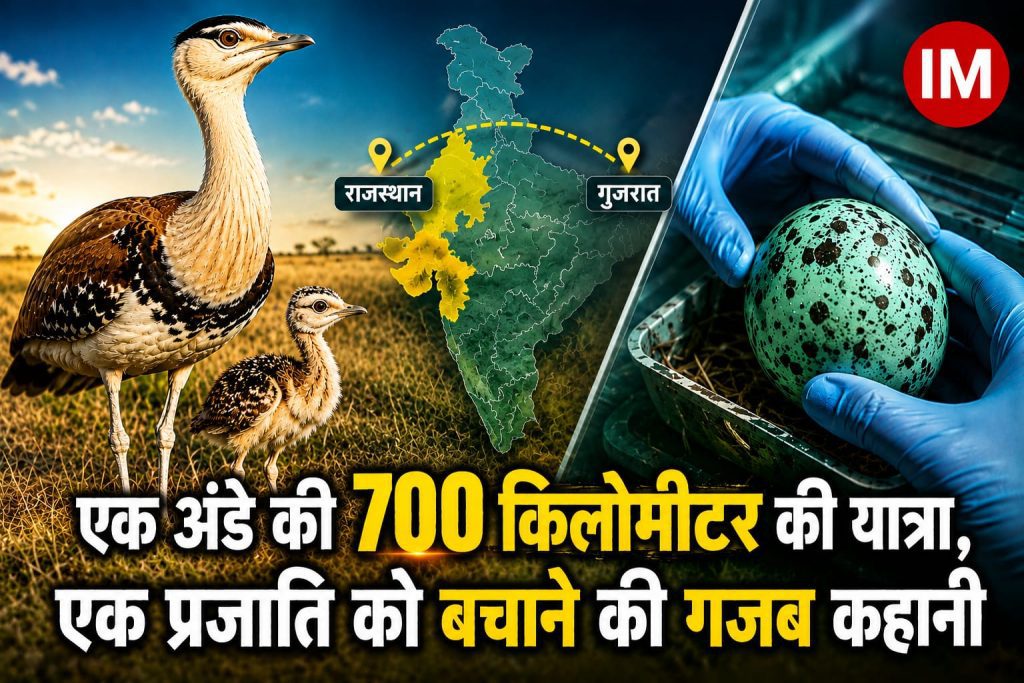
The plan was audacious. Take a fertilised egg from the conservation breeding programme in Rajasthan. Transport it over 700 kilometres to Gujarat. And place it in the nest of a wild female—replacing her infertile egg. If successful, the wild bird would incubate and raise the chick as her own.
Sounds simple? It wasn’t. Eggs are fragile ecosystems. A minor jerk can destroy the embryo. Temperature, humidity, vibration—everything must be controlled. Helicopters were considered—but rejected due to vibration risks. Instead, a carefully planned road mission was executed.
A specially designed incubator was used. The egg was suspended—not placed flat—to minimise shock. A “green corridor” was created to ensure uninterrupted travel. The journey took 17 hours. And that was just the beginning.
The Perfect Swap
Meanwhile, another team tracked wild bustards in Gujarat. Catching one is no easy task. These birds are elusive and extremely sensitive. Using specialised “noose traps,” a bird was briefly captured and fitted with a GPS transmitter—allowing scientists to monitor its movements and nesting behaviour.
They waited. Days passed. Then came the moment—the bird laid an egg. The team moved in. Timing was everything. They had to wait for the female to briefly leave the nest. In that narrow window, the infertile egg was swapped with the transported fertilised one.
The bird returned. And accepted it. No suspicion. No rejection. Just instinct. Within days, the egg hatched. A chick—born of science, raised by the wild.
A Fragile Victory
The first 45–60 days are critical for any bustard chick. Survival depends on strength, instinct, and sheer luck. But this one had a head start. It had a wild mother. A natural upbringing.
And no human imprinting. The experiment had worked.
But, it didn’t go as planned. A Bustard chick has numerous enemies. Predators like Jackal, Hyenas on earth while Eagles and Crows see it as a feast from the sky. A chick grows up in 55-60 days and a chick of 40 days is able to survive the predators. The wild chick survived only for 25 days. It was a heartbreak for the scientists and foresters.
Undeterred, the team geared up once again. The whole exercise was repeated. A second “jump-start” was planned. This wasn’t just conservation anymore—it was innovation at the edge of possibility. This time the chick survived. It completed 55 days on July 14, 2026. Now the experiment could be called a success.
The Bigger Picture
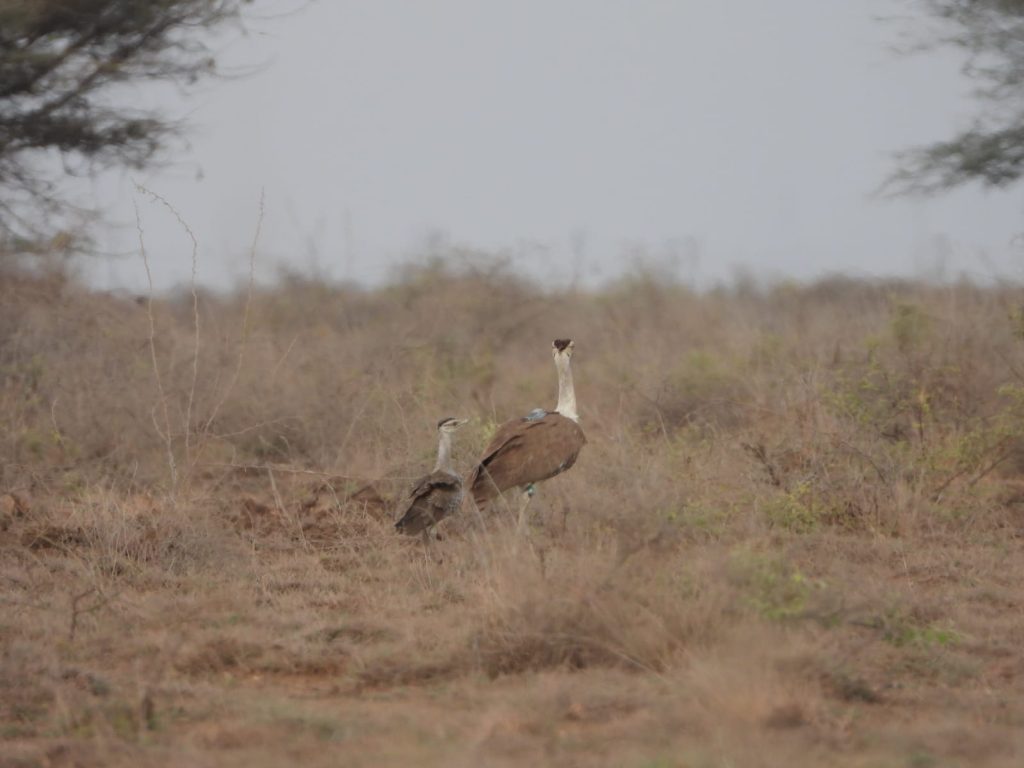
Today, India’s bustard numbers remain precarious—roughly around 120–130 in the wild, supplemented by a growing captive population .
But the strategy is clear.
- In-situ conservation: Protect habitats and wild populations
- Ex-situ conservation: Breed birds in controlled environments
- Rewilding: Release birds back into nature
- Jump-starting: Revive collapsed populations like Gujarat
It is a rare example of science, policy, and fieldwork converging seamlessly. Even threats like high-tension power lines—once a major killer—are now being addressed through dedicated corridors and mitigation strategies.
A Race Still On
Saving the Great Indian Bustard is far from over. The species remains critically endangered. Every bird counts. Every egg matters. But for the first time in decades, there is hope.
From zero males in Gujarat to chicks walking the grasslands again. From fragile eggs to a growing population. From near extinction to cautious revival. This is not just a conservation story. It is a story of persistence, precision, and bold thinking.
And as Dr Ramesh Pandey and his team continue their work, one thing is clear: Sometimes, saving a species requires more than protection. It requires imagination.
Also Read – Why Tania Mishra Chose IA&AS After Serving as a CISF Assistant Commandant