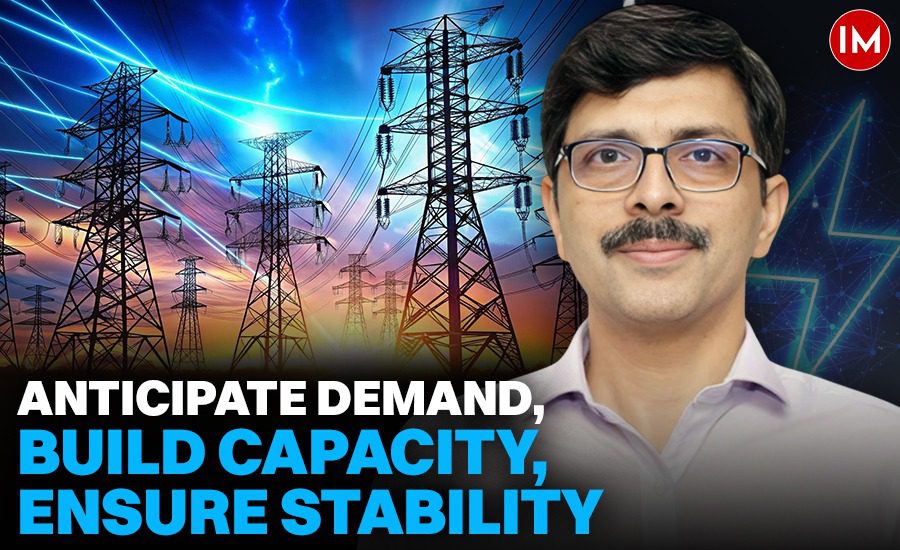
India’s power story is entering a decisive decade. With demand rising faster than expected and the energy mix rapidly evolving, the challenge is no longer just about generating electricity—it is about building a system that is resilient, flexible, and future-ready. Power Secretary Pankaj Agarwal lays out how India plans to stay ahead of demand while balancing sustainability and stability.
India’s electricity demand has been growing faster than expected. How is the ministry planning capacity for the next decade?
India’s demand trajectory has indeed surprised on the upside. Over the past three years, electricity consumption has grown at close to 8–9 percent annually, driven by economic recovery, rising temperatures, increased electrification and industrial expansion. Peak demand has already crossed 250 GW, and projections by the Central Electricity Authority indicate that it could reach around 366 GW by 2031–32.
Our planning framework is based on detailed demand forecasting models that take into account sectoral growth, weather patterns and emerging consumption trends such as electric mobility. On the supply side, we are working towards a balanced capacity addition strategy. This includes adding renewable capacity at scale, augmenting thermal capacity where required, and expanding nuclear and hydro. Importantly, generation planning is being synchronised with transmission expansion and storage deployment so that capacity addition translates into reliable supply.
Summer and winter demand patterns differ significantly. How does the system manage these seasonal variations?
Seasonality has become a defining feature of India’s power demand. Summer peaks are driven largely by cooling loads, while winter demand tends to be flatter, with some regional spikes due to heating needs.
To manage this, we rely on a combination of resource planning and operational flexibility. Thermal plants provide the backbone of supply and are scheduled to maintain adequate reserve margins during peak months. Hydropower plays a critical role in meeting peak demand due to its flexibility, particularly during monsoon and post-monsoon periods.
Also Read – How ‘Greater Agra’ Is Rewriting the City’s Future with 10 River-Themed Townships
Renewable energy also contributes differently across seasons. Solar generation is naturally aligned with daytime demand, while wind output is typically higher during the monsoon months. We are increasingly using advanced forecasting tools and real-time grid management systems to optimise dispatch. In addition, mechanisms such as time-of-day tariffs are being introduced to influence consumption patterns and reduce peak stress.
What does the current generation capacity pipeline look like, and how much is expected by 2030?
India currently has an installed capacity of over 520 GW, and the pipeline for the next five to seven years is robust. On the renewable side, more than 150 GW of capacity is under construction or in advanced stages of tendering, including large solar parks, wind projects and hybrid installations.
In thermal power, approximately 70–80 GW of coal-based capacity is planned to be added by 2032, primarily using high-efficiency technologies. This is necessary to meet baseload demand and ensure system reliability.
Hydropower and pumped storage projects are also being revived, with several gigawatts under development. Nuclear capacity is expected to expand from the current 8–9 GW to over 20 GW in the next decade.
Taken together, these additions will ensure that India has both adequate capacity and a diversified energy mix by 2030.
What challenges are emerging in integrating large-scale renewable energy into the grid?
The primary challenge with renewable energy is its variability. Solar generation is concentrated during daytime hours, while wind patterns vary seasonally and geographically. This creates issues related to balancing supply and demand in real time.
Another challenge is the geographic concentration of renewable resources. A significant portion of solar and wind capacity is located in western and southern states, whereas demand centres are spread across the country. This requires substantial transmission infrastructure.
We are addressing these challenges through a combination of measures. These include strengthening transmission networks, deploying energy storage systems, improving forecasting accuracy and introducing market-based mechanisms such as real-time power markets. The focus is on creating a system that can absorb high levels of renewable energy without compromising stability.
What progress has been made under the Green Energy Corridor programme?
The Green Energy Corridor is a critical component of our transmission strategy. It is designed to facilitate the evacuation of renewable power from resource-rich regions to demand centres.
Under Phase I, substantial intra-state and inter-state transmission infrastructure has already been commissioned. Phase II is currently under implementation and will further enhance the capacity to integrate renewable energy, particularly from states such as Rajasthan, Gujarat and Tamil Nadu.
In parallel, we are executing a broader national transmission plan that looks ahead to 2030 and beyond. This includes high-capacity transmission corridors and advanced grid management systems. The objective is to ensure that transmission is never a bottleneck in India’s renewable expansion.
How critical are storage solutions like batteries and pumped hydro for the future grid?
Storage is absolutely central to the future of India’s power system. As renewable energy becomes a larger share of the mix, the ability to store excess energy and deploy it during peak demand periods becomes essential.
We are pursuing a dual approach. Battery energy storage systems are being promoted for their fast response and scalability, particularly for short-duration balancing. At the same time, pumped hydro storage offers a cost-effective solution for long-duration storage and grid stability.
Several pumped storage projects are under development, and we are also integrating storage requirements into renewable energy tenders. Over the next decade, storage will move from being a supplementary component to a core element of system planning.
How is the government balancing coal expansion with climate commitments?
Coal continues to play a vital role in ensuring energy security. At present, it accounts for the majority of electricity generation, and this is unlikely to change in the immediate future.
However, our approach is to improve efficiency and reduce emissions intensity. New coal-based plants are being built using supercritical and ultra-supercritical technologies. Older and inefficient plants are being phased out.
At the same time, the share of renewables in installed capacity is increasing rapidly, which will gradually reduce the overall carbon intensity of the power sector. The transition is being managed in a way that aligns with India’s development needs as well as its climate commitments.
What reforms are being implemented to improve the performance of DISCOMs?
The distribution sector is the most critical link in the power value chain. Through the Revamped Distribution Sector Scheme, we are addressing both operational inefficiencies and financial challenges.
There is a strong focus on reducing aggregate technical and commercial losses through infrastructure upgrades and improved metering. The rollout of smart meters is a key reform that will enhance billing efficiency and consumer accountability.
We are also working with states to rationalise tariffs and ensure that subsidies are provided in a transparent and targeted manner. The goal is to create a distribution sector that is financially sustainable and capable of supporting future demand growth.
How is the power sector preparing for emerging technologies like green hydrogen and electric mobility?
The power sector is at the centre of several emerging transitions. Electric mobility, for instance, will significantly increase electricity demand, while also offering opportunities for demand-side flexibility through smart charging.
Green hydrogen is another area where the power sector will play a crucial role, as it relies on renewable electricity for production. The National Green Hydrogen Mission is expected to create new demand for clean power and drive further investment in renewables.
We are also investing in smart grid technologies that will enable better integration of distributed energy resources, improve reliability and enhance consumer participation. These developments are shaping a more dynamic and interconnected energy ecosystem.
What are the key milestones India must achieve by 2030?
By 2030, several critical milestones need to be achieved to ensure both energy security and sustainability. First, we must reach our target of 500 GW of non-fossil fuel capacity, which will significantly alter the composition of our energy mix.
Second, transmission infrastructure must be expanded in line with generation capacity so that renewable energy can be effectively utilised. Third, energy storage systems need to be deployed at scale to manage variability.
Equally important are reforms in the distribution sector, which must ensure financial viability and efficient service delivery. Finally, we need to continue improving energy efficiency and demand management. If we are able to align these elements—generation, transmission, distribution and technology—India will have a power system that is not only adequate for its needs but also aligned with its long-term climate goals.
Also Read- How IAS Tulika Prajapati’s ATHR Initiative Is Transforming Child Nutrition in Chhattisgarh