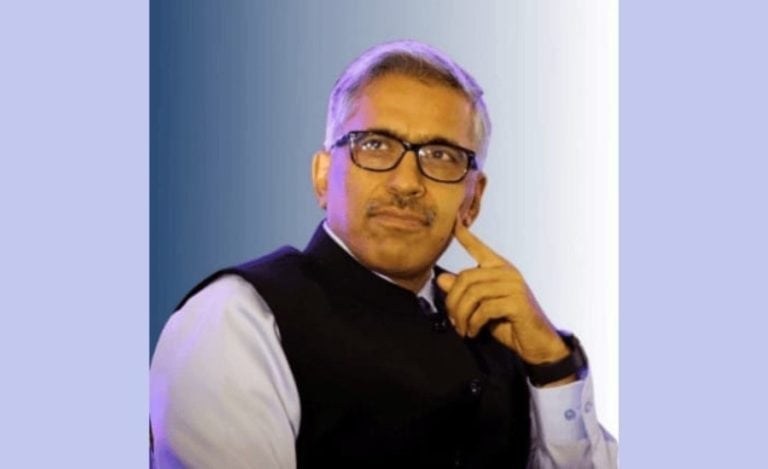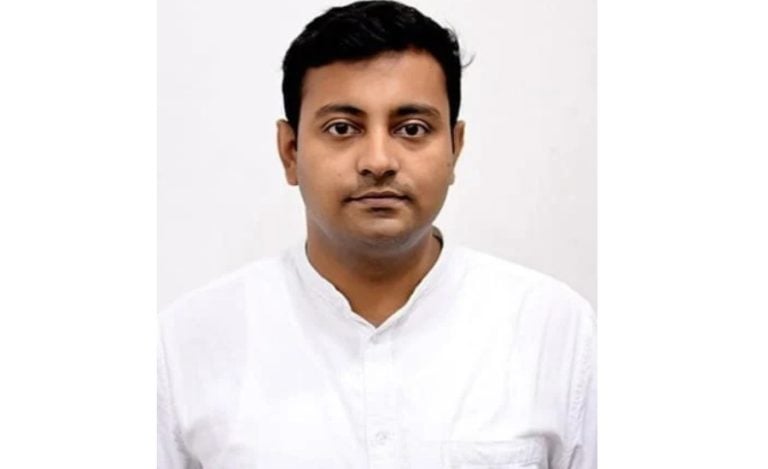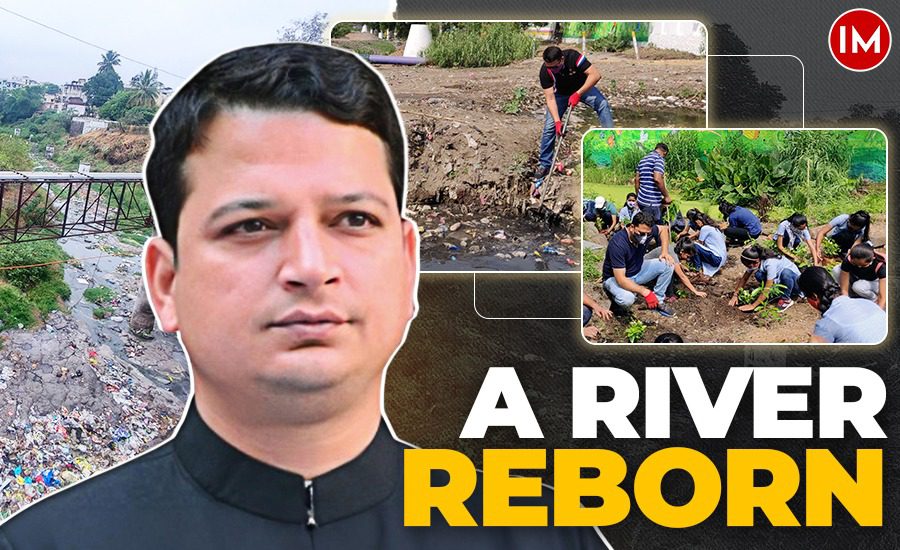
For years, the Kham River had been reduced to little more than a dirty, foul-smelling drain, a far cry from the lifeline it once was. Choked by pollution, plastic waste, and unchecked encroachments, the river was a stark reminder of what happens when urban expansion comes at the cost of nature. But where most saw an irreversible disaster, one man saw an opportunity for transformation. That man was 2011 batch IAS officer Astik Kumar Pandey who is now serving as Commissioner & CEO, ESIS, Mumbai, Maharashtra.

When Pandey took charge as the District Collector DC & DM, and Municipal Commissioner, Chatrapati Sambhaji Nagar (Aurangabad), he made an ambitious decision—to bring the Kham River back to life. With his leadership, the Kham River Restoration Project was launched, a project that would go on to become a model of sustainable development, community participation, and administrative willpower.
THE CHALLENGE OF A DYING RIVER
Historically, the Kham River was an essential water source for local communities, a place where people gathered, farmers irrigated their lands, and children played along its banks. However, over the years, unchecked urbanization has taken a toll. The river became clogged with industrial and domestic waste, its banks encroached upon, and its flow reduced to a sluggish trickle.
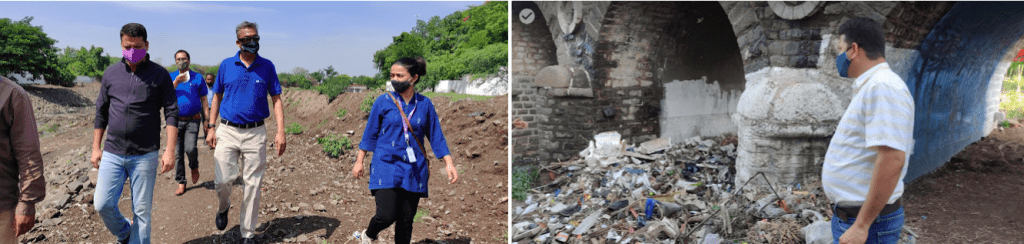
When Pandey first inspected the river, the sight was disheartening. “I remember walking along the riverbanks and seeing nothing but filth and neglect. It was heartbreaking to see a once-thriving river reduced to a sewage drain,” he told Indian Masterminds. “But I also knew that if we gave up, the next generation wouldn’t even know that a river once flowed here. That was not an option.”
“People often think that cleaning a river is just about removing garbage,” Pandey explains. “But the real challenge is to change mindsets—to make people realize that the river belongs to them, and they have to protect it.”
THE TURNING POINT
The most remarkable aspect of the project was the overwhelming response from the people. Schools, colleges, and community groups began participating in cleanup drives. Environmentalists came forward with sustainable solutions. Even corporate entities extended support through CSR initiatives.
One major breakthrough came when a group of young volunteers took it upon themselves to monitor pollution levels and report violations. The administration, under Pandey’s guidance, ensured that their complaints were addressed swiftly, sending a strong message that negligence would not be tolerated.
Within months, the results became visible. The river, once blackened by sludge, began to show signs of revival. Water started flowing again, albeit slowly. Birds and small aquatic species returned. For the first time in decades, people could walk along the riverbanks without being overwhelmed by foul odors.
THE HERCULEAN TASK BEGINS
With a roadmap in place, work began. The restoration project was divided into multiple phases, each targeting a critical issue plaguing the river.
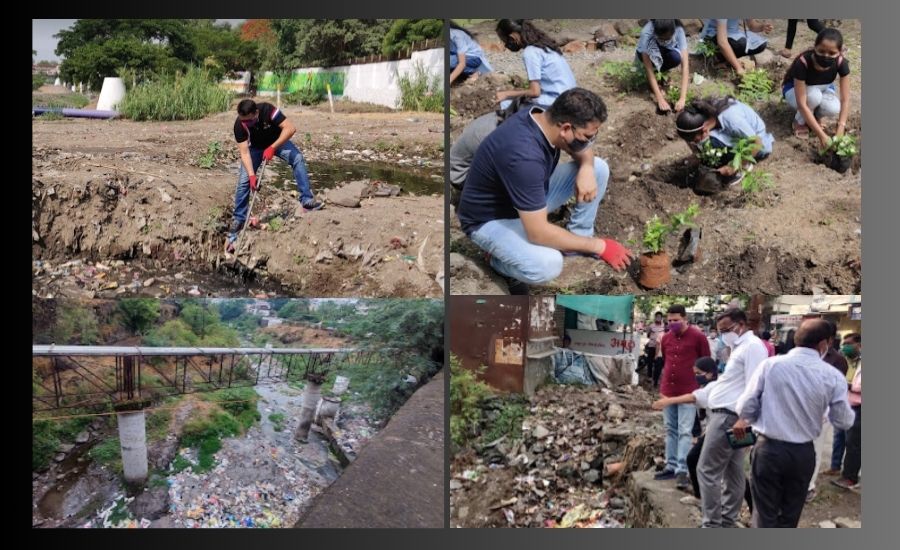
Phase 1: Cleaning the Riverbed The first phase involved clearing out the heaps of plastic, debris, and silt that had accumulated over the years. Hundreds of volunteers, along with municipal workers, rolled up their sleeves and stepped into the filthy waters. The scene was overwhelming—piles of garbage, discarded furniture, rusting vehicles, and even animal carcasses. It was an arduous, backbreaking task, but no one gave up.
Excavators and trucks were deployed to remove the thick layers of sludge, and slowly, the river’s original form began to emerge. By the end of this phase, thousands of tons of waste had been removed, offering a glimmer of hope.
Phase 2: Stopping the Pollutants Cleaning the river would be futile if the pollution continued. The second phase focused on stopping the flow of untreated sewage and industrial waste. This required setting up sewage treatment plants (STPs) and ensuring industries adhered to waste disposal regulations.
Municipal officials, in collaboration with the Maharashtra Pollution Control Board, cracked down on illegal dumping. Surprise inspections were conducted, and heavy fines were imposed on violators. More importantly, local communities were educated about waste segregation and responsible disposal. Schools, colleges, and residential societies joined hands, turning the movement into a city-wide revolution.
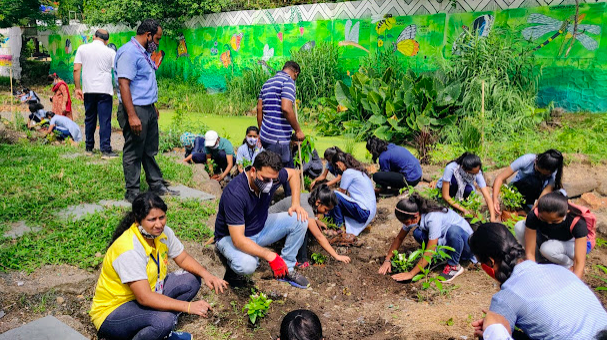
Phase 3: Reviving the Ecosystem Once the river was cleaned and pollution controlled, the focus shifted to restoring its natural ecosystem. Native plant species were reintroduced along the banks to prevent soil erosion and improve water retention. Environmentalists and ecologists worked on reviving aquatic life, and reintroducing fish and other species that had vanished due to the toxicity of the waters.
Additionally, afforestation drives were launched, with thousands of trees planted along the riverbanks to improve the air and water quality. Walkways, gardens, and public spaces were developed to transform the once-polluted stretch into a green corridor, reconnecting the people with their rivers.
A PEOPLE’S MOVEMENT
What made the Kham River restoration different from previous failed attempts was the people’s participation. This wasn’t just a government project—it was a movement that united the entire city. From schoolchildren to senior citizens, everyone played a role. Artists painted murals on walls along the riverbanks, depicting its glorious past and hopeful future. Social media campaigns spread awareness, urging citizens to be mindful of their waste disposal habits.
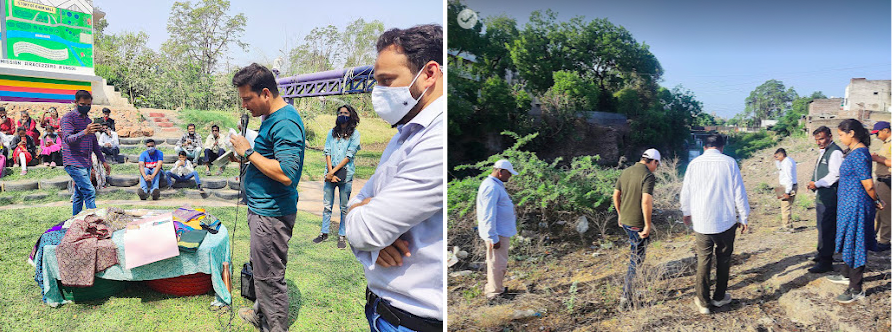
Religious and cultural organizations held clean-up drives, emphasizing the spiritual and historical significance of the river. The restoration project had evolved beyond an environmental mission—it had become a symbol of civic responsibility and collective power.
“Every Saturday I used to go to the bank of the river for a cleaning drive by myself with citizens. 7 am to 10 am. After that, I used to sit with my core team, including all stakeholders on the bank of the river, & take a review of work done last week & solve their problems on the spot. Then, discuss, plan, & give targets to the core team for the next week. The same thing was repeated every Saturday for 4 years,” shared Mr. Astik Pandey.
Also Read : From UP Forests to Delhi’s Apex Office : Leading India’s Forest Conservation from the Top
WHAT’S AHEAD?
The transformation of the Kham River is still a work in progress. While significant strides have been made, challenges remain. Encroachments continue to be a contentious issue, with legal battles underway to reclaim lost river land. Funding remains a constant concern, as large-scale restoration projects require sustained financial support.
Yet, despite these obstacles, the mission continues. The people of Aurangabad have proven that change is possible when a city unites for a common cause. The Kham River, once written off as a lost cause, is now flowing towards a hopeful future.
A LESSON FOR OTHER CITIES
The success of the Kham River Restoration Mission serves as an inspiration for other cities facing similar crises. Urban rivers across India—whether it’s the Yamuna in Delhi or the Mithi in Mumbai—share the same fate of neglect and pollution. But if Aurangabad can revive its dying river, so can others.
The Kham River’s journey from despair to revival is a powerful reminder that no battle is lost if the people refuse to give up. Today, as the waters of Kham once again reflect the sky, it stands as a testament to human resilience, proving that even the most polluted rivers can find their way back to life—if only we choose to fight for them.
Also Read : The Diplomat Who Conquered Hollywood with His Words